Wearing it still feels odd
New dentures change how the mouth feels at rest and in use. Try to tell the dentist which feelings are only new and which are painful or stop you eating and speaking, since that shapes the advice.


A denture that slips from wet fingers onto a hard floor is a common early scare. Denture aftercare for Halton Hills teaches safe handling, cleaning and storage, and checks the fit when wearing becomes uncomfortable.
Dentures are durable in the mouth but can crack or chip when they fall onto a sink or tiled floor. Much of early aftercare is about simple habits that protect the appliance, along with checking that it fits and feels right as you use it more.
Care instructions are not identical for every denture. An appliance placed straight after extractions has early rules about wearing and removal that differ from those for a replacement on healed gums. If two sources disagree, ask us which one fits your situation.
Let us know which parts of the routine feel easy and which feel risky or uncomfortable. A review can look at the fit, show handling and cleaning again and decide whether more assessment is needed. Ongoing pain is not part of the deal; mention it.
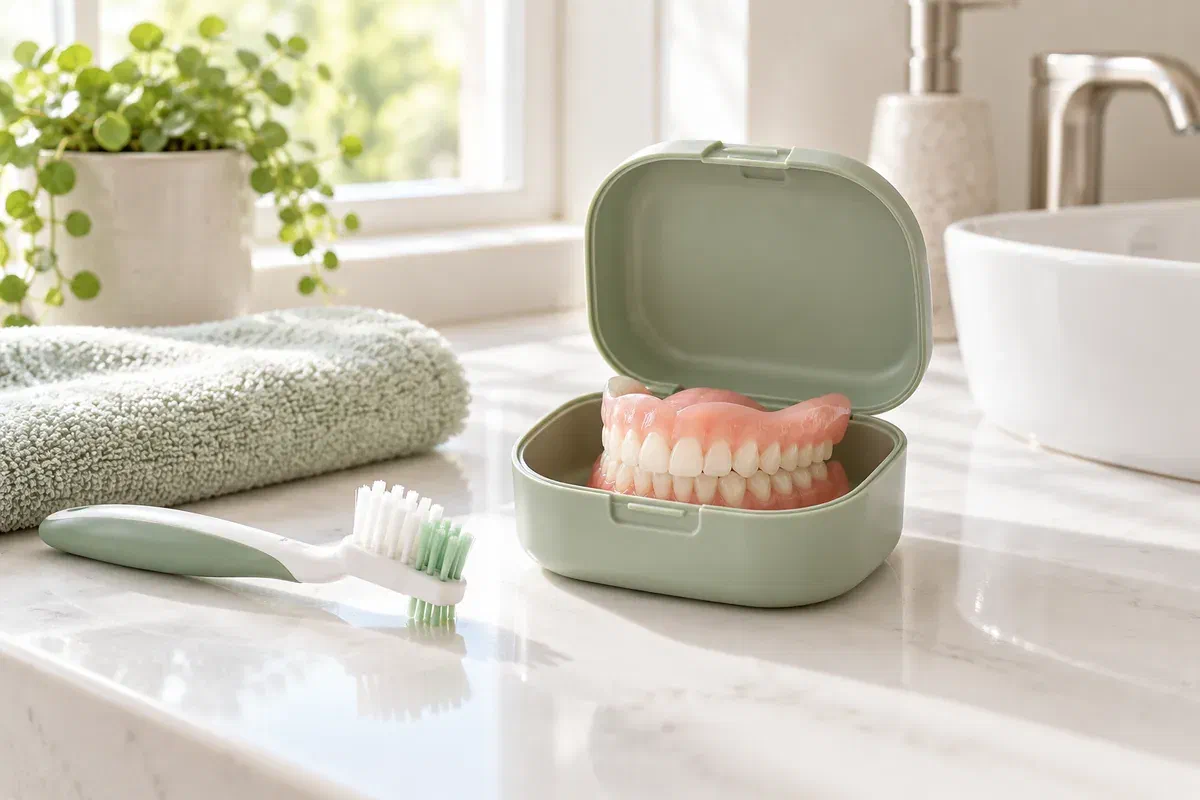
Think through a normal day with the denture: putting it in, eating, rinsing it after meals, cleaning it at night and storing it. Note where things go wrong and bring that list to your appointment.
New dentures change how the mouth feels at rest and in use. Try to tell the dentist which feelings are only new and which are painful or stop you eating and speaking, since that shapes the advice.
Wet hands and a slippery appliance are a risky combination. Ask for a demonstration at the sink, and mention any weakness in your grip, trouble seeing or unsteady hands so the team can suggest safer methods.
Confirm when the denture should be out, what it should be kept in and whether recent extractions change the first days. Short-term rules after surgery may later give way to a different long-term routine.
For a denture fitted after extractions or other surgery, the treating clinician’s postoperative instructions and contact arrangements take priority over general advice on this page.
After some days of real use, you will have practical questions that did not occur to you at the fitting. A review examines your mouth and the appliance together, so a genuine fit issue is not mistaken for clumsiness or lack of practice.
Getting comfortable has no standard timeline. Appliance design, earlier experience, healing and the shape of your mouth all play a part. Ask what you can expect and which developments should bring you back before the planned review.
Patient information: Guy’s and St Thomas’ — getting used to dentures
Bring your denture, case, brush and cleaning product. Trying the steps in front of the team lets them correct grip and technique and suggest storage that suits your bathroom and bedside.
A rubbing area, an uneven bite or general looseness may each need a particular response. A review helps the dentist decide whether an adjustment or another step is appropriate.
Appliances worn during healing may need attention as gums reshape. Ask about likely review points and whether a reline or replacement may come up later.
The visit focuses on your experience since fitting. Explain how your days with the denture have gone; it is the dentist’s job to work out what is behind any difficulty.
Describe how long you wear the denture, any foods or words that are hard, and where soreness has appeared. Mention recent extractions, health changes and any part of the routine you find tricky.
The dentist looks at the tissues, the fit and the bite, and checks the denture for chips or cracks. This helps sort expected adaptation from a pressure point, healing issue or another problem.
You may rehearse handling and cleaning, receive updated advice or have an adjustment made. If something else is needed, the dentist explains why and how it fits the existing plan.
Know which instructions apply now, when to come back and what should prompt an earlier call. Ask for written notes if they would help at home.
Daily care includes the denture and your gums. Follow any post-surgery directions first, then the long-term wearing, cleaning and storage routine your dentist suggests for your denture.
Start with softer meals and the chewing method shown at your appointment. Reading aloud helps you hear which sounds need work. Report difficulties that do not improve so fit and tooth position can be rechecked.
Fill the basin with water or lay a towel underneath before you start. Keep the denture in a closed case when it is out, never in a tissue, and well away from pets.
Use fluoride toothpaste on any natural teeth and follow your gum care instructions. Denture cleaners are for the appliance only and are not safe to use in the mouth.
Safe handling becomes second nature with practice and support. These answers cover questions people often ask while setting up a routine.
Arrange a visit at our Bronte Street practice to review a new or recently changed denture. Bring the appliance, its case and the cleaning products you rely on.
Call about severe pain, a sore that will not settle, a broken denture or concerns after an extraction. We can help you decide whether to come in sooner.
