

Illustrative patient receiving practical guidance about a new denture
Restorative Dentistry

Denture Aftercare in Milton

The first dinner at home with a new denture often raises more questions than the fitting did. Denture aftercare in Milton gives you a place to bring them, from handling and cleaning to sore spots that may need an adjustment.

After the fitting, close to home in Milton

The real test starts at your own table.

Most people leave a fitting appointment feeling hopeful, then sit down to a meal and discover how much there is to learn. Chewing feels different, some words come out oddly, and the appliance may shift in ways that are hard to describe. Aftercare is built for that stage.

Which advice applies depends on the kind of denture you have and where you are in treatment. A denture placed on the same day as extractions carries early instructions that a replacement for a healed mouth does not. When two sets of guidance seem to clash, call and ask instead of guessing.

Our role is to listen to what has been easy and what has not. A review may involve checking the fit, showing you handling and cleaning again, and talking through whether something needs a closer look. Ongoing pain is not something to simply endure.

Arrange your Milton denture review
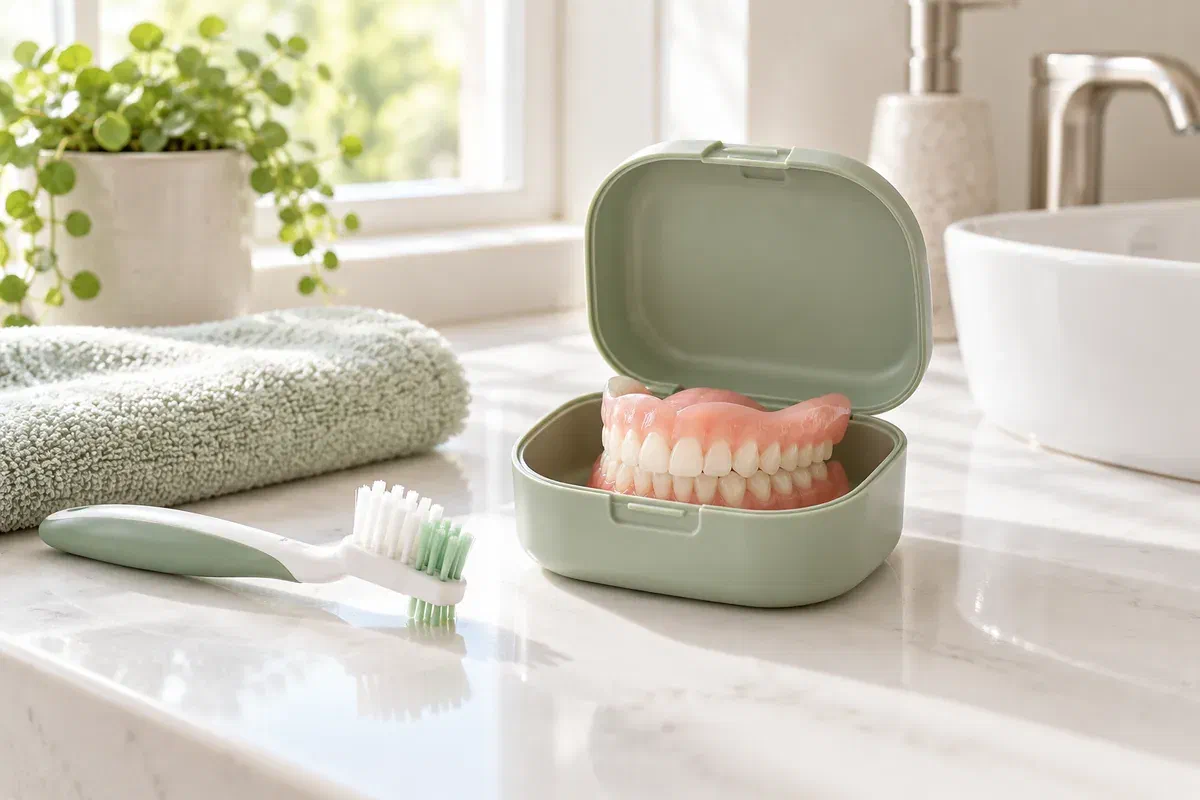
Clean denture set in a storage case beside a brush and towel
Questions that surface in the first weeks

Small difficulties at home deserve a proper answer.

Notes from ordinary days are the most useful thing you can bring. Jot down what happens when you eat, talk, rinse the appliance, or put it in, so the conversation starts from real experience.

Something feels foreign in your mouth

New contours and tooth positions take time to get used to. Try to separate sensations that are simply new from ones that hurt or stop you eating and speaking, because that difference helps the dentist decide whether to wait or act.

Putting it in or taking it out is awkward

You should be shown insertion, removal and cleaning in steps you can repeat on your own. Let the team know early about a weak grip, poor eyesight or shaky hands, and consider bringing a helper to the demonstration.

The daily schedule is unclear

Find out when the denture should come out, where it should be kept, and whether recent extractions change the first few days. Early post-surgery instructions are often temporary.

When a denture is placed after extractions or other surgery, the instructions from the clinician who did that procedure come first. General tips on this page do not replace them.

Why a follow-up visit helps

Practice works better with a plan behind it.

Some questions only make sense once you have worn the appliance through a few meals and conversations. A follow-up looks at your mouth and the denture together, so a real fit problem is not mistaken for something you just need to practise.

Nobody can promise a fixed date when a new denture will feel natural. The design, any earlier experience with dentures, how the gums are healing and your own anatomy all play a part. Ask what steady progress looks like for you and which signs mean you should come back sooner.

Patient information: Guy’s and St Thomas’ — getting used to dentures

Hear the instructions a second time

Fitting day can be a lot to absorb. Bring the denture, your brush and any cleaner you have bought, and the team can go over handling, cleaning and overnight storage using the items you actually have.

Spot what practice will not fix

A single tender spot, a bite that meets unevenly, or a looser overall fit can each call for a different answer. The review lets the dentist judge whether an adjustment or another step makes sense.

Know what may change later

Appliances worn while the mouth heals can need more attention as the gums reshape. Ask when the next checks are likely and whether a reline or replacement might come up down the road.

What happens at the review

Tell us how it has gone, then we look together.

The visit centres on the days since your denture was fitted. A short account of your habits and the moments that cause trouble is enough; you do not need to work out the cause before you arrive.

  1. Talk through the past few weeks

    Share how many hours a day you wear it, which foods or words give you trouble, and where any soreness has appeared. Mention extractions, health changes, and any instruction that has been hard to keep up.

  2. Examine your gums and the denture

    The dentist looks at the tissues, the fit and how your bite comes together. This helps tell normal settling-in apart from a pressure spot, a healing concern or another issue that needs treatment.

  3. Offer the right kind of help

    That might mean a fresh demonstration, updated advice or a careful adjustment. If a different procedure is needed, you will hear why and how it connects with the treatment already planned.

  4. Settle the next steps

    Confirm which instructions you follow from now on, when to return, and what should make you call sooner. Ask for the key points written down so you can check them later.

Everyday denture habits

Go steadily, and speak up when something stays hard.

Good daily care covers both the appliance and the gums and teeth under it. Any special directions after surgery take priority; after that, settle into the wearing, cleaning and storage routine recommended for your particular denture.

Ease back into meals and conversation

Start with softer foods cut into small pieces and use the chewing approach you were shown. Reading a page aloud can reveal which sounds are still tricky. If a limitation does not improve, mention it so the fit and tooth set-up can be reviewed.

Keep the denture safe while you handle it

Clean it over a folded towel or a basin of water, and keep it in a proper case when it is out. A denture tucked into a napkin is easy to throw away, and pets may chew one left within reach.

Look after your gums and natural teeth too

Brush any remaining teeth with fluoride toothpaste and follow the advice you were given for your gums. Products made for soaking or scrubbing a denture are not meant to go in your mouth, and the reverse is also true.

Possible next steps

What we suggest depends on what we find.

Sometimes reassurance and better technique are all that is needed. Other times the review points to treatment. Either way, you can ask why a particular step suits the problem you described.

When technique and getting used to it are the focus

Guidance and a set period of practice

If the denture and your gums look healthy, a demonstration and a few weeks of practice may be the sensible plan. You will still be told which changes would justify coming back earlier.

When the denture itself needs work

An adjustment or fit change

A tender pressure point or uneven bite can often be eased with an adjustment, while a broader loss of fit may need a different solution. The dentist explains the change and how you will judge the result.

When the issue goes beyond adapting

More assessment or a new plan

A sore that will not heal, an appliance that does not suit you, or healing that is not going as expected needs proper investigation. That may lead to further treatment, another design or input from a different clinician.

Common questions from new denture wearers

Ask what came up once you got home.

Learning to live with a denture continues well after the fitting chair. These answers cover questions that often appear in the first weeks of wear.

(905) 876-4488
Is it normal for my mouth to make more saliva with a new denture?
Many people notice extra saliva at first, because the mouth reacts to something new. It often settles as you get used to the appliance. If it continues, or comes with soreness or trouble swallowing, mention it at your review so the dentist can take a look.
What should I bring to my denture aftercare appointment?
Bring the denture, its case, and any brush, cleaner or adhesive you have been using. A short list of foods or words that cause trouble helps too.
Can I trim or file a rough spot on my denture myself?
Please do not. Home adjustments can change the fit, weaken the appliance or create a new sore spot. Call and describe where it rubs so the dentist can decide whether an adjustment is needed.
Do instructions for immediate dentures change over time?
They usually do. Early directions after extractions are designed for a healing mouth and may cover wearing, removal and rinsing differently. Ask the treating clinician when you should move to a longer-term routine rather than assuming the first week’s advice is permanent.
Should my denture come out overnight?
In the first days, follow the personal instructions you were given, especially after extractions. For routine wear, dentures are generally taken out at night so the gums can rest, unless your dentist gives a specific reason to do otherwise. Check this before you leave the fitting.
Is it easy to come back for a quick check if I live in Milton?
Being local makes a short follow-up simple to fit into the week. Call when a concern comes up, describe what is happening, and the team can suggest whether an appointment soon is a good idea or whether it can wait for your planned review.
Milton denture follow-up

Bring your denture in and we will work through it.

Book a review at our Bronte Street practice to talk about a new or recently changed denture. Bring the appliance, your questions and the products you use so the advice fits your routine at home.

Call about severe pain, a sore that is not healing, or worries after an extraction. We can talk about whether you should be seen sooner.

Visit Milton Dental Clinic
Unit 1, 342 Bronte St. S, Milton, ON L9T 5B7
Get directions Clinic hours
Monday–Thursday
11am–7pm
Friday–Sunday
By appointment only

Areas we serve

  • Milton
  • Oakville
  • Mississauga
  • Georgetown
  • Halton Hills
  • Acton
  • Campbellville
  • Brampton
  • Burlington
  • Puslinch
  • Rockwood
  • Erin
  • Caledon
  • Etobicoke
  • Old Milton
  • Bronte Meadows
  • Timberlea
  • Dorset Park
  • Dempsey
  • Clarke
  • Beaty
  • Coates
  • Harrison
  • Scott
  • Willmott
  • Ford
  • Bowes
  • Cobden
  • Walker
  • Mountain View
  • Milton Heights
  • Hawthorne Village
  • Valley View
  • Fallingbrook
  • Nassagaweya
  • Trafalgar
  • Esquesing
  • Nelson
  • Brookville
  • Moffat
  • Glen Williams
  • Norval
  • Limehouse
  • Stewarttown
  • Ashgrove
  • Hornby
  • Silver Creek
  • Speyside
  • Scotch Block
  • North Oakville
  • River Oaks
  • Glen Abbey
  • West Oak Trails
  • Palermo
  • Bronte Creek
  • College Park
  • Joshua Creek
  • Uptown Core
  • Preserve
  • Iroquois Ridge
  • Lisgar
  • Meadowvale
  • Meadowvale Village
  • Churchill Meadows
  • Erin Mills
  • Central Erin Mills
  • Streetsville
  • East Credit
  • Creditview
  • Heartland
  • Sheridan
  • Mount Pleasant
  • Credit Valley
  • Huttonville
  • Churchville
  • Springbrook
  • Northwest Brampton
  • Bram West
  • Fletcher's Meadow
  • Fletcher's Creek South
  • Alton Village
  • Orchard
  • Millcroft
  • Headon Forest
  • Tansley
  • Brant Hills
  • Tyandaga
  • Kilbride
  • Lowville
  • Aberfoyle
  • Morriston
  • Arkell
  • Hillsburgh
  • Freelton
  • Carlisle
  • Waterdown
  • Flamborough
  • Mountsberg

How can we help?

Milton Dental Clinic

Have a question about your smile? Choose the option that works best for you.

For urgent dental concerns, please call.
Messages are reviewed during clinic hours.