Deposits remain despite brushing
Some deposits are difficult to remove safely at home. Bring the appliance for assessment rather than scraping it with a sharp tool, which can alter the surface or damage areas important to fit.


Make denture cleaning appropriate to the appliance you wear. Discuss deposits, staining, odour, and cleaning products with our Milton team, and learn when a denture or mouth concern needs professional attention.
Denture cleaning removes food debris and deposits from an appliance that sits in close contact with the mouth. The routine needs to suit its materials and design. Acrylic, metal components, soft liners, and attachments may not all tolerate the same products or handling.
A clean-looking denture is only one part of oral care. The tissues beneath it and any remaining natural teeth still need attention, and a persistent smell or sore area may have a cause that brushing the appliance alone cannot address.
At Milton Dental Clinic, bring the denture and describe the products and methods you currently use. We can discuss a suitable routine, assess difficult deposits or surface changes, and explain whether professional cleaning or another form of care is appropriate.
A change in appearance or freshness can be frustrating, but aggressive cleaning may damage the appliance. The first step is to understand the material, the nature of the deposit, and the condition of the denture.
Some deposits are difficult to remove safely at home. Bring the appliance for assessment rather than scraping it with a sharp tool, which can alter the surface or damage areas important to fit.
Explain when the colour change appeared and whether a new product or habit preceded it. The team can assess whether cleaning is likely to help or whether the material itself has changed.
Tell the clinician about the mouth as well as the denture. Recurrent odour, redness, or soreness may need an examination and a review of wearing habits, fit, and cleaning rather than simply adding a stronger cleanser.
Denture cleansers are intended for use according to their instructions, generally outside the mouth. Do not use a soaking solution as mouthwash or place a cleaning tablet in your mouth.
A suitable routine helps manage deposits while respecting the appliance material. The goal is a method you can perform consistently, with clear advice about brushing, any recommended soaking product, rinsing, and storage.
Professional assessment can also identify when the concern is not simply a dirty surface. A damaged liner, rough area, or poorly fitting appliance may need another response, and persistent mouth symptoms should not be concealed by repeated cleaning attempts.
Patient information: American Dental Association — denture care and maintenance
Bring the product names or packaging to the appointment. The clinician can discuss whether they are appropriate for the denture and whether special components change the instructions.
The routine should account for grip, vision, and access to the fitting surface. Ask for a demonstration and explain any step that is difficult so a practical alternative can be considered.
Knowing when to stop scrubbing and arrange a review can help protect the appliance. Ask which deposits, odours, surface changes, or symptoms should be assessed rather than managed with another home product.
The appointment should connect the condition of the appliance with the routine you use. Bring relevant cleaning products or a list of them, especially if staining or irritation began after a change.
Discuss the type and age of the denture, any liners or attachments, and how it is cleaned and stored. Mention previous repairs and whether the appliance has been exposed to heat, abrasives, or household products.
The clinician examines the denture surface and relevant oral tissues. This helps determine whether cleaning is the main need or whether fit, material damage, or a mouth condition also requires attention.
If professional cleaning is suitable, the team explains what it can reasonably address. You receive guidance on compatible products and techniques, with any limitations related to the material or appliance design.
Ask to see how to hold and clean the denture safely, including difficult areas. Clarify storage and rinsing instructions, and agree on when to return if deposits or symptoms continue.
Follow the instructions recommended for your denture and any product used with it. Keep appliance cleaning separate from care of the mouth, and ask before changing products if the denture contains metal, a soft liner, or attachments.
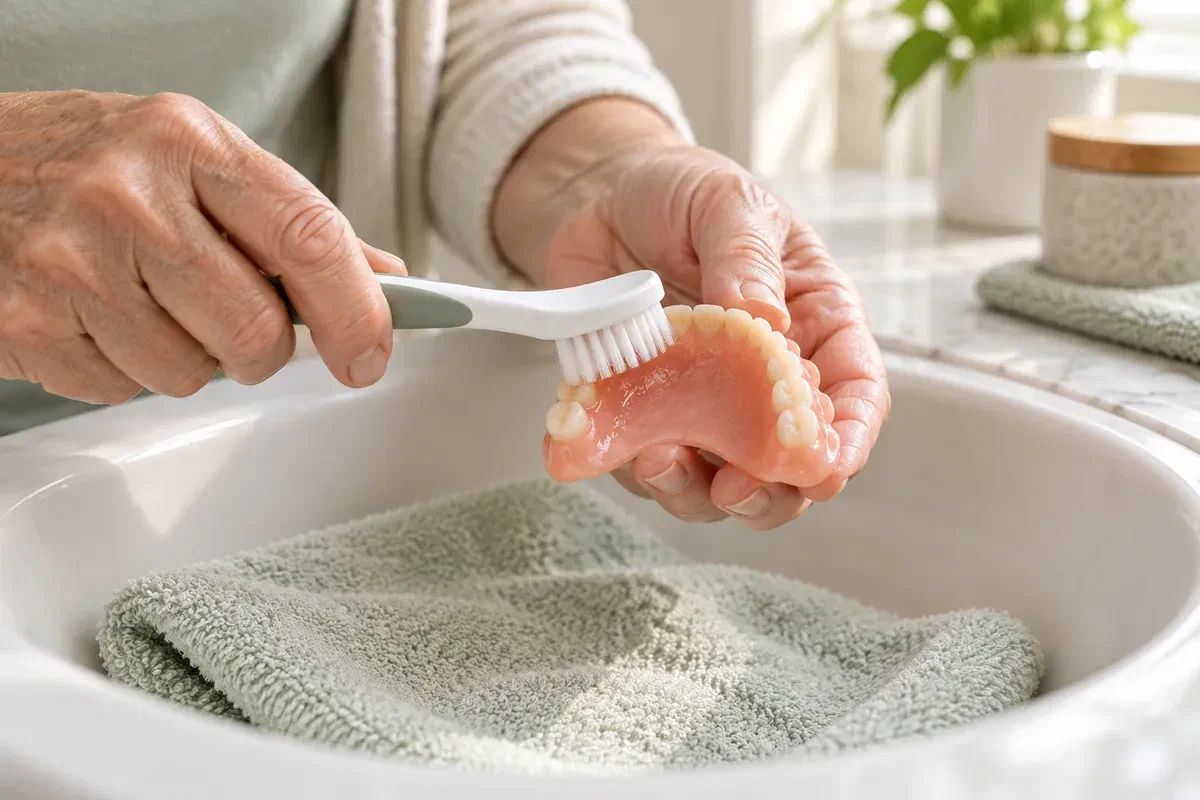
A towel-lined basin or another suitable protected area can reduce the chance of breakage if it slips. Hold the appliance securely without bending delicate parts, and ask for help if handling is difficult.
A soft brush and a suitable non-abrasive product may be advised. Avoid hard scrubbing, sharp scraping tools, and household cleaners. Follow the product’s directions and rinse the appliance as instructed before putting it back in the mouth.
Clean natural teeth with fluoride toothpaste and follow guidance for the gums and other tissues. The product used for the denture may not be suitable for those areas, so confirm which method belongs to each part of the routine.
Patient information: Mayo Clinic — denture cleaning
Products that look similar can have different uses and material restrictions. Bring your questions and the names of the products you own so the advice can be specific.
Visit our Bronte Street clinic to discuss deposits, staining, product choices, or difficult cleaning areas. Bring the appliance and details of your current routine so we can assess the concern and explain a suitable approach.
If there is persistent soreness, redness, or a change in the appliance’s fit, mention it when arranging the visit so the mouth can be assessed as well.
