Residue settled into the soft surface
Deposits on or near a liner can be especially tricky to remove at home. Picking at them can tear or roughen the material, so bring the denture in to be assessed.


Soft liners make a denture more comfortable, yet they can be easy to damage with the wrong brush or cleaner. From Acton, you can have the liner checked, learn how to clean around it, and find out when wear calls for a reline rather than more scrubbing.
A soft liner can turn a sore, rubbing denture into one you barely notice. Its softer surface, however, can be marked by stiff bristles, roughened by gritty pastes and affected by some soaking products. It also sits beside hard acrylic and sometimes metal parts, so one appliance can need two different kinds of care.
Comfort does not mean the mouth can be ignored. The gums the liner rests on, your palate and any natural teeth need regular attention, and if soreness or a smell keeps returning, the cause may be the liner's condition, the fit or the tissues themselves.
When you come in from Acton, bring the denture together with your brush and cleaners. We can look at the liner and the rest of the appliance, show you a method that respects both, and say whether a professional clean, a routine change or a reline should be considered.
When the cushion looks marked or feels less springy, it can tempt you toward a stronger product. That may speed up wear. Start by finding out what kind of liner it is and what the change actually is.
Deposits on or near a liner can be especially tricky to remove at home. Picking at them can tear or roughen the material, so bring the denture in to be assessed.
Note when you first saw the change and whether a new soak or habit came before it. The clinician can judge whether cleaning might help or whether the liner itself is ageing.
Tell us how the gums feel beneath it. Recurring redness, tenderness or odour may mean the liner, fit or tissues need examining, not that you should clean more aggressively.
Denture cleansers should only be used outside the mouth and as directed. Some carry warnings about soft liners, so check the label, and never rinse your mouth with a soaking solution.
Cleaning a liner the right way helps control residue without wearing through its surface. A simple routine you can repeat each day matters most, with clear direction on brushing, whether a soak is suitable, rinsing and how to store the denture.
A review may also show that the liner has reached the end of its useful life. Peeling, hardening or a poor fit may call for a reline or replacement, and ongoing tissue soreness needs to be examined rather than masked by extra cleaning.
Patient information: American Dental Association — denture care and maintenance
Bring the soaks and cleansers you have at home. We can tell you which suit a soft liner and which are better kept for other appliances.
Brushing a liner well is mostly about how lightly you press. We can demonstrate on your own denture and adapt the method if your grip or eyesight makes it hard.
Cleaning cannot restore a liner that has hardened or lifted. Ask which signs mean it is time to book an assessment instead of trying another product.
We link the condition of the liner and the rest of the appliance with the way you care for it. If a change followed a new product, bring that product or its name.
Share when the liner was placed, how old the denture is, and your daily routine, including what it soaks in overnight. Mention any repairs and contact with heat or household cleaners.
The clinician looks at the soft and hard surfaces and the gums beneath them. This helps show whether cleaning is the priority or whether the liner, fit or a tissue concern needs attention.
If professional cleaning is appropriate for the liner, we explain what it can and cannot do. You also receive guidance on compatible products and on how gently to brush each surface.
Practise cleaning the liner and the hard base with guidance. Confirm the rinse and storage steps, and agree when to return if residue, wear or soreness continues.
Use the method advised for this appliance and the instructions for each product. Care for your mouth separately, and ask before changing cleaners, since soft liners can have their own restrictions.
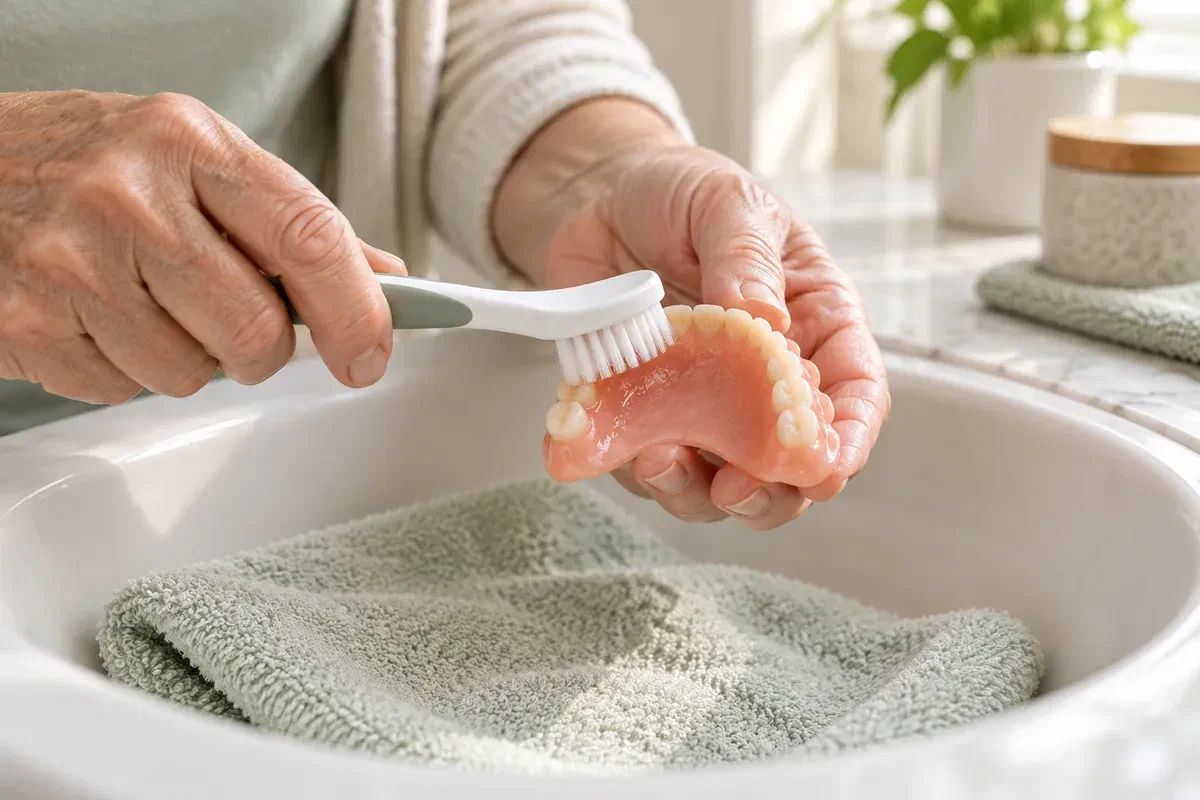
Hold it securely over a towel-lined basin or a little water so it is protected if it slips. Avoid squeezing the liner or bending any thin edges, and ask for help if handling is difficult.
Very gentle bristles and a non-abrasive product are usually recommended for liners. Skip stiff brushes, scraping tools and household cleaners, and rinse thoroughly before wearing.
The tissues that support a soft liner still need daily care, along with fluoride toothpaste for any natural teeth. Keep denture products for the appliance alone.
Patient information: Mayo Clinic — denture cleaning
Liners vary in type and lifespan, and product restrictions differ. Bring your questions and what you use so the advice suits your appliance.
At our Bronte Street practice we can talk through residue, staining, products and any hard-to-clean areas on a soft-lined denture. Bring the appliance and describe your current routine so we can examine it and recommend suitable care.
If the gums under the liner are sore or the denture fits differently, mention it when booking so your mouth can be assessed at the same visit.
