A brown line that brushing misses
Deposits near the gum edge can harden and hold stain. Resist chipping them off with a sharp tip, which can mark the acrylic or alter how the denture seats, and let the team examine it.


Tea, coffee and everyday meals can leave denture teeth looking duller than they did on day one. From Brampton, you can have our team look at the staining, tell you what cleaning may realistically lift, and explain when a colour change means something else.
Often it is a family picture that does it. You see your smile and realise the teeth have yellowed or picked up a brownish edge near the gumline. Before reaching for a whitening product, it helps to know what the denture is made of, because acrylic, porcelain-style teeth, liners and metal parts respond to cleaners in different ways.
Colour is also only one thing to check. Underneath the appliance, your gums and any remaining natural teeth need their own care, and staining that arrives with a stale smell or tender patch may have a cause beyond the surface.
Bring the denture from Brampton along with whatever you use to clean it. We can look closely at the discolouration, tell you whether it seems to be removable staining or a change in the material, and suggest a routine or professional clean if either is likely to help.
Stains invite strong measures, like gritty pastes or bleach, that can roughen the surface and make it pick up colour faster. Find out what you are dealing with first.
Deposits near the gum edge can harden and hold stain. Resist chipping them off with a sharp tip, which can mark the acrylic or alter how the denture seats, and let the team examine it.
Think about when you first saw the change and whether a new drink, habit or cleaner came first. That helps us judge whether it may come away with cleaning or whether the material itself has aged.
Mention any changes in your mouth too. Odour or irritation that keeps coming back can need an examination of the tissues and a look at fit and habits, not a stronger stain remover.
Use any denture cleanser only outside your mouth and as directed on its packaging. Never rinse your mouth with soaking liquid or put a tablet in your mouth.
Gentle, regular cleaning helps keep film and residue from building up and holding colour, without scratching the surface. A routine is only useful if you keep it, so we focus on steps you can manage daily: brushing, any soak we advise, rinsing and overnight storage.
A review may also show that the colour change is not about cleanliness. Worn acrylic, a degraded liner or an appliance that has lost its fit may call for something else, and recurring soreness deserves direct attention rather than extra scrubbing.
Patient information: American Dental Association — denture care and maintenance
Bring the products you use, especially any marketed for whitening. We can say which suit your denture and whether clasps, liners or attachments rule some of them out.
It should be easy to see and reach the stained areas. Ask us to demonstrate, and mention anything awkward so we can find another way to get there.
Not every stain can be removed, and knowing that early saves money and frustration. Ask which changes are worth a professional clean and which suggest the material has aged.
We tie the colour change to the products and habits behind it. If the staining showed up after a switch in cleaner, toothpaste or diet, mention it.
We ask its age, whether it has liners or attachments, and how you clean it and where it sits overnight. Tell us about past repairs and any use of hot water, abrasives or household cleaners.
The clinician studies the discoloured areas and the parts of your mouth the denture covers. That reveals whether removable residue is the problem, or whether wear, fit or a tissue issue is involved.
Where a professional clean is suitable, we explain how much it may improve the colour. You also hear which home products and techniques are compatible with the material and which to avoid.
Try brushing the stained areas with guidance so you know how firm to be. Confirm rinsing and storage, and decide together when to come back if the colour or symptoms do not settle.
Follow the guidance for your appliance and each product you use. Keep denture care and mouth care apart, and check with us before a new stain remover touches a denture that has clasps, a cushioned lining or implant fittings.
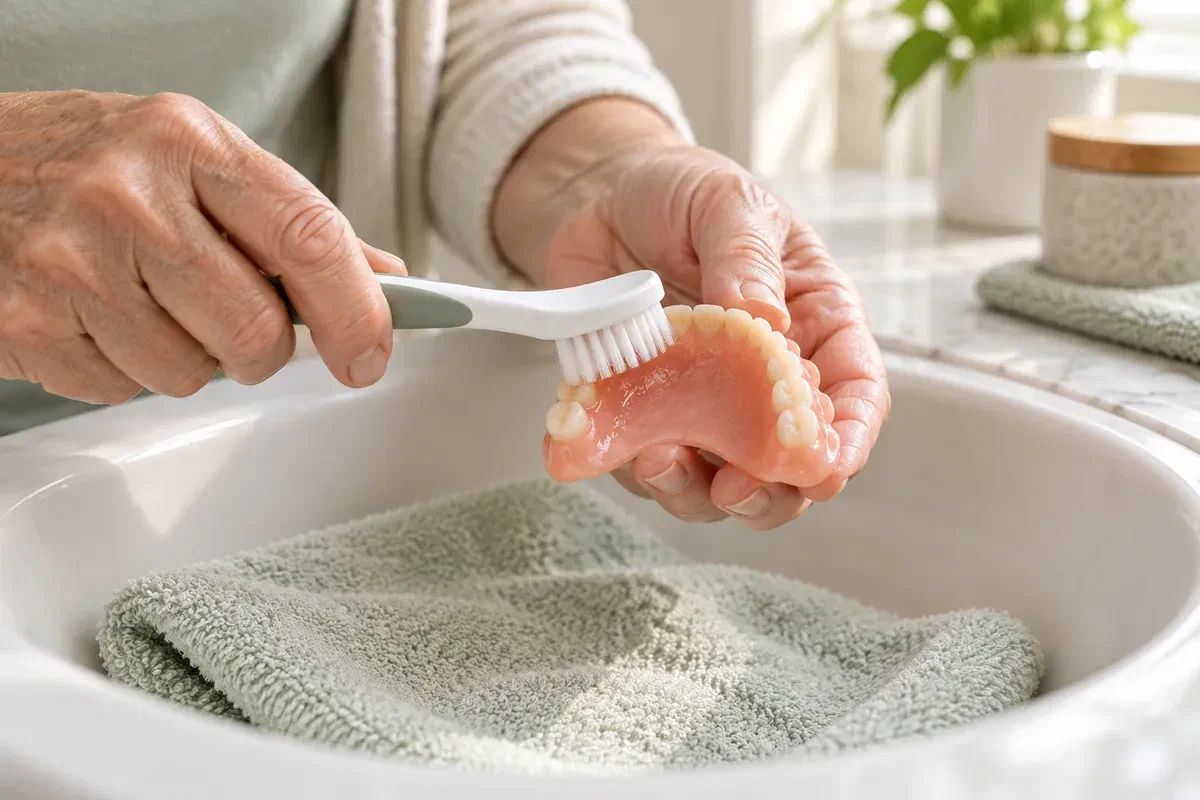
Rinsing the denture with water after tea, coffee or richly coloured meals, when it is practical, can help before film settles. Clean over a towel or a basin of water so a slip does not crack it.
Choose the brush and cleanser you were advised. Abrasive pastes, sharp tools and bleach-based household products can roughen the surface. Rinse well, as directed, before wearing it again.
The teeth you still have need fluoride toothpaste, and your gums need the gentle care you were shown. A product made for acrylic may sting or irritate soft tissue, so keep each step where it belongs.
Patient information: Mayo Clinic — denture cleaning
Whitening and stain products vary a great deal, and many were never meant for dentures. Bring the ones you have tried so we can give answers that fit your appliance.
At our Bronte Street practice, we can look at discolouration, deposits, the products you rely on and any stained spots your brush never quite gets to. Bring the denture and tell us how you clean it so we can explain what is likely to help.
If you have also noticed soreness, redness or a change in fit, say so when you book, and the visit can include a check of your mouth.
