A rim of deposit that stays put
Hardened build-up is not always safe to remove at home. Picking at it with a sharp object can mark the surface or alter areas that help the denture fit, so bring it in instead.


Cleaning someone else's denture is a different task from cleaning your own. If you help a parent or partner from Burlington, our team can show you a safe method, check stubborn build-up or stains, and explain which mouth changes to report.
Many adult children and partners end up cleaning a denture for someone whose hands or eyesight are no longer steady. It can feel awkward at first, and it is hard to know how firmly to brush or which product is safe. The answer rests on the appliance itself, since an acrylic base, a metal framework, a cushioned liner or a snap-on attachment may each need different treatment.
The person you care for also needs more than a clean appliance. Their gums, palate and any natural teeth need attention, and new odour, redness or reluctance to wear the denture can signal a fit or mouth problem that brushing will not touch.
Families in Burlington are welcome to come along to the appointment together. Bring the denture and the products used at home, and we can demonstrate a safe method, assess deposits or wear, and explain whether clinic cleaning or other care would help.
Helpers often spot a stain or smell first and feel pressure to fix it fast. Harsher products or tools can damage the appliance, so it pays to learn what it is made of and what the build-up is before trying more.
Hardened build-up is not always safe to remove at home. Picking at it with a sharp object can mark the surface or alter areas that help the denture fit, so bring it in instead.
Jot down when you noticed it and whether anything changed around then, such as a new drink, product or routine. That helps us tell whether cleaning may help or the material has altered.
Let us know how the mouth seems, not just the denture. Recurring odour, sore spots or a sudden dislike of wearing it are reasons for the clinician to examine the tissues and check how the appliance sits.
Denture cleaners are for use outside the mouth and as directed. Keep soaking solutions and tablets well away from anyone who might mistake them for a drink or mouthwash.
When the method suits the material, a helper can keep deposits under control without worrying about damage. A short, consistent routine, written down step by step from brush to soak to rinse to overnight container, is easier to pass on to other family members or care staff.
A clinic visit can also pick up when the problem is not cleanliness at all. A cracked liner, a sharp ridge or an appliance that has started to rock may need another response, and ongoing soreness should be checked rather than hidden by extra cleaning.
Patient information: American Dental Association — denture care and maintenance
Bring the cleaners you use, or photos of the labels. We can confirm which ones suit the denture and whether clasps, liners or attachments change how they are used.
The routine should be manageable for whoever is doing it, with a safe grip and a clear view of the fitting surface. Ask us to show each step and mention anything awkward.
Knowing which changes need professional attention protects the appliance and the wearer. Ask which deposits, odours, surface marks or symptoms should prompt a call to the clinic.
We link the condition of the appliance to the care it gets at home. When a new cleaner arrived shortly before the stain or soreness did, that timing is worth sharing, along with the bottle.
We ask about the denture's age, any liners or attachments, and who cleans it and how. Mention repairs and whether it has met hot water, gritty pastes or household products.
The clinician checks the denture surface and the tissues beneath it. This shows whether cleaning is the main need or whether fit, damage or a mouth condition is also involved.
If professional cleaning suits the appliance, we explain what it can reasonably do. The helper receives advice on compatible products and technique, along with limits linked to the materials.
The person doing the cleaning can try it with guidance, including the tricky areas. We confirm rinsing and storage, and agree when to return if deposits or symptoms continue.
Follow the advice for this denture and every product used with it. Clean the appliance and care for the mouth as two separate jobs. Where the denture includes metal, a cushioned liner or attachments, call before introducing anything new.
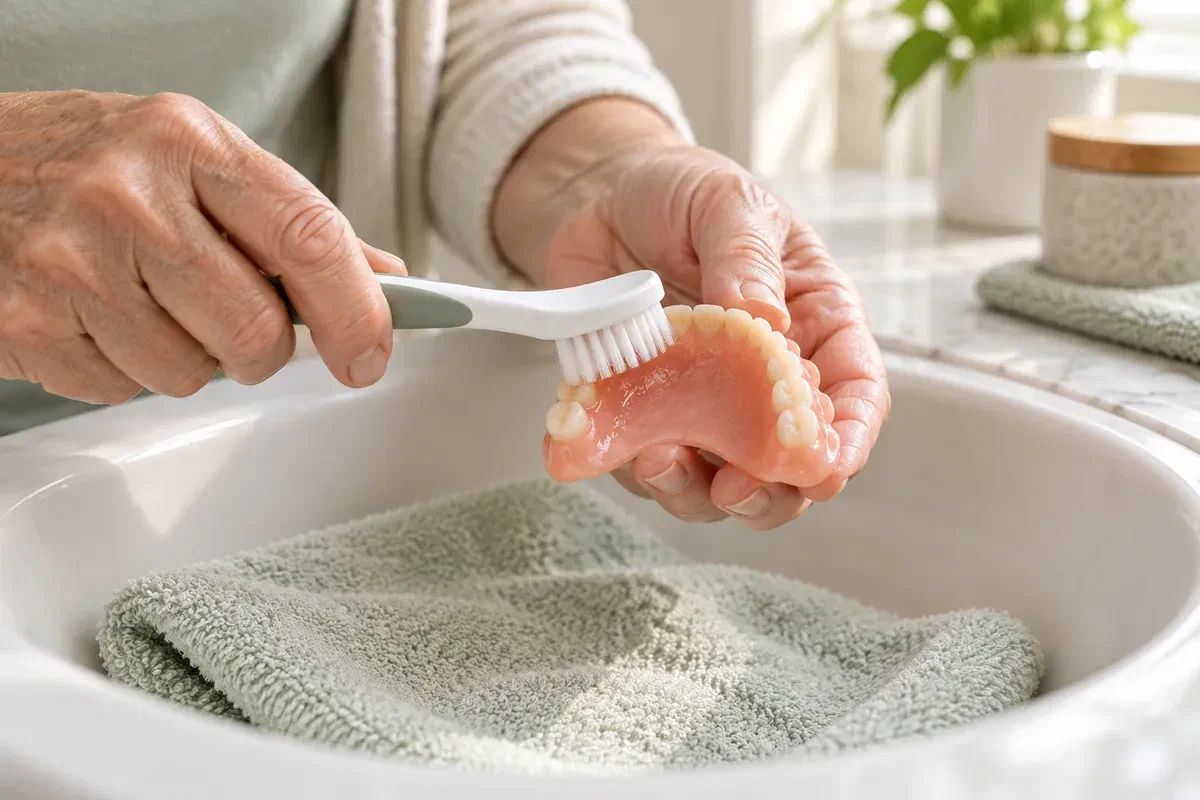
Work over a towel-lined basin or a sink with some water in it. Hold the denture firmly but without bending thin parts, and sit down to clean it if that feels steadier.
That usually means gentle bristles and a cleanser without grit. Avoid hard scrubbing, sharp instruments and household cleaners, follow the label, and rinse thoroughly before helping the wearer put it back.
Help brush any remaining teeth with fluoride toothpaste and follow guidance for the gums. Denture products may not suit those tissues, so keep each part of the routine distinct.
Patient information: Mayo Clinic — denture cleaning
Products can look similar while having different purposes and restrictions. Bring your questions and the product names you use so the advice suits the appliance.
If you are helping someone from Burlington, come to our Bronte Street clinic together. Bring the denture, the cleaners you use and a few notes on the current routine, and we will look at what is bothering you and show both of you a method that works.
Tell us when booking if the wearer has been sore, red or unhappy with the fit lately, so we leave time to examine the mouth as well as the appliance.
