Build-up you cannot reach comfortably
Hard deposits are often in the places that are awkward to hold and see. Prying at them with a sharp tool raises the chance of slipping and scratching, so let the team deal with them.


Most denture breaks happen at the sink, not at the table. For households in Campbellville, our team can help you set up a safer way to handle and clean the appliance, look at any build-up or stains, and spot signs that need a professional eye.
Wet acrylic is slippery, and a denture that hits a hard sink or tiled floor can crack or chip. Safer handling is the foundation of good cleaning, and it works together with choosing the right tools. Hard acrylic, metal clasps, cushioned liners and implant attachments all set their own rules for products and pressure.
Handling well also helps you see what you are doing. Gums, palate and any remaining natural teeth need daily care, and noticing redness, a sore spot or a lingering smell early lets you mention it before it turns into a bigger problem with the fit or the tissues.
If you are coming in from Campbellville, bring the denture with your brush and cleaners. We can watch how you hold it, suggest a steadier setup, examine any deposits or wear, and explain whether a professional clean or another kind of care would help.
After a drop, or when a denture looks tired, there is a pull to clean it extra hard. That can make small damage worse. First find out whether anything has changed and what the appliance is made of.
Hard deposits are often in the places that are awkward to hold and see. Prying at them with a sharp tool raises the chance of slipping and scratching, so let the team deal with them.
Tell us whether the change appeared after a fall, a new product or a new habit. We can judge whether it is surface staining that may clean up, damage that needs repair, or ageing of the material.
A tiny crack or rough edge after a drop can irritate the gums. Mention any tenderness, redness or smell so the clinician can examine the tissues and check the fit.
Keep denture cleansers outside the mouth and follow the directions on the label. A soaking liquid is not a rinse, and a cleaning tablet should never be placed in your mouth.
A secure, comfortable setup makes it easier to brush thoroughly and gently, which keeps deposits down without wearing the surface. The steps should be simple and the same every day: brush, soak if we advise it, rinse well and store it safely.
A visit can also catch damage you might not see at home. A hairline crack, a chipped tooth, a torn liner or a change in fit may need a repair rather than another clean, and persistent soreness should be examined directly.
Patient information: American Dental Association — denture care and maintenance
Grip strength, eyesight and steadiness all matter. We can suggest ways to hold the appliance and position yourself so cleaning feels more secure, and adjust the method if a step is difficult.
Bring what you use. We can confirm which products suit your appliance and point out any that are not right for its liner, clasps or attachments.
Not every slip causes damage, but some do. Ask which signs after a fall, such as a rough edge or a different bite, mean you should book.
Seeing how you actually clean the denture helps us suggest real improvements. If a product change came before staining or irritation, mention it and bring the product.
We ask about the denture's age, any liner or attachments, past repairs and falls, and where it sits overnight. You may be asked to show how you usually hold and brush it.
The clinician checks for deposits, chips or cracks and looks at the gums and palate. That reveals whether cleaning is the main concern or whether damage, fit or tissue health needs attention.
If professional cleaning suits the denture, we explain what it can address. You also get advice on safe handling, compatible products and any limits linked to the design.
Try the new setup and technique in the chair, including the awkward surfaces. We confirm rinsing and storage and agree when to return if deposits or symptoms continue.
Use the method advised for your denture and every product with it. Keep cleaning the appliance separate from caring for your mouth, and phone us before trying anything new if it includes clasps, a liner or an attachment.
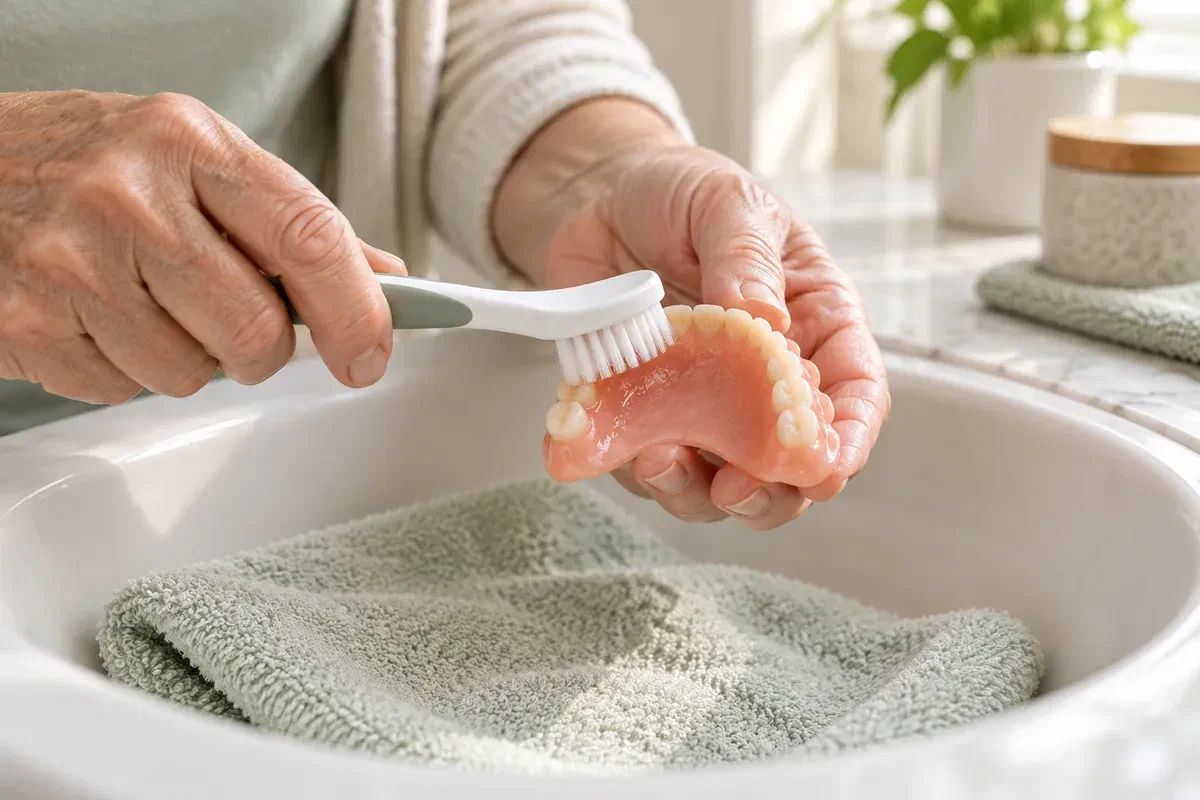
Fold a towel into the basin or run a little water into it. Sitting down while you clean, or working close to the surface, means a slip has less distance to fall.
A soft brush and a cleanser without abrasives are usually recommended. Avoid sharp tools, hard scrubbing and household cleaners, and rinse properly before wearing.
With the denture out, take a moment to look at the gums and brush any remaining teeth with fluoride toothpaste. Report sore or red areas instead of waiting for them to settle.
Patient information: Mayo Clinic — denture cleaning
Many products look similar but suit different materials. Bring your questions, your cleaners and the denture so we can give advice specific to it.
At our Bronte Street practice, we can look at your handling, build-up, staining and product choices, along with the corners your brush tends to miss. Pack the appliance and your cleaning tools so we can assess the concern and suggest a steadier routine.
If the denture has been dropped, rubs, or fits differently, mention it when booking so the clinician can check it and your mouth together.
