Residue in the hard-to-reach places
Film and hardened deposits often hide on the inner surface and in crevices. Digging at them with something pointed can scratch the acrylic and give bacteria more places to settle, so have them looked at.


A denture that still smells after a thorough clean is telling you something. Our team can help you find the source, whether it is the routine, storage, the appliance or your mouth, and suggest care that suits the materials, for visitors from across Halton Hills.
Odour is one of the most common reasons people start doubting their routine. Film can hide on the fitting side, in tiny scratches or around clasps, and an overnight soak may not reach it on its own. The right fix depends on the appliance, since acrylic, metal, soft liners and attachments each tolerate a different range of products.
Sometimes the denture is not the source at all. Gums, tongue, palate and any natural teeth can all contribute, and a smell that travels with soreness, dryness or a change in fit points toward the mouth or the way the denture sits.
Coming from Georgetown, Acton, Glen Williams or elsewhere in Halton Hills, bring the denture, its case and your cleaning products. We can examine the surface and your mouth, work out where the odour is likely starting, and suggest a routine change, a professional clean or other care.
The natural response to a persistent smell is a stronger soak or a longer one. That rarely solves it and can harm some materials. Look for the pattern first: when it happens, where it seems to come from and what else is going on.
Film and hardened deposits often hide on the inner surface and in crevices. Digging at them with something pointed can scratch the acrylic and give bacteria more places to settle, so have them looked at.
Staining and odour often turn up together. Tell us when both began and whether a new product, drink or habit came first, so we can tell whether cleaning is likely to help or the surface has changed.
Describe how your mouth feels day to day. Recurring soreness, redness or dryness alongside odour may need an examination and a look at how long the denture is worn and how it fits.
Denture soaks and tablets are made for the appliance, not your mouth. Use them outside the mouth as directed, and never gargle with the solution.
Once the source is clear, a gentle method can keep film from building up again without wearing down the surface. The routine needs to be realistic: a daily brush, any soak we suggest, a thorough rinse and a clean, appropriate place to store the denture.
The visit can also uncover reasons a smell persists that cleaning cannot touch. A liner that has started to break down, a porous or rough area, or an appliance that traps food because it has loosened may need a different response, and tissue problems deserve their own attention.
Patient information: American Dental Association — denture care and maintenance
Bring the cleaners and soaks you have tried. Some may be fine, some may not suit your liner or metal, and a few may be adding to irritation without helping the smell.
Many odour problems trace back to one missed surface. Ask us to show you how to angle the brush, and say if your grip or eyesight makes part of it difficult.
Some smells respond to a better routine and some signal a problem. Ask which patterns, such as odour with soreness or with a looser fit, should bring you back in.
We compare what is on the denture with how it is cleaned, worn and stored. If the smell started after a change in products or habits, bring the products or a note of what changed.
When does the odour appear, and how old is the appliance? We ask about liners or attachments, your daily method, the case and the solution it sits in. Mention past repairs and any use of heat or household cleaners.
The clinician looks closely at the surface, crevices and fitting side, then at the gums and palate. The aim is to see whether residue explains it or whether fit, damage or a tissue issue is contributing.
If a professional clean is suitable, we outline what it can remove and what it cannot. You also get advice on compatible products and on storing the denture in a way that discourages odour.
Try the method with guidance, including the hidden surfaces. Confirm rinsing and storage steps, and agree on when to return if the smell or any symptoms persist.
Use the method advised for your appliance and each product with it. Treat the appliance and your mouth as two jobs, and check with us before switching cleaners on a denture that has a framework, cushion lining or snaps.
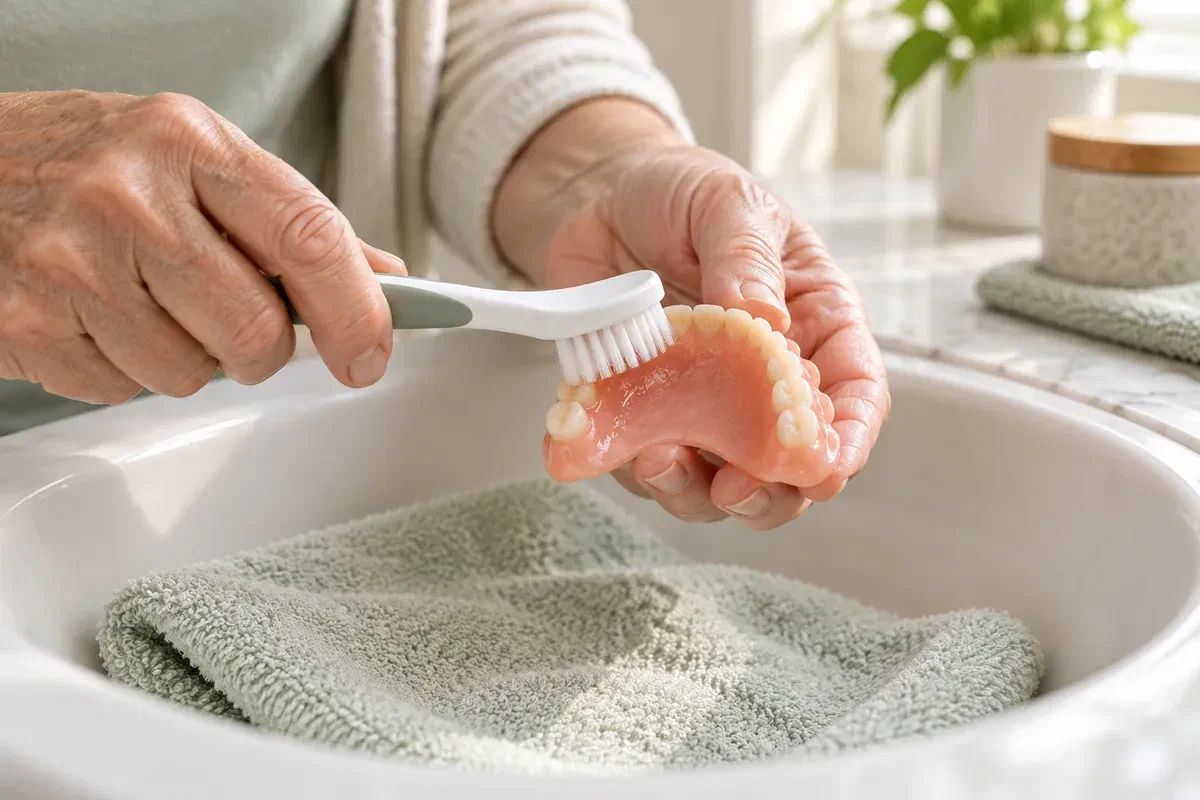
A case that is not cleaned and dried can harbour residue. Ask how to clean it and how often to change any soaking solution, and handle the denture over a towel or basin of water in case it slips.
A soft brush and a gentle, non-gritty cleanser usually work best. Avoid scrubbing hard, scraping with sharp tools or using household cleaners, and rinse thoroughly before wearing the denture.
Gentle cleaning of the tongue and gums, and fluoride toothpaste on any natural teeth, can make a real difference to freshness. Keep denture products for the denture only.
Patient information: Mayo Clinic — denture cleaning
Odour can come from several sources at once. These answers cover the questions we hear most, and your own appliance may need more specific advice.
Visit our Bronte Street practice to talk through odour, deposits, staining, your products and the surfaces that are hard to reach. Bring the appliance, its storage case and a description of your routine, and we will look for the source and recommend a suitable approach.
If the smell comes with soreness, redness or a change in fit, mention it when booking so your mouth can be assessed at the same appointment.
