Build-up that brushing will not shift
Hardened deposits are not always safe to tackle at home. Scraping with a knife edge or pin can roughen the surface or nick an area that matters for fit, so let the team take a look first.


Start a denture routine that fits the appliance you actually wear. Talk through film, stains, smell and product choices with our team in Milton, and find out which changes call for a closer look at the denture or your mouth.
The first time you take a denture out and notice a soft film on the side that rests against your gums, it is natural to wonder how hard to scrub. The answer depends on what the appliance is made of. Acrylic bases, metal clasps, soft liners and attachments each have their own limits for products and handling.
Cleaning the appliance well does not finish the job. Your gums, palate and any natural teeth underneath need care too, and a sore patch or lingering smell can come from the mouth, the fit or the routine, not only from what is left on the denture.
Here in Milton, you can bring the denture in with the brush and cleanser you use now. We look at the surface, talk through what is working and what is not, and explain whether professional cleaning, a change in method, or a different kind of care makes sense.
When a denture starts to look dull or smell stale, it is tempting to scrub harder or switch to a harsher cleaner. That can scratch or weaken the appliance, so it helps to know the material and what the build-up actually is first.
Hardened deposits are not always safe to tackle at home. Scraping with a knife edge or pin can roughen the surface or nick an area that matters for fit, so let the team take a look first.
Think back to when you first noticed the change and whether a new drink, product or habit came before it. We can then judge whether cleaning may lift it or whether the material has altered.
Mention how your mouth feels, not only how the denture looks. Repeated odour, redness or tenderness may call for an exam and a review of fit and wearing habits before any stronger cleanser is added.
Use denture cleansers outside the mouth and as their labels direct. A soaking solution is not a mouthwash, and a cleaning tablet should never go in your mouth.
A routine that suits the material can keep deposits under control without wearing down the surface. What matters most is something you can repeat each day, with clear steps for brushing, any soak that has been recommended, rinsing and where the denture rests overnight.
A visit can also show when the problem is more than a dirty appliance. A worn liner, a rough edge or a denture that no longer fits may need its own solution, and ongoing soreness should be examined instead of being masked by more cleaning.
Patient information: American Dental Association — denture care and maintenance
Bring the packaging or write down the names of what you use. We can tell you whether each product suits your appliance and whether clasps or liners change the directions.
Your routine should work with your grip, your eyesight and how easily you can reach the fitting side. A short demonstration helps, and if a step feels awkward, say so and we can suggest another way.
Understanding which signs mean it is time to stop scrubbing protects the appliance. Ask which kinds of build-up, smell, surface change or discomfort should be seen instead of treated with another product.
We link what we see on the denture with the way you look after it. If staining or irritation started after a switch in products, bring those products or a list of them.
Tell us how old the appliance is, whether it has liners or attachments, and how you clean and store it. Note any past repairs and any contact with hot water, abrasives or household cleaners.
The clinician checks the denture and the tissues it rests on. That shows whether cleaning is the main issue or whether fit, damage or a condition in the mouth also needs care.
Where professional cleaning is suitable, you hear what it can realistically achieve. You also get advice on products and technique that suit the material, along with any limits the design imposes.
Practise holding and brushing the denture safely, including the hard-to-reach spots. Confirm how to rinse and store it, and decide together when to come back if build-up or symptoms carry on.
Follow the advice given for your appliance and for each product you use with it. Treat denture cleaning and mouth care as separate tasks, and check with us before changing products if there is metal, a soft liner or an attachment.
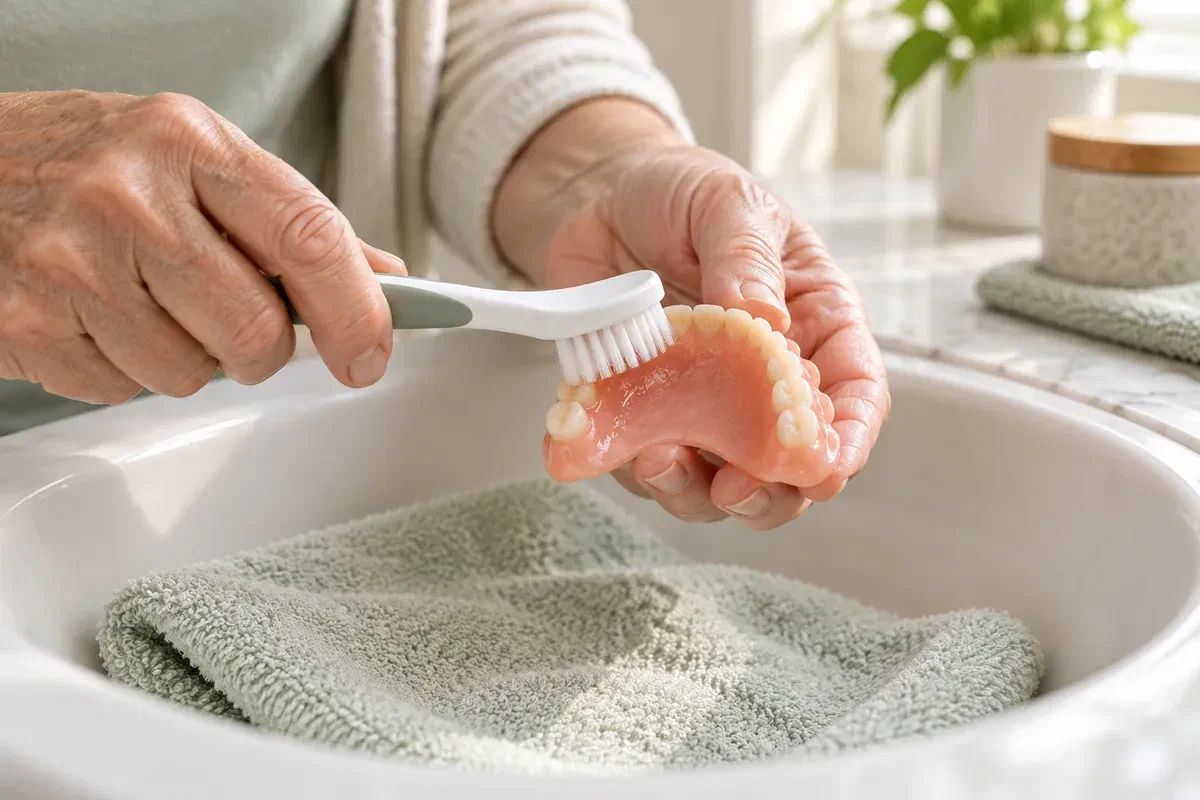
Lining the sink with a towel, or filling it with a little water, makes a slip less likely to end in a crack. Hold the denture firmly but do not flex thin parts, and ask for help if gripping it is hard.
A soft brush and a non-abrasive cleaner are usually suggested. Skip hard scrubbing, pointed tools and household products. Follow the label and rinse well before the denture goes back in.
Brush any natural teeth with fluoride toothpaste and follow the advice you were given for your gums. A denture product may not suit those tissues, so be clear about which method goes where.
Patient information: Mayo Clinic — denture cleaning
Many products look alike but have different purposes and restrictions. Write down your questions and the names of the products you own, so the answers fit your appliance.
Come to our Bronte Street practice to talk about build-up, staining, products or the parts that are hard to clean. Bring the appliance and a description of your routine so we can assess the concern and suggest a sensible approach.
Let us know about ongoing soreness, redness or a change in how the denture fits when you book, so your mouth can be checked at the same appointment.
