Hard residue under the clasp arms
Deposits often collect in tight curves that a brush barely reaches. Poking at them with a pin risks scratching the metal or bending a clasp out of shape, which can change how the partial grips.


A partial denture with metal clasps sits against natural teeth, so it needs a slightly different kind of care. Coming from Mississauga, you can review your method with us, have stubborn build-up checked, and learn which signs mean the teeth or gums need attention.
Your partial hooks onto the teeth you still have, and food tends to collect where the clasps rest. Cleaning it well means reaching under those arms without bending them, and choosing a product that will not tarnish or weaken the metal. A full acrylic plate, a soft liner or an implant attachment would each change that advice again.
Because the appliance leans on natural teeth, those teeth carry extra responsibility. They need thorough brushing with fluoride toothpaste, and the gum around them deserves attention. A lingering odour or a tender spot may trace back to them rather than to the plastic or metal.
When you visit from Mississauga, bring the partial along with the brush and cleanser you use. We can examine deposits around the clasps, check the teeth it relies on, and explain whether clinic cleaning, a change of routine or a different kind of care makes sense.
It can be tempting to scrub the framework hard or soak it in something strong when it looks dull. Metal and acrylic react differently to products, so knowing what you are cleaning, and what the build-up is, comes first.
Deposits often collect in tight curves that a brush barely reaches. Poking at them with a pin risks scratching the metal or bending a clasp out of shape, which can change how the partial grips.
Note when the colour changed and whether you had just started a new soak or habit. Some cleansers are not meant for metal, and the team can judge whether cleaning will help or the material has been affected.
Tenderness, redness or odour around the supporting teeth may point to a gum, tooth or fit issue. Mention it so the clinician can examine the area instead of you adding a stronger product.
Use denture cleansers outside your mouth and only as the label directs. A soaking liquid is not a rinse, and tablets should never be placed in the mouth.
When the method suits both the metal and the acrylic, deposits stay manageable without wearing away either material. A routine you can actually keep up, covering brushing, any recommended soak, rinsing and where the partial sits overnight, matters more than any single product.
A professional look can also catch problems that cleaning would only hide. A loosened clasp, a rough patch or a framework that no longer seats evenly may need adjustment or repair, and gum or tooth symptoms nearby should be examined on their own terms.
Patient information: American Dental Association — denture care and maintenance
Bring the product names or packaging. The clinician can confirm whether each one is suitable for a framework with clasps, and whether a liner or attachment adds restrictions.
Getting under the arms without bending them takes a particular grip. Ask to see it done, and mention if your hands or eyesight make that step tricky so we can suggest another approach.
Some changes need a professional rather than another attempt at home. Ask which kinds of deposit, discolouration, looseness or soreness should bring you back in.
The aim is to connect what we see on the appliance with how you care for it and the teeth around it. If something changed after you switched products, bring those products or their names.
Share how old it is, what it is made of as far as you know, and what your evening routine with it looks like. Mention repairs, adjustments to the clasps, and any exposure to heat or harsh cleaners.
The clinician checks the framework, the acrylic and the teeth and gums it touches. Sometimes the deposits are the whole story; other times a worn clasp seat or a gum problem is part of it.
If a professional clean suits the partial, you hear what it can and cannot remove. You also get advice on products and technique that are safe for the metal and acrylic.
Try holding and brushing the partial with guidance, especially under the clasp arms. Confirm rinsing and storage, and agree when to return if build-up or tenderness continues.
Use the method advised for your appliance and every product with it. Treat the partial and your natural teeth as separate tasks, and ask before trying a new cleaner on a metal framework, liner or attachment.
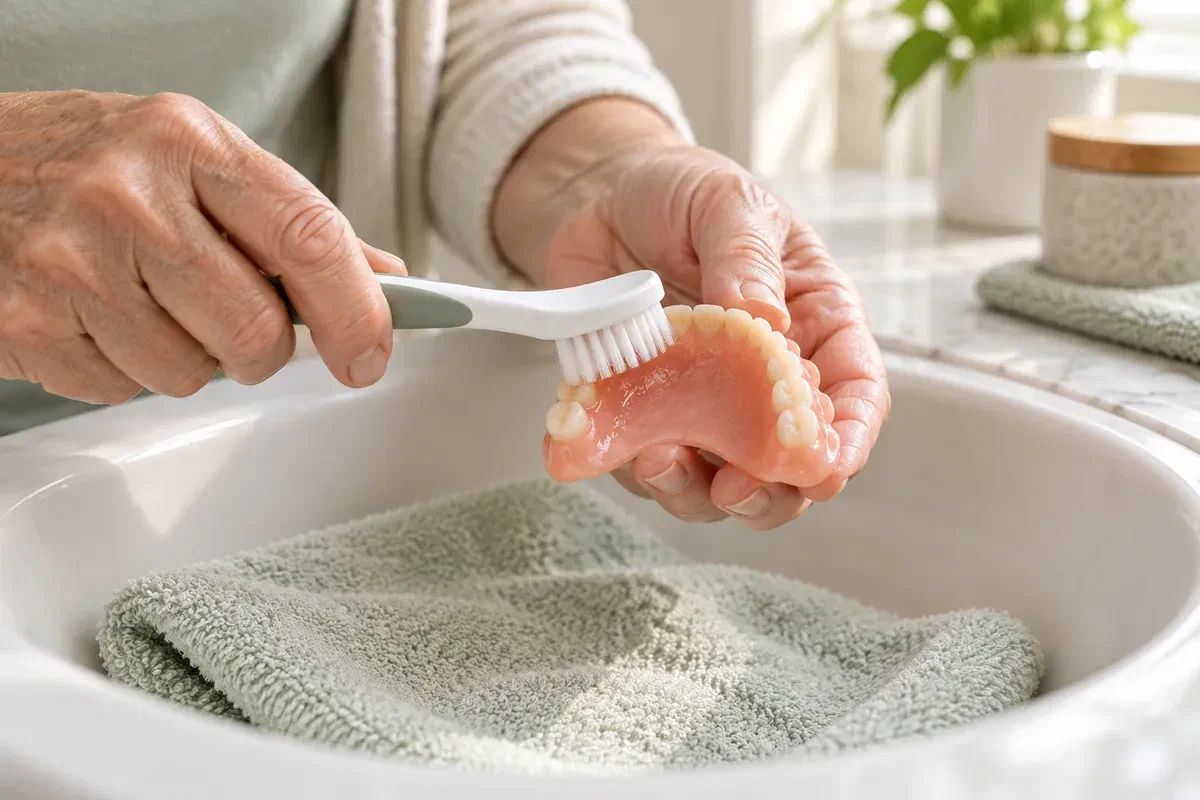
Gripping the acrylic rather than the metal arms reduces the chance of bending them. Clean over a basin with a towel or some water in it in case it slips, and ask for help if handling is difficult.
A soft brush and a product without grit are generally advised. Steer clear of hard scrubbing, sharp tools and anything from the household cupboard. Rinse as directed before putting it back.
The teeth the clasps rest on need thorough cleaning with fluoride toothpaste, along with the gum around them. Denture products are not for those teeth, so keep the two routines distinct.
Patient information: Mayo Clinic — denture cleaning
Products that look alike can behave differently on metal and acrylic. A photo of each label, or the boxes themselves, lets us answer for your partial rather than in general.
At our Bronte Street clinic we can talk through build-up around the clasps, staining, product choices and the spots that are awkward to reach. Bring the appliance and describe your routine so we can examine it properly and recommend a practical method.
Mention any soreness, gum redness, a loose clasp or a change in fit when booking, so time can be set aside to check your mouth as well.
