Residue the brush leaves behind
Some hardened deposits do not come away safely with home tools. Using a sharp edge can scratch the surface or alter areas that help the denture seat, so bring it in for a look.


Tablets, foams, pastes and soaks all promise a cleaner denture, but not all of them suit every appliance. Coming from Oakville, you can sort through the options with our team and learn when a deposit, stain or smell needs more than a product.
The shelf of denture products can be confusing. Effervescent tablets, creams, foams and overnight soaks sit side by side, and the packaging rarely tells you whether they suit a soft liner, a metal framework or an implant attachment. Those details matter, because each part of an appliance tolerates different chemicals and handling.
Even the best product only cleans the denture. Your gums and any natural teeth still need daily care, and when a smell lingers or an area stays tender, the explanation may be in the mouth or the fit rather than on the surface.
For anyone driving in from Oakville, it helps to bring everything at once: the denture, the brush and each product you have tried. We can sort out which choices suit the material, examine stubborn build-up, and tell you whether professional cleaning or something else is the better step.
When the denture looks stained or does not feel fresh, buying a stronger cleanser is an easy reaction. Some are too harsh for certain materials. It is worth confirming what the appliance is made of and what the residue is before you change anything.
Some hardened deposits do not come away safely with home tools. Using a sharp edge can scratch the surface or alter areas that help the denture seat, so bring it in for a look.
Note roughly when the colour shifted and whether a new cleaner, drink or routine started around then. That helps us judge whether cleaning may help or whether the material has changed.
Tell us how the gums and palate feel, too. Recurring odour, redness or soreness may need an exam and a check of fit and wearing habits, not another bottle from the shelf.
Denture cleansers are designed for use outside the mouth and according to the label. Do not swish with a soaking solution, and keep cleaning tablets out of your mouth.
Once the product suits the material, it becomes easier to control deposits without dulling or scratching the appliance. What helps most is a short, repeatable routine with clear guidance on brushing, any soak, rinsing and overnight storage.
A professional look can also flag problems that no product will solve. A liner that is breaking down, a rough area or a denture that has lost its fit may need a different solution, and recurring soreness deserves an examination of its own.
Patient information: American Dental Association — denture care and maintenance
Bring the actual packaging if you can. The clinician can say which products suit the denture and whether clasps, liners or attachments change the directions on the box.
The steps should suit your grip, your vision and your ability to reach the inner surface. Ask for a demonstration, and point out anything awkward so another approach can be found.
Recognising when to stop experimenting protects the appliance. Ask which deposits, smells, surface changes or symptoms should be checked in person instead of treated with something new.
We connect the condition of the denture with the products and habits you use. If staining or irritation began after you changed cleaners, the packaging is especially useful.
Tell us the denture's age, whether it has liners or attachments, and which of your products you reach for most. Mention any repairs and whether it has been exposed to heat, gritty pastes or household products.
The clinician looks at the appliance and the areas of your mouth it covers. This shows whether cleaning is the main concern or whether fit, damage or a tissue issue is also involved.
If professional cleaning suits the denture, we explain what it can reasonably remove. You leave with advice on compatible products and technique, along with any restrictions tied to the materials.
Try holding and brushing the denture with guidance, including the tight spots. Confirm how to rinse and store it, and agree on when to come back if deposits or discomfort persist.
Use each product exactly as directed and as advised for your appliance. Keep denture cleaning separate from caring for your mouth, and ask first before trying a new cleaner if there is metal, a soft liner or an attachment.
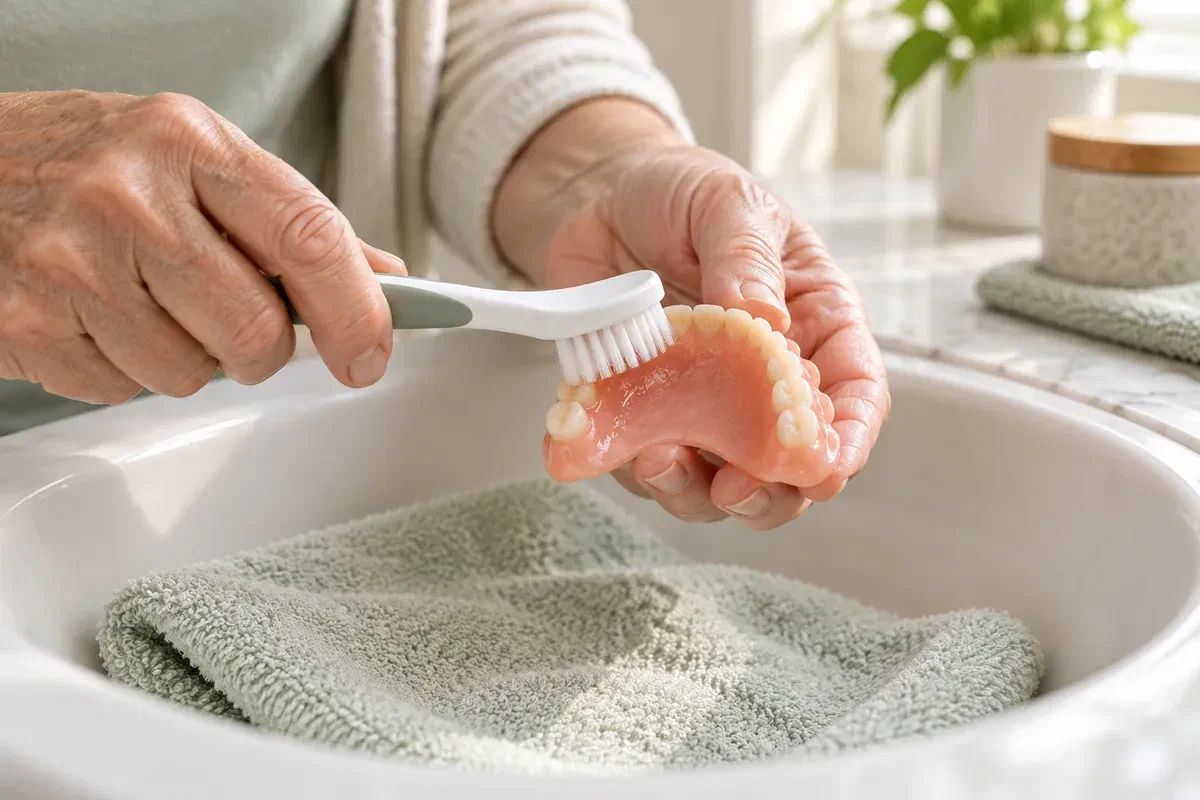
A towel in the basin or a little water in the sink cushions the denture if it slips. Keep a firm hold without bending thin areas, and ask for help if handling it is getting harder.
Non-abrasive products and soft bristles are usually what is advised. Avoid scouring, sharp instruments and household cleaners. Rinse well, as the directions say, before the denture goes back in.
Use fluoride toothpaste on any natural teeth and follow guidance for your gums. Products for the denture may not suit those tissues, so be clear about which product goes where.
Patient information: Mayo Clinic — denture cleaning
Similar-looking products can have very different uses and limits. Bring your questions and the names of what you have at home so the advice is specific to your appliance.
Bring the denture and the products you use to our Bronte Street clinic, and we can talk through build-up, staining, product choices and hard-to-clean areas. Knowing your routine lets us assess the concern and suggest a suitable approach.
If soreness, redness or a change in the denture's fit has come along with the cleaning concern, mention it when you book so the mouth can be assessed too.
