A crust along the edges or teeth
Hard build-up can be tricky to remove safely on your own. Rather than working at it with a blade or pick, which may gouge the surface or change how it seats, have it assessed.


A cleaning habit that has served you for years may not suit the denture you wear today. Close to Old Milton, our team can review your products, any stubborn deposits or stains, and the signs that point to a fit or mouth concern.
Plenty of people have cleaned a denture the same way for decades, sometimes with a method passed on by a parent or picked up from an earlier appliance. Over that time materials and designs have changed. A newer denture may have a soft liner, metal parts or attachments that do not respond to products and handling the way older acrylic did.
The appliance is also only half the picture. Gums, palate and any remaining teeth need their own care, and if a smell keeps coming back or a spot stays tender, the cause could lie in the fit or the tissues rather than on the denture's surface.
From Old Milton, our Bronte Street practice is close by. Bring the denture and describe exactly how you clean it, including anything you soak it in. We can suggest adjustments, look at deposits or surface wear, and say whether clinic cleaning or another kind of care would help.
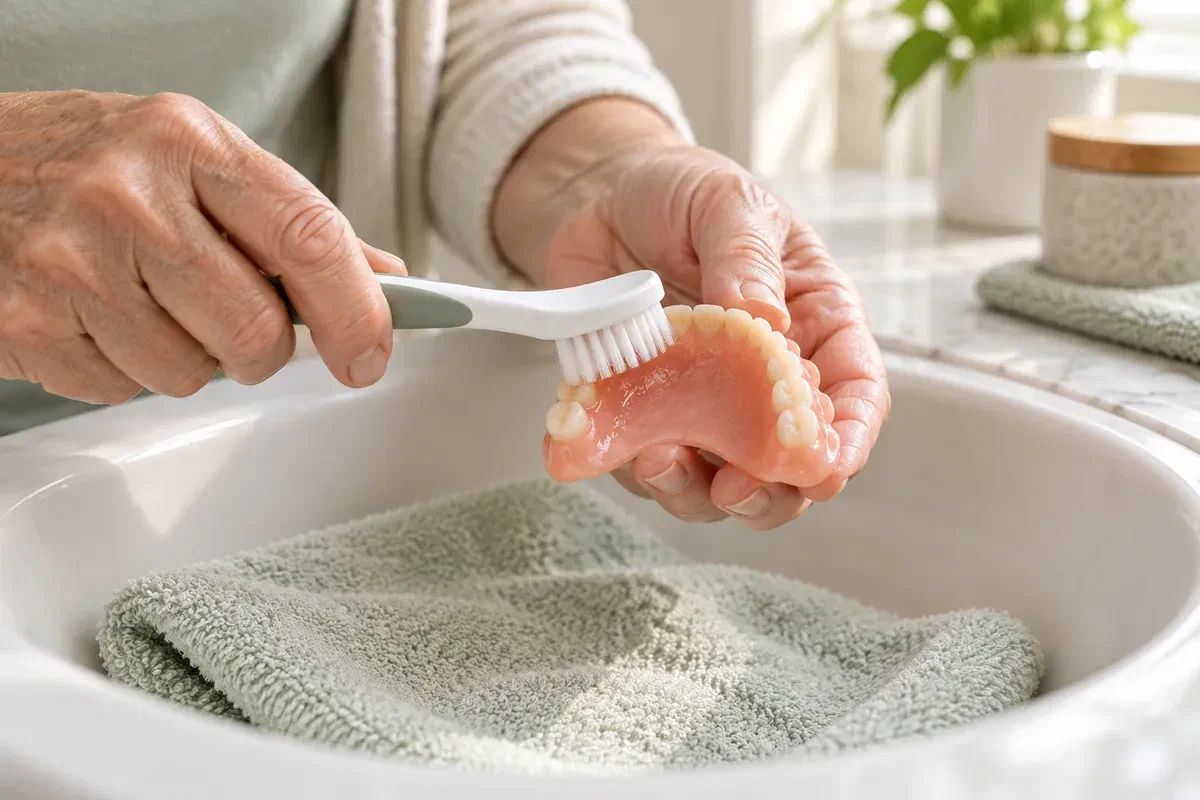
If the denture no longer looks or feels as fresh as it used to, the urge is often to soak it longer or brush harder. Both can wear the material. Start by finding out what the appliance is made of and what kind of build-up you are seeing.
Hard build-up can be tricky to remove safely on your own. Rather than working at it with a blade or pick, which may gouge the surface or change how it seats, have it assessed.
Try to recall when the change began and whether it followed a new soak, drink or habit. That helps the team decide whether cleaning could help or whether the material has aged.
Describe how your mouth has felt as well. Odour, redness or soreness that keeps coming back may need an examination and a look at fit and wearing habits, not a harsher cleaner.
Cleansers made for dentures are meant to be used as directed and outside the mouth. Never rinse with a soaking solution or put a tablet in your mouth.
Updating the method to suit today's appliance helps control deposits without wearing the surface down. The aim is a set of steps you will keep doing, with clear direction on brushing, any soak, rinsing and storage.
An assessment can also reveal when the issue goes beyond cleanliness. A liner that has broken down, a rough patch or a denture that has loosened over the years may need a different response, and lingering mouth symptoms should be looked at directly.
Patient information: American Dental Association — denture care and maintenance
Bring along the boxes or bottles you use. The clinician can say whether they suit the material and whether clasps, liners or attachments change how they should be used.
A good routine allows for grip strength, eyesight and how well you can reach the inner surface. Ask to be shown each step, and mention anything that has become harder so we can find an alternative.
Knowing which changes need professional attention helps the appliance last. Ask which kinds of deposit, odour, wear or discomfort to bring in rather than tackle with yet another product.
We compare the state of the appliance with the habits behind it. If you changed products recently and the staining or irritation followed, bring those products or their names.
Explain how long you have had it, whether it has a liner or attachments, and how you clean and store it. Mention earlier repairs and whether it has met hot water, gritty pastes or household cleaners.
The clinician examines the appliance and the parts of your mouth it touches. That helps show whether cleaning is the main need or whether fit, wear or a tissue problem also needs attention.
If professional cleaning suits the appliance, you will hear what it can and cannot do. You also get guidance on compatible products and technique, plus any limits linked to the design.
Ask to try holding and cleaning the denture with guidance, including the awkward areas. Make sure the rinsing and storage steps are clear, and agree when to come back if problems continue.
Use the instructions given for your denture and each product. Keep cleaning the appliance apart from caring for your mouth, and check before switching products if it has metal parts, a soft liner or attachments.
Cleaning over a folded towel or a partly filled basin can save the denture if it slips from your fingers. Hold it firmly without squeezing thin sections, and ask for help if handling it has become difficult.
Usually that means gentle bristles and a cleanser with no grit in it. Avoid hard scrubbing, sharp tools and anything from the cleaning cupboard. Follow the label and rinse thoroughly before wearing it again.
Fluoride toothpaste is still the right choice for whatever natural teeth remain, and your gums and palate deserve a soft clean too. The denture product may not belong in your mouth, so be sure which method is for which.
Patient information: Mayo Clinic — denture cleaning
Products on the shelf may look the same as years ago but differ in use and restrictions. Bring your questions and the names of what you use so the answers fit your appliance.
Our Bronte Street clinic is close by if you live in or around Old Milton. Bring the appliance and tell us about deposits, colour changes, the products you use and any spots that are hard to clean, and we will assess the concern and suggest a suitable way forward.
If you have ongoing soreness, redness or the denture fits differently, say so when you book so the mouth can be examined during the same visit.
