Film that survives the overnight soak
Soaking alone may leave deposits behind, and some harden over time. Scraping them with a sharp object can mark the surface or change areas that help the denture fit, so have them assessed.


Where your denture spends the night matters as much as how you brush it. If you are travelling in from Puslinch, our team can review your evening routine and storage, check for build-up or stains, and point out the signs that need a closer look.
Evening is when most wearers give the denture its main clean, and it is also when habits get rushed. Do you soak it, leave it in water, or wrap it in a tissue on the nightstand? The right answer depends on its make-up. Acrylic can dry and warp, metal can react to some solutions, and liners or attachments may carry their own instructions.
Night-time is also a chance for your mouth to recover. Many people are advised to give the gums a rest from the appliance, and the gums, palate and any natural teeth still need gentle cleaning before bed. A smell or sore patch that keeps returning may point to the fit or the tissues.
Families in Puslinch often group appointments to make the trip worthwhile. Bring the denture, its case and your products, and we can review your evening routine, look for deposits or wear, and tell you if a professional clean or other treatment is worth arranging.
When a denture comes out of its overnight container looking dull or smelling stale, the temptation is a stronger tablet or a longer soak. That may not suit the material. Work out what the appliance is made of and what the residue is first.
Soaking alone may leave deposits behind, and some harden over time. Scraping them with a sharp object can mark the surface or change areas that help the denture fit, so have them assessed.
If the appliance looks different since you changed tablets or soaks, tell us when it started. We can judge whether the change may clean up or whether the material has been affected.
Tender gums or a stale smell when you wake up may relate to wear time, storage or fit. Mention them so the clinician can examine your mouth rather than you reaching for something stronger.
Overnight soaking products are for the appliance alone. Use them outside your mouth as the label directs, and never sip or swish the solution.
A clear evening sequence, brush first, soak if advised, rinse in the morning, keeps deposits down without stressing the material. It only works if it is easy enough to do every night, even when you are tired.
A review may also show that storage or wear time is part of the problem. A base that has dried and distorted, a damaged liner or a loosened fit may need another response, and ongoing tissue soreness should be examined in its own right.
Patient information: American Dental Association — denture care and maintenance
Bring the tablets or solutions you use at night. We can confirm which ones suit the appliance and whether any metal, liner or attachment rules some out.
The routine should work with tired hands and dim bathroom light. Ask us to demonstrate, and tell us which steps tend to get skipped so we can simplify them.
Some problems need professional care. Ask which kinds of morning odour, soreness, deposit or surface change mean it is time to book.
We link the condition of the denture to your daily and overnight habits. If a change in soak or storage came before staining or irritation, bring the product or a note of it.
When do you take the denture out, how do you clean it, and what does it sit in overnight? Mention its age, any liners or attachments, earlier repairs and any contact with heat or household cleaners.
The clinician checks the denture surface and the gums and palate it covers, to see whether cleaning is the central issue or whether fit, damage or a tissue concern also needs care.
When a clinic clean makes sense for this appliance, you hear beforehand how much it is likely to remove. You also get advice on compatible soaks, storage containers and technique, with any limits clearly stated.
Try the brushing and rinsing steps with guidance. Confirm the overnight storage method, and decide when to return if deposits, odour or soreness persist.
Follow the guidance for your appliance and the directions on each product. Keep mouth care separate, and ask before trying a new overnight soak if the denture contains clasps, a liner or an attachment.
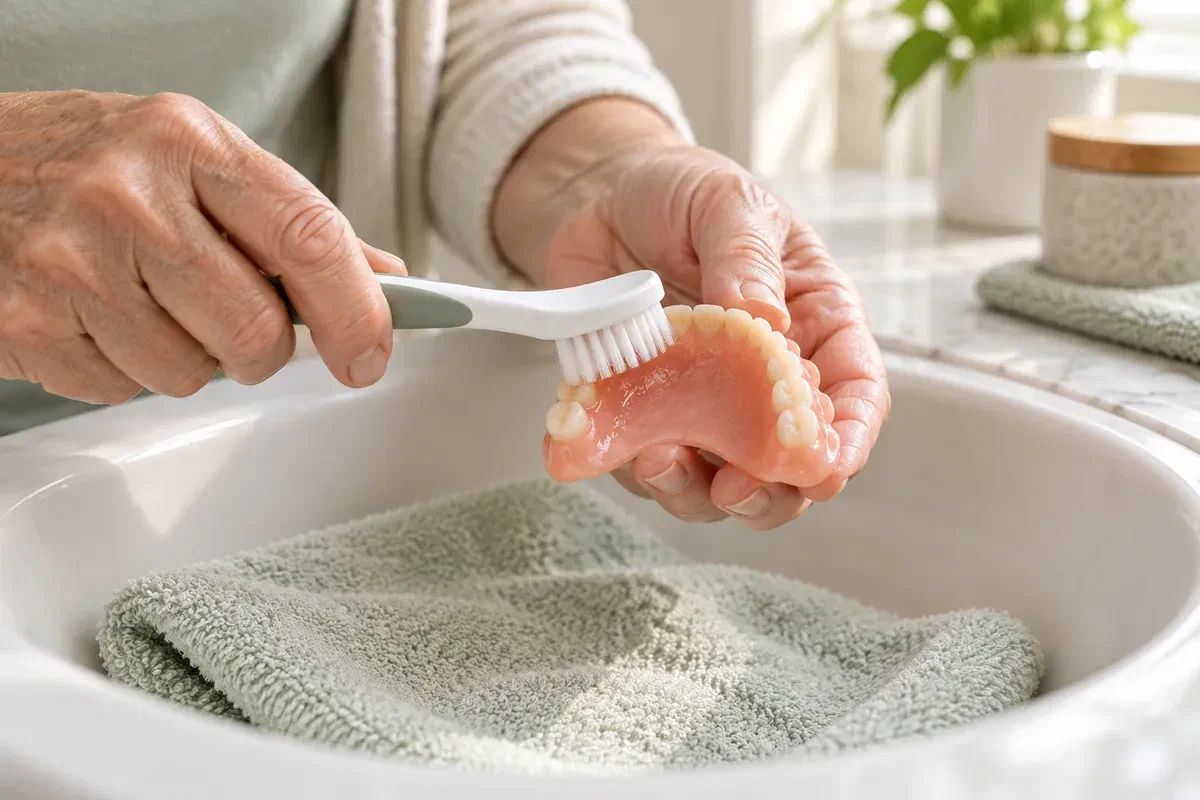
Clean the denture before it goes into its container, working over a towel or a little water so a slip is less likely to crack it. Hold it securely without bending thin parts.
Many dentures should be kept moist when out of the mouth, but follow the advice for your material. Use the product and container you were shown, keep it out of reach of children and pets, and rinse before wearing.
Your own teeth get fluoride toothpaste at bedtime, and your gums and palate get the soft brushing or wiping you were shown. Denture soaks and cleansers stay in the bathroom cup, away from those tissues.
Patient information: Mayo Clinic — denture cleaning
Overnight products and storage advice vary between appliances. Bring your questions and the products you use so the answers fit your denture.
At our Bronte Street clinic, we can review your evening routine, build-up, staining, products and any spots your brush struggles with. Bring the appliance, its container and a rough outline of your nightly routine, and we will work out together what to keep and what to change.
If you wake with soreness or the denture fits differently, mention it when booking so your mouth can be examined at the same appointment.
