Teeth already missing in places
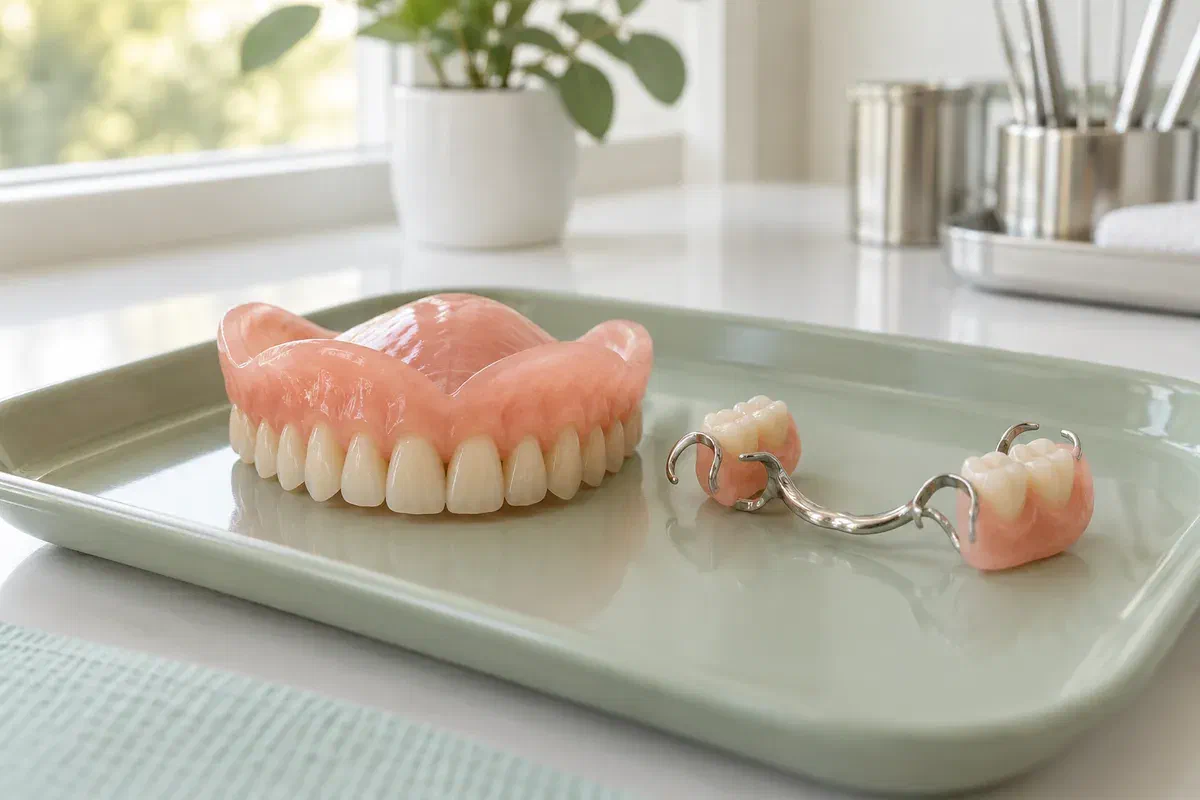
Existing gaps, and the health of teeth beside them, influence whether a partial is planned now or a fuller replacement later. Ask what support each design would need and how the remaining teeth would be looked after.


Told that some teeth may need to come out? A denture consultation for people in Burlington maps the transition: what could be saved, how replacement would be timed, and what the healing months tend to involve.
Hearing that teeth may need removal tends to bring one worry above the rest: will I be left without teeth? A denture consultation is the place to ask it. The answer depends on which teeth are involved, how the work is sequenced and whether an immediate appliance makes sense.
The dentist will confirm which teeth are truly beyond saving and which could be treated and kept. Keeping even a few sound teeth can change the type of denture recommended, so that assessment comes before any replacement design is discussed.
For many people in Burlington, the main concern is everyday life during the change: work, meals and being seen. Tell us what matters most in those weeks. We can explain what is realistic, where compromises might be needed and how often you would be checked as things heal.
Share what brought you in and what you are most uneasy about. That lets the examination focus on the decisions you actually face.
Existing gaps, and the health of teeth beside them, influence whether a partial is planned now or a fuller replacement later. Ask what support each design would need and how the remaining teeth would be looked after.
If you already wear a partial, extractions may mean it can be added to, relined or must be remade. Bring it with you and explain how it has been working so the options can be weighed sensibly.
Ask why each tooth has been flagged, which could be retained and what the order of treatment would be. Discuss whether an immediate denture is suitable, what temporary changes to expect and the review visits during healing.
Pain that keeps you awake, facial swelling, a sore that will not close or a broken appliance should be mentioned when you call. Those may need care before planning continues.
Gums and bone reshape after teeth are removed, which is why the first denture placed at that stage often needs adjustments or a reline later. Hearing this at the consultation helps you plan for follow-up rather than being caught off guard.
A firm plan may depend on X-rays, impressions, treatment of nearby teeth or a referral for complex extractions. Ask what remains uncertain and what the next appointment is meant to settle.
Patient information: Canadian Dental Association — dentures
Teeth, gums, supporting bone and the bite are assessed together. That view explains whether a partial or complete denture fits, and whether some teeth should be treated before anything is removed.
If front teeth are involved, discuss how you would like the replacement to look and bring a photo if useful. The team can explain how appearance is reviewed and what limits apply during the healing phase.
Ask which visits are expected, what is included in the estimate and how relines or adjustments after healing are handled. That makes it easier to compare the whole journey, not just the first appliance.
Feel free to stop and ask what a term means. Let us know about any accessibility, language or hearing needs so the appointment is comfortable.
We review the teeth in question, earlier treatment, any appliance and why extractions came up. Share your medical history and medications, particularly anything that affects healing or bleeding.
The dentist looks at each tooth under discussion, the gums, the ridges and your bite. X-rays or other records may be advised to judge roots and bone before decisions are made.
Partial, complete, immediate and non-denture routes are compared where relevant. Ask what each would involve, what limitations would remain and whether a specialist should handle any part.
You may need more records, time to review an estimate or a plan to begin. Confirm which appointment is next and whether any tooth needs attention sooner than the main plan.
A plan with extractions, temporary teeth and later adjustments has many parts. Keep it with your questions in one place, and check with us before assuming what an estimate covers.
Make sure the proposal addresses the worries you raised, especially about the weeks after removal. Note questions on comfort, eating, speech, cleaning and follow-up so they are answered before the first step.
Ask how long the transition usually takes, how many check-ups to expect and whether you could be without teeth at any point. Tell us about events and work demands while keeping clinical timing in view.
Brush and clean as advised, and keep any appliance you use now clean too. Call about worsening pain, swelling or a break instead of holding it for the next planning visit.
When removal is on the table, people from Burlington tend to ask about the weeks right after. These answers may help you plan what to raise at your own visit.
Book a denture consultation at our Milton practice to discuss proposed extractions and how replacement would be timed. Bring any current appliance, recent X-rays and your questions about the weeks ahead.
If you would like someone with you, or need support with mobility or communication, let the team know ahead of time.
