Back teeth missing
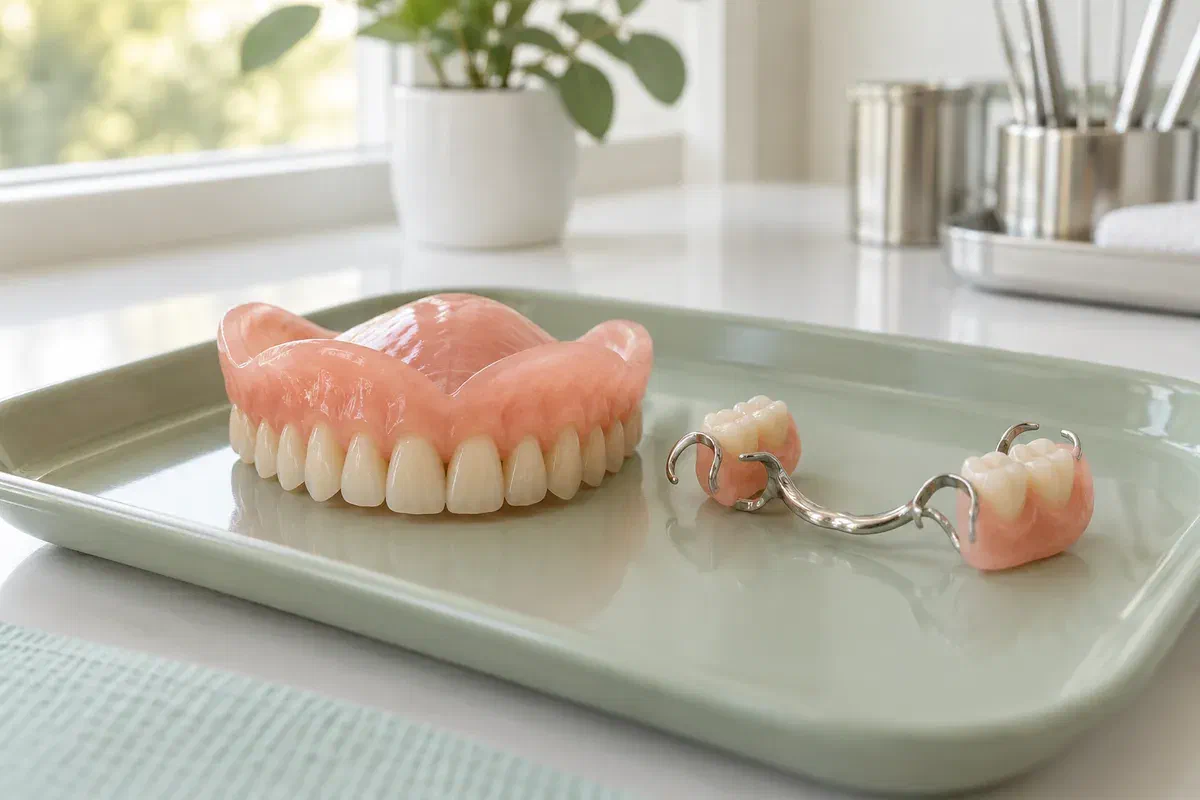
Losing molars shifts chewing onto fewer teeth. The dentist can explain whether a partial could restore some of that work, whether another replacement deserves a look, and what the remaining teeth would need to support it.


Cutting apples into slivers or avoiding steak altogether? From Erin or Hillsburgh, a denture consultation starts with the foods you miss, then looks at what your mouth can support and which replacement might help you chew.
Think of the foods you have quietly given up. Raw vegetables, nuts, a sandwich on firm bread. When teeth are missing or a denture shifts, people often trade favourite meals for softer ones without making a conscious decision. Naming those foods is a practical way to start a consultation.
Chewing relies on how many teeth meet, where they meet and how steady any appliance is. The dentist examines your remaining teeth and gums, the ridges that would carry a denture and your bite, and checks how a current appliance behaves under pressure.
In a rural community like Erin, meals tend to be home-cooked and hearty, so it is fair to ask what a replacement could and could not let you eat comfortably. You will hear what is realistic, what usually takes practice, and where a different approach might give more stability.
Describe what is difficult to bite, chew or keep from getting trapped. Pairing that with an examination gives the dentist a clear picture of what needs to change.
Losing molars shifts chewing onto fewer teeth. The dentist can explain whether a partial could restore some of that work, whether another replacement deserves a look, and what the remaining teeth would need to support it.
Bring it with you and describe which foods cause trouble. Movement can come from changes in the ridges, worn teeth or design. It might be adjusted, refitted, repaired or replaced, and the review helps decide.
If you have been told some teeth may need removing, ask which ones help you chew most and whether they can be kept. Discuss an immediate appliance, the soft-food period while healing and the check-ups that follow.
For severe pain, swelling, an ulcer that keeps returning or a cracked appliance, mention it when booking. Those may need care before a planning conversation.
A removable appliance can restore a lot of everyday eating, but it usually does not feel or perform exactly like natural teeth, and lower dentures in particular can be harder to keep steady. Knowing that early helps you set fair expectations and compare fixed or implant-supported options.
Before a firm plan, records, other treatment or a specialist opinion may be needed. Ask what remains uncertain and how the next appointment will help resolve it.
Patient information: Canadian Dental Association — dentures
The dentist looks at which teeth still touch when you close, how healthy the gums are and how much ridge there is to rest on. That explains why a particular design may help you chew, or why another problem should be treated first.
Tell the team which foods matter most to you, along with any concerns about appearance and handling. They can explain which goals a proposed design is likely to meet.
Find out how many stages are likely, which items sit inside the estimate, and how adjustments after delivery are handled. That helps you compare long-term care as well as the appliance.
Questions are welcome at every stage. If you need help with communication, hearing or mobility, or would like company, tell us when booking.
We go over missing teeth, any appliance, past treatment and how meals have changed. Share health history and medications, especially anything that causes a dry mouth.
The dentist examines remaining teeth, gums and ridges and how a current denture behaves when you bite. Records may be suggested to see bone or roots more clearly.
Partial, complete and non-denture options are discussed where relevant. Ask what each would change for eating, what would remain limited, and whether other treatment should come first.
That might be more records, an estimate to review or planning. Make sure you know the next appointment and whether anything needs attention sooner.
Comparing designs is easier with notes in front of you. Keep the plan and your questions together, and give us a call if any part of the estimate is unclear.
Would the proposal let you eat the foods that matter most? Write down questions about stability, temporary teeth, cleaning or follow-up before treatment begins.
Ask roughly how many visits are needed, whether your current denture is required for records and whether there would be a period without it. Mention seasonal or family commitments alongside the clinical timing.
Continue brushing and appliance cleaning as advised. If you notice a new sore, swelling or breakage, call the clinic rather than holding it for a later visit.
These questions often come up when chewing is the main concern. They may help you set expectations before the visit.
Plan a denture consultation with us on Bronte Street in Milton. Bring any appliance you wear, your medication list and notes on what is hard to eat, so the time goes toward a sensible next step.
Bringing a partner or friend is fine. Mention any mobility or communication needs when you book so the appointment can be arranged around them.
