

Illustrative dentist and patient discussing denture options at a consultation
Restorative Dentistry

Denture Consultations in Milton

Chewing on one side, hiding a gap, or wondering if it is time to ask about dentures? A first consultation in Milton gives you room to describe what bothers you and learn which replacement choices suit your mouth.

Your first conversation about dentures

Most people start by noticing how they chew.

Many first denture conversations begin at the dinner table. You find yourself moving food to one side, skipping a favourite crusty bread, or feeling a gap with your tongue as you talk. Those small adjustments are worth describing, because they show where a replacement might help.

A consultation brings that story together with an examination. The dentist looks at the teeth you still have, the gums and ridges that would support an appliance, and how your upper and lower teeth meet. Health history, medications and earlier dental work fill in the rest.

You are welcome to come in with no vocabulary at all. For people already living in Milton, our Bronte Street practice is close by, so a first visit can simply be about listening and explaining, with time afterwards to think before any planning appointments are booked.

Start with a first consultation
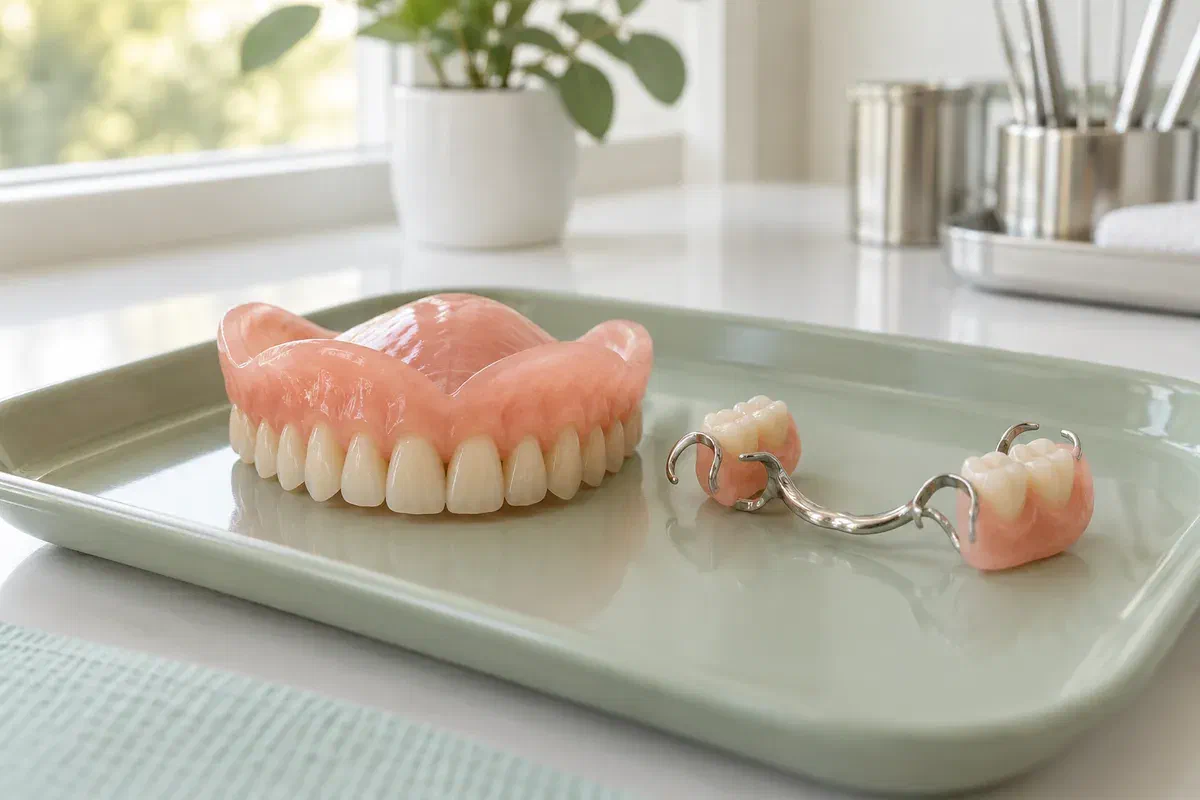
Complete and partial removable dentures displayed as illustrative examples
Reasons to book

What has changed lately?

It helps to name the situation that prompted the call. A clear description lets the dentist link what you notice day to day with what the examination shows.

Gaps that affect chewing or confidence

Where teeth are missing, and how healthy the neighbouring teeth are, shapes what can be offered. You can learn whether a partial suits your gaps or whether a different replacement deserves a look, and what support each would need.

A denture that feels different than it used to

Gums and bone change over time, and appliances wear. Bring the denture with you and explain when it began to rock, rub or feel loose. The answer may be an adjustment, a reline, a repair or a new appliance, and the visit helps sort out which.

Teeth that may need to come out

When extractions have been suggested, ask which teeth could stay and in what order work might happen. This is a good time to hear about an immediate denture, how healing changes the fit, and the check-ups that follow.

If you have strong pain, swelling, a sore that will not heal or a broken appliance, say so when you call. Those problems may need their own appointment rather than waiting for an options discussion.

What you leave knowing

A clearer sense of what a denture would ask of you

A good consultation explains both the goal and the trade-offs. Removable appliances come out for cleaning, take time to get used to and need periodic review, which is a different commitment from a fixed bridge or implant crown. Hearing that early makes the decision more honest.

Sometimes the first visit ends with more questions than answers, and that is normal. X-rays, impressions, treatment of a remaining tooth or a specialist’s view may be needed first. Ask what is still unknown and what the next appointment is meant to find out.

Patient information: Canadian Dental Association — dentures

Recommendations based on your own mouth

Remaining teeth, gum health, the shape of the ridges and your bite are weighed together. That is how the dentist can explain why one appliance suits you, or why another problem should be treated before any denture is made.

Room to talk about looks and handling

Mention how you would like your teeth to show when you smile, any older photos you like, and whether clasps or fiddly handling worry you. The team can say which wishes are realistic for the design being suggested.

A plain outline of visits and fees

Ask how many stages to expect, what the estimate covers and how adjustments after delivery are handled. Knowing the full path lets you weigh the ongoing care, not only the appliance.

How the visit runs

Four parts, at a pace that suits you

Questions at any stage are welcome, including basic ones. Tell us ahead of time about hearing, vision, language or mobility needs so the appointment works for you.

  1. Talk about what you want to change

    We go over missing teeth, any appliance you have now, past treatment and the reason you booked. Share your health history, and mention practical limits such as stiff hands or a busy work schedule.

  2. Examine your teeth, gums and current appliance

    The dentist checks the remaining teeth and soft tissues, and looks at how an existing denture sits and works. X-rays or other records may be suggested to understand the support available.

  3. Look at the realistic pathways

    Partial, complete and non-denture options are compared where relevant. You can ask what each would improve, what would stay the same, and whether a filling, extraction or specialist opinion should come first.

  4. Decide what happens next

    That might mean more records, time to review an estimate, or starting to plan. Before you leave, confirm what was agreed, what the next appointment is for and whether anything needs earlier attention.

Once you are home

Give yourself time to compare.

It is hard to keep several options straight from memory. Keep your written plan and a running list of questions in one place, and check with us before assuming what an estimate does or does not include.

Hold the plan up against your reasons for booking

Ask yourself whether the suggestion solves the problem you came in with. Jot down questions about comfort, appearance, cleaning, temporary teeth and follow-up so they can be answered before any work begins.

Work out the scheduling

Find out roughly how many appointments are involved, whether your current denture will be needed for impressions and if you might spend time without it. Mention work and family commitments, keeping in mind that some steps have clinical timing.

Carry on with your usual care

Keep cleaning and wearing your current denture as advised, and keep brushing the natural teeth you have. Call about new sore spots, swelling or a breakage rather than holding the question for the next planning visit.

The main choices

Which design fits depends on your starting point.

Expect to hear why a choice is relevant for you, not just what it looks like. Weigh the preparation, chewing, handling, upkeep and cost of each.

Some of your own teeth remain

Partial denture

A partial replaces specific missing teeth and relies on the teeth and gums around it for support. Ask how it would hold in place, what it means for the teeth it rests against, and how you would clean around it each day.

A whole arch is being replaced

Complete denture

A full denture replaces all the teeth in the upper or lower jaw. Timing, the health of the supporting gums, appearance and the adjustment period all need discussion, especially if extractions or an immediate denture are planned.

Another approach may suit you

Bridge or implant-supported option

Some gaps are better served by a fixed bridge or by implants, alone or holding a denture. These need their own assessment and should be compared as whole plans, including surgery where it applies and long-term upkeep.

First-timer questions

Nothing is too basic to ask.

These are common questions from people considering a first denture. They may help you prepare and know what to bring.

(905) 876-4488
How long does a denture consultation usually take?
It varies with how much there is to discuss and whether records are taken at the same visit. Ask when you book so you can plan the rest of your day. If more time is needed, a second appointment can be arranged instead of rushing the conversation.
Do I need a referral to book a denture consultation?
No referral is needed to book with us. If you have recent X-rays or notes from another dentist, it can help to arrange for them to be shared. The dentist may still recommend new records if the older ones do not show what is needed.
Is it possible to keep some of my natural teeth and still wear a denture?
Often, yes. A partial denture is designed to work alongside healthy remaining teeth. The consultation should look at which teeth are sound enough to keep and how a partial would rest on them, rather than assuming removal.
Will it feel strange to speak and eat with a new denture?
Most people need an adjustment period. Speech and chewing usually take practice, and sore spots may need small adjustments after delivery. Ask what to expect for your situation and how follow-up visits are arranged.
What should I bring to my first appointment?
Bring a list of medications, any denture you currently have or used to wear, and notes about what you find hardest day to day. A photo of your smile from a few years ago can help if appearance matters to you.
How do I know whether my estimate covers everything?
Ask the team to walk through each item, including records, preliminary treatment, temporary appliances, fitting visits and adjustments. Check whether later relines are separate. Comparing plans is easier when you know each one covers the same scope.
Close to home in Milton

Bring your questions to Bronte Street.

Book a denture consultation at our Milton practice to talk through missing teeth or an appliance you already wear. Bring your current denture, past records and a few written questions so the time goes toward a clear next step.

Tell us if you would like a family member or friend in the room, or if you need communication or mobility support during the visit.

Visit Milton Dental Clinic
Unit 1, 342 Bronte St. S, Milton, ON L9T 5B7
Get directions Clinic hours
Monday–Thursday
11am–7pm
Friday–Sunday
By appointment only

Areas we serve

  • Milton
  • Oakville
  • Mississauga
  • Georgetown
  • Halton Hills
  • Acton
  • Campbellville
  • Brampton
  • Burlington
  • Puslinch
  • Rockwood
  • Erin
  • Caledon
  • Etobicoke
  • Old Milton
  • Bronte Meadows
  • Timberlea
  • Dorset Park
  • Dempsey
  • Clarke
  • Beaty
  • Coates
  • Harrison
  • Scott
  • Willmott
  • Ford
  • Bowes
  • Cobden
  • Walker
  • Mountain View
  • Milton Heights
  • Hawthorne Village
  • Valley View
  • Fallingbrook
  • Nassagaweya
  • Trafalgar
  • Esquesing
  • Nelson
  • Brookville
  • Moffat
  • Glen Williams
  • Norval
  • Limehouse
  • Stewarttown
  • Ashgrove
  • Hornby
  • Silver Creek
  • Speyside
  • Scotch Block
  • North Oakville
  • River Oaks
  • Glen Abbey
  • West Oak Trails
  • Palermo
  • Bronte Creek
  • College Park
  • Joshua Creek
  • Uptown Core
  • Preserve
  • Iroquois Ridge
  • Lisgar
  • Meadowvale
  • Meadowvale Village
  • Churchill Meadows
  • Erin Mills
  • Central Erin Mills
  • Streetsville
  • East Credit
  • Creditview
  • Heartland
  • Sheridan
  • Mount Pleasant
  • Credit Valley
  • Huttonville
  • Churchville
  • Springbrook
  • Northwest Brampton
  • Bram West
  • Fletcher's Meadow
  • Fletcher's Creek South
  • Alton Village
  • Orchard
  • Millcroft
  • Headon Forest
  • Tansley
  • Brant Hills
  • Tyandaga
  • Kilbride
  • Lowville
  • Aberfoyle
  • Morriston
  • Arkell
  • Hillsburgh
  • Freelton
  • Carlisle
  • Waterdown
  • Flamborough
  • Mountsberg

How can we help?

Milton Dental Clinic

Have a question about your smile? Choose the option that works best for you.

For urgent dental concerns, please call.
Messages are reviewed during clinic hours.