

Illustrative hygienist reviewing denture care with a patient
Restorative Dentistry

Denture Hygiene and Maintenance in Milton

A nightly soak keeps a denture fresh, but it can’t tell you whether the fit, the gums or the appliance itself have changed. Denture maintenance in Milton checks all three and keeps your home routine realistic.

Beyond the bedtime soak

Routines drift. A review brings them back on course.

Most people settle into a denture routine within weeks of getting the appliance, then repeat it for years without much thought. That habit is useful, yet the gums, any remaining teeth and the denture itself keep changing quietly in the background. Maintenance visits exist to notice those shifts.

Brushing and soaking keep the surface clean. They don’t confirm that the base still sits evenly, that the bite still meets properly, or that the tissues it rests on are healthy. A proper review looks at wear, earlier repairs, supporting teeth and how manageable your daily care feels.

Here in Milton, a review is easy to fold into a normal week. Carry the appliance in its case to our Bronte Street practice and tell us what has changed, even if it seems minor. Dr. Zoha Anjum and the team can examine the appliance and your mouth, then suggest a follow-up plan that fits ordinary life in Milton rather than an ideal you can’t keep up.

Plan your next denture check
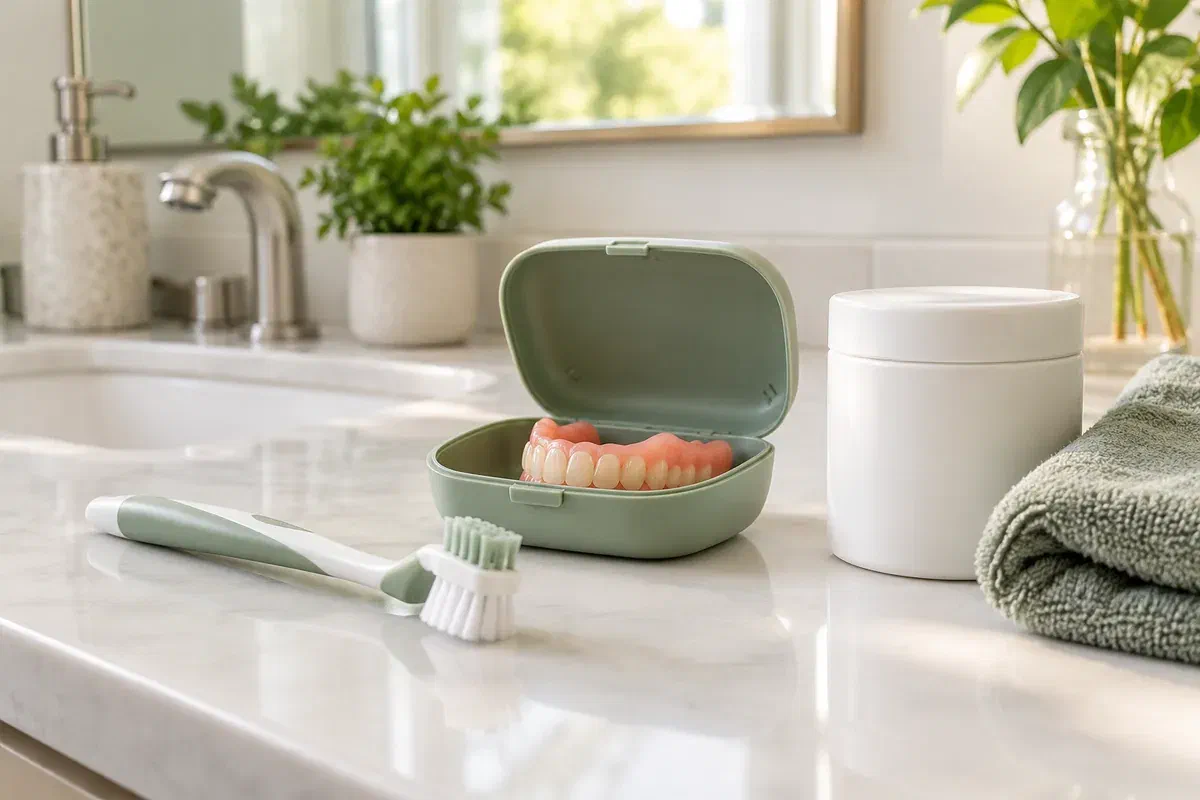
Denture storage case, soft brush, and unlabelled cleanser container
Signals to mention

Is something different from how it felt last year?

Changes in comfort, chewing or cleaning are often gradual, which makes them easy to dismiss. Note what you’ve noticed and whether it seems to come from the denture, your mouth, or both.

It rocks, clicks or needs more adhesive

A denture that shifts when you chew or talk, contacts that feel uneven, or a growing reliance on adhesive are worth assessing. The cause may lie in the appliance, the tissues beneath it, remaining teeth, or several of these at once.

Sore or red areas keep returning

Irritation that comes back in the same place, or a patch that doesn’t fade, should be looked at. Habits around cleaning and wearing can play a part, but nobody should assume the denture is to blame until the area is examined.

Daily care has become a struggle

Stiff hands, weaker eyesight, a health change or less help at home can all make cleaning harder. Let the team know, so the method and the follow-up schedule can be adjusted instead of leaving you with steps that no longer work.

A sore that won’t heal, a lump, or any mouth change you can’t explain needs prompt attention, however well the denture fits. Call the clinic instead of waiting for your next scheduled visit.

Why ongoing care pays off

A plan that keeps pace with you

Each maintenance visit looks at your mouth, the appliance and your routine side by side. That makes it easier to tell whether a problem is about cleaning, about wear, about fit, or about something that needs its own treatment.

No one schedule suits every denture wearer. How often you return depends on the health of your mouth, any natural teeth, the design of the appliance and the support you have at home. It’s reasonable to ask what each visit is checking and why the interval was chosen.

Patient information: Ontario Dental Association — denture care

Teeth and gums get their own attention

A partial denture leans on natural teeth, and a complete denture sits on gum tissue that deserves examination too. Good maintenance includes those structures rather than concentrating only on the piece that comes out.

Wear and damage are caught early

Worn denture teeth, fine cracks, loose attachments and older repairs can be assessed where relevant. Knowing their condition helps explain whether simple upkeep, a repair or eventually a replacement makes the most sense.

Techniques you can try on the spot

The team can show you how to clean and handle the appliance, then watch you practise. If a family member or caregiver helps, they can learn alongside you in a way that respects how you prefer things done.

How a visit unfolds

Four parts, one appointment

Your visit is shaped by the denture you wear and its history. If you have records of earlier repairs, liners, attachments or work done at another office, bring them along.

  1. Catch up on health and habits

    We ask about new medicines, health changes, how long you wear the denture each day and how you clean it. Mention recent soreness, movement or breakage, including problems that came and went.

  2. Look closely at your mouth

    Gums, cheeks, palate and any teeth you still have are examined, with extra checks if something calls for them. A lasting change is investigated for what it is, not written off as routine denture rubbing.

  3. Assess the appliance

    Fit, bite, wear and the overall integrity of the denture are reviewed. You’ll hear whether cleaning or a small adjustment is enough, or whether a different procedure is worth talking about.

  4. Settle the plan for home and next time

    We confirm suitable products, how to handle and store the appliance, and how long to wear it. You’ll leave knowing when to come back and which changes mean calling sooner.

Your part between visits

Gentle, steady and matched to the material

Every denture has its own needs, so follow the instructions given for yours. Metal frameworks, soft liners and attachments can all change which products and methods are safe to use.

Treat the denture and your mouth as two jobs

Clean the appliance as instructed, then look after your gums and any natural teeth separately. A product made for soaking a denture isn’t a mouth rinse and shouldn’t be assumed safe for the tissues inside your mouth.

Protect it while it’s out

Clean over a folded towel or a basin of water, and keep the denture in a proper case when you’re not wearing it. Follow the storage advice you were given, and keep it away from hot water and household tools that could warp or damage it.

Ask first, then change the routine

If the fit worsens or deposits won’t shift, book a review before reaching for harsher cleaners or extra adhesive. The underlying change may call for something other than scrubbing harder.

What the review may lead to

The findings decide the next step.

Sometimes a visit simply confirms that your current routine is working. Other times it points to treatment. Ask what each recommendation is meant to fix and how its effect will be checked.

When all is going well

Keep up regular hygiene visits

Professional reviews and home-care coaching continue on a schedule set for you. The plan covers the appliance as well as the gums and teeth that surround it.

When fit, wear or a part is the concern

Fix a particular denture issue

Depending on the finding, an adjustment, reline, rebase or repair may be discussed. The dentist can explain what each one changes and whether the rest of the appliance is still worth keeping.

When upkeep isn’t enough on its own

Look at a wider plan

A tissue problem, a struggling support tooth or a denture that no longer suits you may call for broader planning. Ask whether further assessment or a new appliance is advisable and what other options exist.

Common questions

What people ask once the denture is part of everyday life

Maintenance needs shift as years pass. These answers explain why ongoing visits still matter long after the denture first felt settled.

(905) 876-4488
Why does my denture suddenly need more adhesive than it used to?
The tissues that support a denture can change shape over time, and the appliance itself wears. Either can loosen the fit. Rather than adding more adhesive, book a review so the dentist can find out what has changed and discuss a suitable response.
Can I use regular toothpaste to brush my denture?
Many toothpastes are abrasive enough to scratch denture material over time. Ask the team which cleaner suits your appliance, especially if it has metal parts or a soft liner, and keep using an appropriate toothpaste for any natural teeth.
Does a hygiene visit still make sense if I have a complete denture and no natural teeth?
Yes. The gums and soft tissues still need to be examined, and feeling comfortable doesn’t prove everything is healthy. The dentist can suggest how often to return based on your mouth and appliance.
Should I take my denture out at night?
Many dentists recommend giving the tissues a rest from the appliance for several hours each day, often overnight, but advice can differ for your situation. Ask what wearing and storage routine is right for your denture.
My denture still looks fine. Could it need repair anyway?
It could. A clean, intact surface says little about the bite, the fit or the condition of the base. Ask the dentist to explain the specific findings behind any recommendation instead of judging by appearance.
Can a family member come in and learn how to help me?
Yes, with your agreement. They can see how to handle and clean the appliance safely and which changes to report. Ask for a demonstration suited to your denture, and make sure the plan reflects what you want.
Denture care close to home in Milton

Keep your denture working for you.

Book a maintenance review at our Bronte Street practice to talk through your daily routine, a change in fit, or the general condition of your denture. We’ll look at the appliance and your mouth together and explain what continuing care makes sense.

Call if you notice a sore that persists, new swelling, a break or a lot of movement, so the team can decide whether you should be seen sooner.

Visit Milton Dental Clinic
Unit 1, 342 Bronte St. S, Milton, ON L9T 5B7
Get directions Clinic hours
Monday–Thursday
11am–7pm
Friday–Sunday
By appointment only

Areas we serve

  • Milton
  • Oakville
  • Mississauga
  • Georgetown
  • Halton Hills
  • Acton
  • Campbellville
  • Brampton
  • Burlington
  • Puslinch
  • Rockwood
  • Erin
  • Caledon
  • Etobicoke
  • Old Milton
  • Bronte Meadows
  • Timberlea
  • Dorset Park
  • Dempsey
  • Clarke
  • Beaty
  • Coates
  • Harrison
  • Scott
  • Willmott
  • Ford
  • Bowes
  • Cobden
  • Walker
  • Mountain View
  • Milton Heights
  • Hawthorne Village
  • Valley View
  • Fallingbrook
  • Nassagaweya
  • Trafalgar
  • Esquesing
  • Nelson
  • Brookville
  • Moffat
  • Glen Williams
  • Norval
  • Limehouse
  • Stewarttown
  • Ashgrove
  • Hornby
  • Silver Creek
  • Speyside
  • Scotch Block
  • North Oakville
  • River Oaks
  • Glen Abbey
  • West Oak Trails
  • Palermo
  • Bronte Creek
  • College Park
  • Joshua Creek
  • Uptown Core
  • Preserve
  • Iroquois Ridge
  • Lisgar
  • Meadowvale
  • Meadowvale Village
  • Churchill Meadows
  • Erin Mills
  • Central Erin Mills
  • Streetsville
  • East Credit
  • Creditview
  • Heartland
  • Sheridan
  • Mount Pleasant
  • Credit Valley
  • Huttonville
  • Churchville
  • Springbrook
  • Northwest Brampton
  • Bram West
  • Fletcher's Meadow
  • Fletcher's Creek South
  • Alton Village
  • Orchard
  • Millcroft
  • Headon Forest
  • Tansley
  • Brant Hills
  • Tyandaga
  • Kilbride
  • Lowville
  • Aberfoyle
  • Morriston
  • Arkell
  • Hillsburgh
  • Freelton
  • Carlisle
  • Waterdown
  • Flamborough
  • Mountsberg

How can we help?

Milton Dental Clinic

Have a question about your smile? Choose the option that works best for you.

For urgent dental concerns, please call.
Messages are reviewed during clinic hours.