Less grip, more movement
A denture that lifts during meals, a bite that seems uneven or a new reliance on adhesive are worth assessing. The reason might involve the appliance, the supporting tissue, natural teeth, dryness or several factors at once.


A new prescription, a dry mouth in the mornings, and suddenly the denture feels less comfortable. Maintenance for wearers in Puslinch connects health changes with fit, tissue health and the way you look after the appliance.
Saliva helps a denture settle and keeps the tissues beneath it comfortable. When the mouth gets drier, perhaps after a medication change or during an illness, wearing the appliance can start to feel different. Rubbing, stickiness or a looser feel are common complaints, and they deserve a proper look.
Health shifts are only one thread. Gums reshape gradually, natural teeth age, and denture teeth wear. That’s why a maintenance review considers the appliance’s condition, any past repairs, the supporting teeth and tissue, and whether your home routine still suits how you’re feeling.
In a rural township like Puslinch, it makes sense to cover a lot in one appointment. Bring your denture and an up-to-date list of medications to our Bronte Street office. The dentist will examine your mouth and the appliance and talk through a follow-up plan.
Linking a change to a date, such as a new prescription or a hospital stay, can help. Mention whether the problem feels like the appliance, your mouth or both.
A denture that lifts during meals, a bite that seems uneven or a new reliance on adhesive are worth assessing. The reason might involve the appliance, the supporting tissue, natural teeth, dryness or several factors at once.
Tissue that feels sore, looks red or develops a patch that lingers should be examined. Dryness and cleaning habits can contribute, yet the area needs assessment before it’s assumed to be caused by the denture.
Fatigue, reduced grip, vision changes or recovery from illness can all make daily care harder. Mention it, and the team can simplify the routine and rethink how often you come in.
An ulcer that doesn’t heal, a lump, or a mouth change with no clear cause should be examined soon, even if the fit seems fine. Please phone the clinic instead of waiting for your recall.
A review that considers your mouth, the appliance, your routine and your health together can help separate a dryness issue from wear, a fit change, a cleaning problem or a condition that needs separate care.
How often to return depends on your oral health, any natural teeth, the appliance design, your support at home and any medical changes. There’s no one-size interval, so it’s fine to ask what each review is designed to check.
Patient information: Ontario Dental Association — denture care
Dry tissue can be more easily irritated, and any natural teeth may need extra attention. A good review gives those structures as much attention as it gives the appliance.
The dentist can check denture teeth, cracks, attachments and earlier repairs where relevant. That helps explain whether upkeep, a repair or eventual replacement is worth considering.
The team can show you gentler or simpler cleaning and handling methods, then let you practise. If a family member or caregiver helps you, they can be included in the way you prefer.
Your review is shaped by your appliance, your health and what has happened since your last visit. A medication list and any notes about relines, repairs, liners or implant parts are useful.
We talk about recent diagnoses, prescriptions, dryness, wearing time and cleaning. Mention soreness, looseness or breakage, including things that improved on their own.
The dentist looks at your gums, tongue, cheeks and any remaining teeth, with additional checks if needed. A lasting change gets proper attention rather than being labelled routine denture irritation.
We review how the denture seats and bites, how worn it is and whether it is intact. You’ll learn whether a clean or a minor adjustment should help, or whether another procedure is worth discussing.
Together we choose suitable products, handling, storage and wearing time. You’ll know when to return and which changes should prompt an earlier call.
Follow the method recommended for your appliance, especially if your mouth is dry or tender. Metal frameworks, liners and attachments can affect which products are appropriate.
Clean the appliance on its own, then care gently for your gums and any natural teeth. Denture soaking products aren’t mouth rinses, and they shouldn’t be used on tissue that is already irritated.
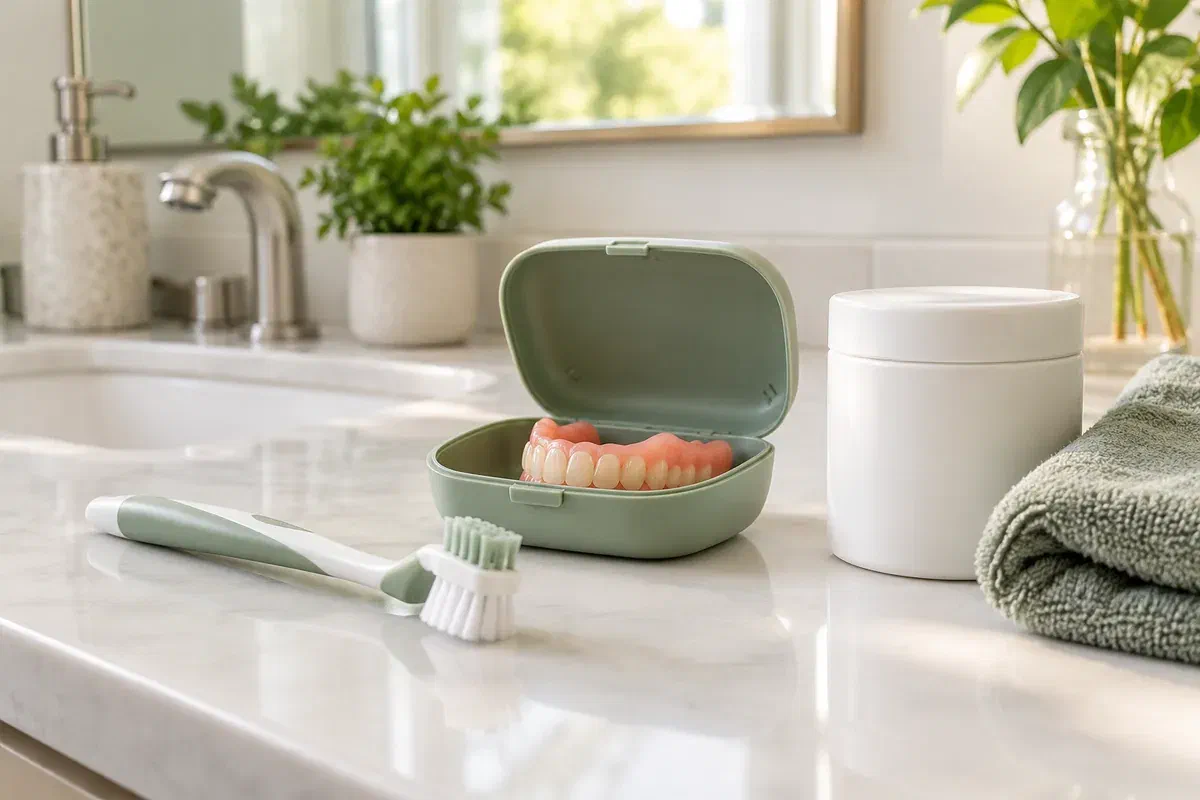
Clean over water or a towel, and keep the denture in its case when it isn’t in your mouth. Follow your storage instructions and keep it away from hot water and household tools.
If comfort or fit gets worse, or deposits won’t budge, arrange a review before switching to stronger cleaners or adding adhesive. The issue may need something other than more effort at home.
Your mouth and your denture can both change as your health does. These answers explain why ongoing reviews are useful.
Set aside time at our Bronte Street office to discuss dryness, a change in fit or the condition of your current denture. The dentist will look at how your health, your tissues and the appliance interact, then outline sensible next steps.
Phone if you have a sore that persists, new swelling, a broken denture or significant movement. Someone on the team will help you work out how soon to come in.
