Glue lines, cracks or rough acrylic
Home repairs, wear and changes in the base material are good reasons to book an assessment. The dentist determines whether a contained professional repair would work or whether the base should be renewed.


Sometimes it is a son or daughter who first notices that a parent’s denture is chipped, loose or mended with glue. We can examine it together and explain whether the teeth could be kept in a renewed base.
Rebasing is a way to renew a denture’s foundation without giving up teeth that still work. The worn base is replaced with new material and the original teeth are set into it, provided an examination confirms they and their positions are still right for the wearer.
Families sometimes hear three terms at once and wonder how they differ. A reline adds a fresh layer to the inner surface of the current base. A new denture replaces every part. Rebasing falls between the two, and choosing well depends on how the whole appliance fits and bites, how worn its teeth are, how it looks and how healthy the mouth beneath it is.
You are welcome to come together from Brampton to our Bronte Street practice. We will check whether a rebase would address the real problem and listen to both the wearer and anyone who helps with daily care. Notes on earlier repairs, changes in fit and what the wearer wants to keep all help, and our explanation should cover the case for keeping those teeth and the honest limits of a renewed base.
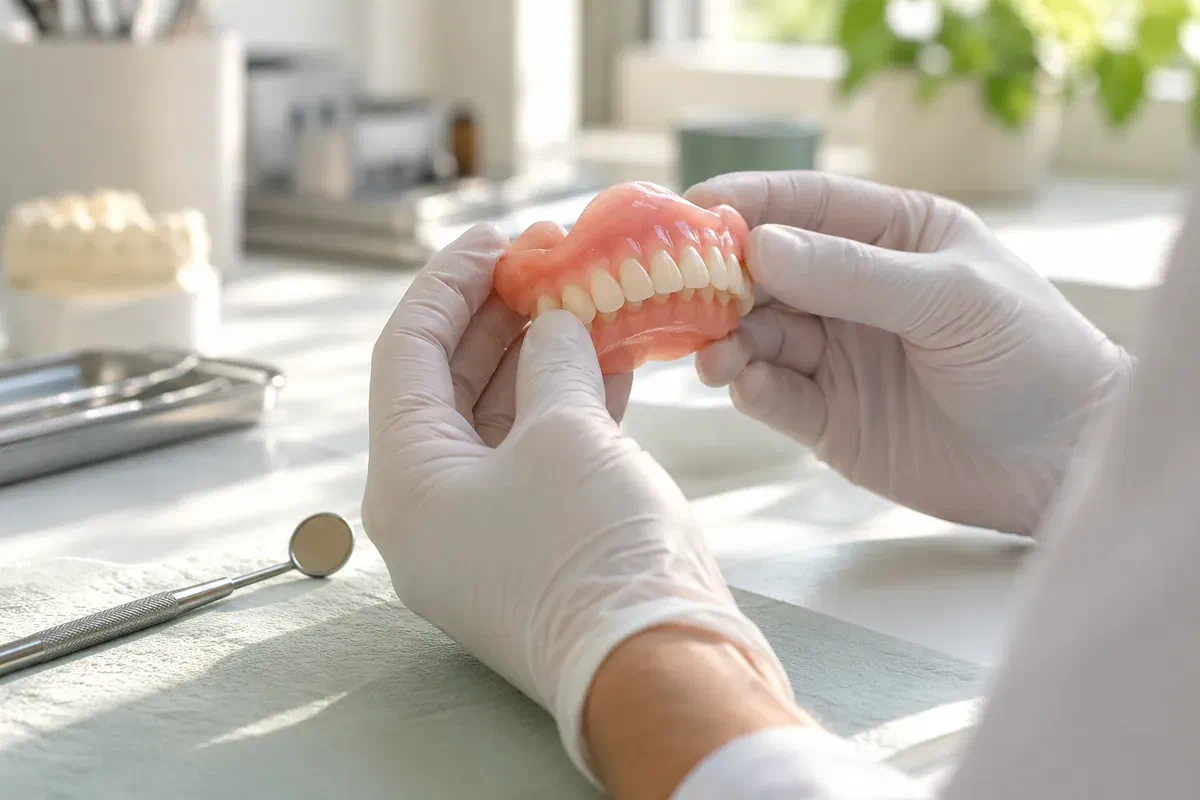
A denture is several parts working as one, and each can age differently. Rebasing is considered when the base needs replacing yet keeping the current teeth still makes clinical sense.
Home repairs, wear and changes in the base material are good reasons to book an assessment. The dentist determines whether a contained professional repair would work or whether the base should be renewed.
The wearer may like the smile and still chew reasonably well. Those teeth are checked for wear and position, because looking right is not enough on its own to show a rebase is appropriate.
Leaving the denture out or changing what they eat can signal a fit problem. Ask which part of the appliance needs attention and whether the proposed work considers support and bite as well as the base.
Repeated breaks or ongoing soreness need their cause identified. A fresh base should not recreate an arrangement that still does not suit the wearer’s mouth.
When the denture is suited to it, a rebase replaces the base and keeps a tooth arrangement that still works. That can be reassuring for someone who has grown used to their smile, but the narrower scope only makes sense if the teeth being kept are sound.
Be clear about what it cannot do. Worn teeth, an unsuitable bite and appearance concerns linked to tooth position are not resolved by a new base alone. Talk through what will remain and which limits would still apply before deciding against a new denture.
Patient information: American Dental Association — dental terms
If the existing teeth are still appropriate, keeping them may preserve features the wearer is comfortable with. Ask the clinician how those teeth were assessed.
Household glue cannot rebuild a failing base. If a proper new one is advised, ask what the dentist saw that makes a reline or simple repair insufficient.
The assessment lets the wearer and family compare benefits, limits, visits and cost across the options. A rebase should meet a clear need, not stand in for a frank talk about a denture that may no longer be suitable.
The path depends on the denture and the work required. Ask about records, lab time, how long the wearer will be without it, and the fitting and review dates before agreeing to go ahead.
The dentist looks at the gums and supporting tissues and reviews how the denture fits, how its teeth meet and what state its base is in. Family observations help, but the present condition decides suitability.
Consider whether a repair, a reline or a new denture would suit the findings better. Make sure everyone understands what a rebase changes, what it keeps and whether the kept teeth are still well arranged.
Impressions or other records may be needed for the new base. We explain how the denture will be handled and what meals and routines may need while it is away.
The rebased denture is tried in and checked for how it seats, touches and functions. Wearing and care guidance is given, and a review deals with concerns that show up in daily life.
Even with the same teeth, the denture may feel different in the mouth. Follow the instructions given and report any change in comfort or eating, so the new base can be assessed fairly.
Ask how to reintroduce the denture and whether there are precautions. If a sore spot appears, call the team instead of encouraging the wearer to put up with it.
The new material may need different products. Confirm which brush, cleanser and storage container to use, particularly if the denture has liners or extra components.
Note any movement, pressure or a bite that seems different. The review shows whether a small adjustment is enough or another issue needs looking at.
Rebasing has a particular purpose. These answers help families tell it apart from relining, repairs and replacement and plan practical care.
Book one appointment at our Bronte Street clinic and come as a pair if that helps. We will look over the denture and the mouth it sits in, answer questions from both of you, and explain whether a rebase or a different plan makes more sense.
Please bring the denture, any spare and whatever you know about past repairs or relines, so we can see how it has changed.
