A crack, a chip or an old mend
Damage from a drop, gradual wear or earlier repair work can all lead to a review. The dentist judges whether the defect is contained enough to repair or whether the base should be replaced.


A denture that slipped onto the counter, a base mended once too often, a plate that tips when you chew: none of these always means starting over. Find out whether your existing teeth could be set into a new base.
Picture the acrylic as a saddle and the teeth as its passengers. The saddle meets your gums, takes the pressure of chewing and can wear, stain or crack on its own schedule. Rebasing replaces that saddle while moving the current teeth across, as long as the teeth and their placement remain suitable.
This is not the same as a reline, which layers new material onto the fitting side of the existing base, and it is not a new denture, which rebuilds the entire appliance. Picking the right one means reviewing everything together: fit, bite, how worn the teeth are, how the denture looks and the state of the mouth beneath it.
If you are travelling from Burlington to our Bronte Street practice, we start by checking whether a rebase would actually fix the problem you have noticed. Tell us what has been repaired before, how the fit has shifted and which features you want to keep. Expect a clear explanation of why your teeth are worth keeping and what a new base can realistically achieve.
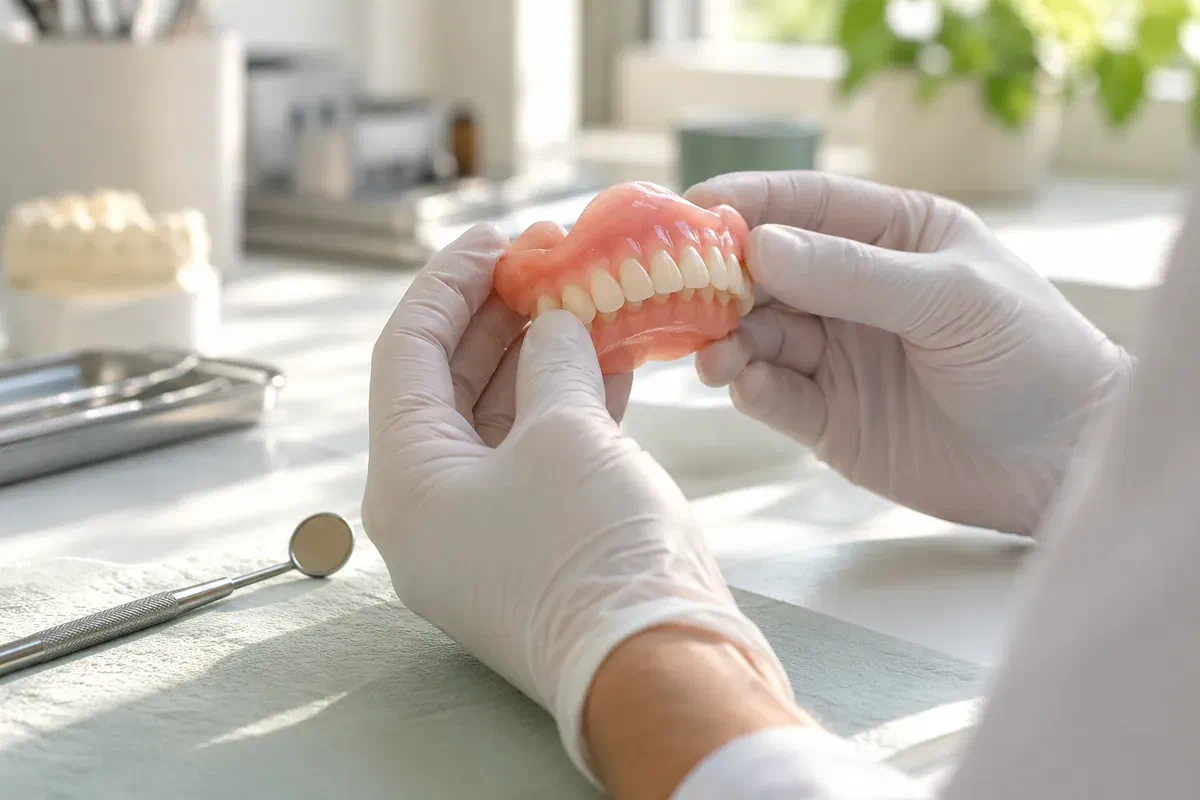
Teeth, base and fit each age in their own way, so they are assessed side by side. A rebase is considered when the base needs replacing and keeping the present teeth is still clinically sensible.
Damage from a drop, gradual wear or earlier repair work can all lead to a review. The dentist judges whether the defect is contained enough to repair or whether the base should be replaced.
You may be happy with their shape and how they chew. Their wear and arrangement still need checking, since a good-looking row of teeth is not proof on its own that rebasing suits the denture.
Movement during meals can reflect a change in fit, which may lead to talk of relining, rebasing or a new set. Ask which part of the denture needs to change and whether support and bite are part of the plan.
A base that keeps cracking is telling you something. Finding out why matters, so that a new base does not repeat a design that is not working for your mouth.
For the right denture, rebasing tackles the base and leaves a still-suitable tooth arrangement undisturbed. Its scope is more limited than a whole new appliance, which helps only when the retained parts are genuinely sound.
Keep expectations realistic. A rebase does not resurface worn teeth, correct an unsuitable bite on its own or change how the teeth are positioned for appearance. Find out what will remain the same and which limits persist before choosing it over a new denture.
Patient information: American Dental Association — dental terms
When the existing teeth remain appropriate, keeping them may preserve features you already find acceptable. Ask how the clinician assessed their condition and position.
If a quick mend or reline would fall short, renewing the whole base may be worth discussing. Ask why that extent of work is suggested and what finding supports it.
Once assessed, you can compare benefits, limits, visit numbers and cost for each route. A new base should answer a clear need rather than postpone a talk about a denture that may no longer be right.
Steps depend on your denture and the work planned. Ask about impressions, any lab stage, the period you may be without the appliance and the timing of the fitting and review before you agree.
We examine your gums and the ridges beneath them, then look at how the appliance seats, how the teeth meet and what shape the base is in. Your story about repairs and symptoms helps, but today’s condition is what determines whether a rebase is suitable.
Compare repair, relining and a new denture against the findings. Know what a rebase would change, what it would leave alone, and whether the retained teeth are still set appropriately.
Impressions and other records may be needed to guide the new base. The team explains how the denture is handled during the work and what to plan while you are without it.
The rebased denture is checked in your mouth for fit, contacts and function. You receive care and wearing instructions, with a follow-up to sort out anything that appears during everyday use.
Your teeth may be unchanged, but the base now meets your mouth differently. Follow the instructions you receive and describe any shift in comfort or function so the base can be assessed fairly.
Ask how to resume wearing it and whether there are precautions to take. Contact the team if a sore area develops rather than assuming you need to wear through it.
The new base may need different products from the ones you are used to. Ask which brush, cleanser and storage suit it, especially if liners or other components are involved.
Report movement, pressure or a bite that feels changed. The review shows whether a small adjustment will do or whether a different issue needs investigating.
A rebase is a specific treatment with a specific reach. These answers help you tell it apart from relining, repair and full replacement.
A cracked plate or a denture that has started to move is worth a proper look at our Bronte Street clinic. We go over the teeth, how it sits and the gums carrying it, then tell you plainly whether a rebase or something else makes more sense.
If you can, have the appliance with you along with any notes on past mends or relines; they show us how its condition has changed.
