A base that has been fixed and fixed again
Several past repairs, worn patches or changes in the material are reasons for review. The dentist judges whether a single contained repair could work or whether replacing the base is better.


A rebase usually means more than one appointment, so it pays to plan before you start. We can assess whether your worn denture base can be renewed around its existing teeth and map out the visits with you.
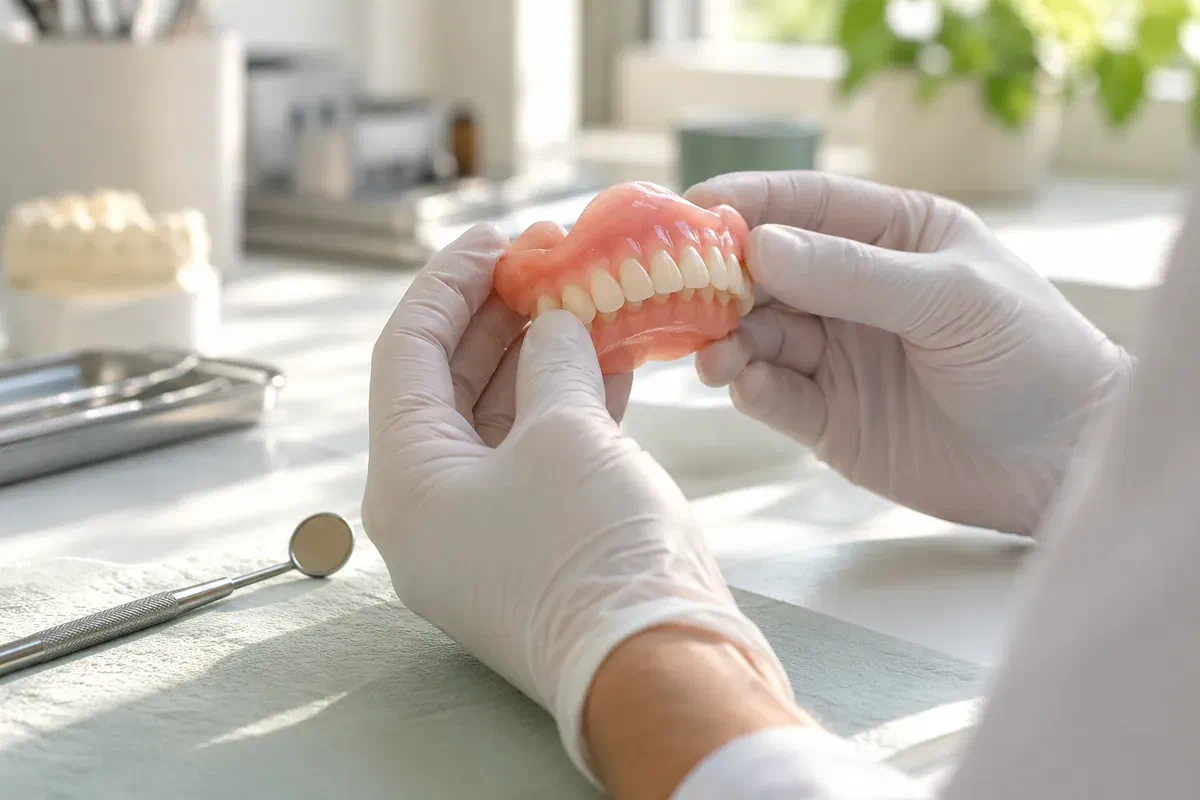
A denture rebase keeps your current teeth and gives them a new base. The old acrylic, which may be worn, discoloured or repeatedly repaired, is replaced, and the teeth are carried across if their condition and arrangement are still suitable. Because the work spans several stages, knowing the shape of the plan helps a great deal when you are travelling in from the west end of Toronto.
It helps to separate rebasing from two related services. Relining refreshes only the fitting surface and leaves the existing base in use. A new denture rebuilds every part. Which one makes sense depends on the whole appliance: its fit and bite, how far the teeth have worn, how it looks and the health of the gums and bone that support it.
Your first appointment at our Bronte Street practice is where we work out whether a rebase would solve the actual problem. Tell us about past repairs, how the fit has changed and what you want to hold on to. From Etobicoke, it also makes sense to ask how many visits the plan involves, and you should leave knowing why the teeth are worth keeping and what a new base will realistically improve.
These are the signs that usually justify a proper look. The base, the teeth and the fit wear in different ways, and a rebase is weighed when the base needs renewal but the current teeth are still a sensible choice.
Several past repairs, worn patches or changes in the material are reasons for review. The dentist judges whether a single contained repair could work or whether replacing the base is better.
You may still like how they look and chew. Their wear and arrangement must be checked, because a tidy row of teeth does not by itself show that rebasing suits the denture.
Loosening or new pressure points can lead to a discussion of relining, rebasing or replacement. Ask which component needs to change and whether the plan looks at support and bite, not only the acrylic.
If the base keeps breaking or rubbing, find out why before renewing it. A new base built around the same unsuitable layout would not end the problem.
For a suitable denture, a rebase replaces the base and leaves a still-appropriate tooth arrangement alone. It is a narrower piece of work than a new appliance, and that is an advantage only if the parts being kept are in sound condition.
A new base does not restore worn teeth, put right an unsuitable bite or change appearance concerns that come from where the teeth are set. Ask what will stay the same and which limits remain, so you can weigh the trips involved against those of a new denture.
Patient information: American Dental Association — dental terms
If the existing teeth remain suitable, keeping them can preserve a look and bite you already accept. Ask how the clinician assessed their condition and position.
When a small repair or reline would not be enough, a full new base may be worth considering. Ask why that extent of work is proposed and how it links to the findings.
The assessment lets you set benefits, limits, number of appointments and cost side by side. A rebase should be picked for a clear reason, not to avoid discussing a denture that may no longer be suitable.
The exact sequence depends on your denture and the work involved. Ask about records, lab time, how long you will be without the appliance and when fitting and review happen, so you can organize travel before agreeing.
The dentist examines your gums and supporting tissues, then looks at the denture’s seating, bite, teeth and base material. Your history helps, while what is found on the day determines suitability.
Talk through whether a repair, reline or new denture would fit the findings better. Confirm what a rebase would change and keep, and whether the retained teeth are still arranged appropriately.
Impressions and other records may be taken to guide the new base. The team explains how the denture is handled while it is away and helps you plan for that period.
The rebased denture is tried in for seating, tooth contact and function. You get wearing and care guidance, along with a review to address anything noticed during ordinary use.
Familiar teeth do not guarantee a familiar feel once the base has changed. Follow your instructions, keep a note of what you notice, and tell us about any change in comfort or function so the new base can be assessed.
Ask how to resume wear and whether there are precautions. A sore area is a reason to call us; if you have significant swelling, bleeding or pain and cannot reach us, seek care closer to home.
The new base material may need different products from before. Confirm the right brush, cleanser and storage, particularly if your denture has liners or other components.
Write down any movement, pressure or bite change so the review visit is efficient. It shows whether a small adjustment is needed or another issue should be explored.
Rebasing has a clear scope and usually several stages. These answers help you tell it apart from relining and replacement and plan visits sensibly.
The first visit to our Bronte Street clinic is about information. By the end of it you should know whether your denture’s teeth are worth keeping, whether a rebase or something else fits the problem, and roughly how many trips the work would take.
Please bring the denture, any spare and details of earlier repairs or relines so the first visit gathers everything it can.
