Material that has broken down
Worn, porous or repeatedly repaired acrylic may be beyond what a fresh surface layer can help. The dentist checks whether a local repair is reasonable or whether the base should be replaced.


Reline or rebase? The words sound alike, but one adds a layer and the other renews the whole base beneath your teeth. An examination can show which, if either, suits the denture you wear now.
A reline adds new material to the surface of your denture that rests on the gums, and the original base stays where it is. A rebase goes further: the base material itself is replaced, and the existing teeth are kept and moved into the new base, so long as they and their arrangement are still suitable.
Then there is the third option, a completely new denture, which changes every component. Deciding between all three is not a matter of preference alone. It rests on an assessment of the full appliance, including how it fits and bites, the wear on its teeth, how it looks and the condition of the tissues supporting it.
Households across Halton Hills, from Georgetown and Acton to Glen Williams and the smaller hamlets, can book that assessment at our Bronte Street practice. We look at whether a rebase would address the true cause of the trouble. Tell us about earlier repairs, any change in fit and what you want to keep, and we will explain the reasons for keeping the teeth and the realistic limits of a renewed base.
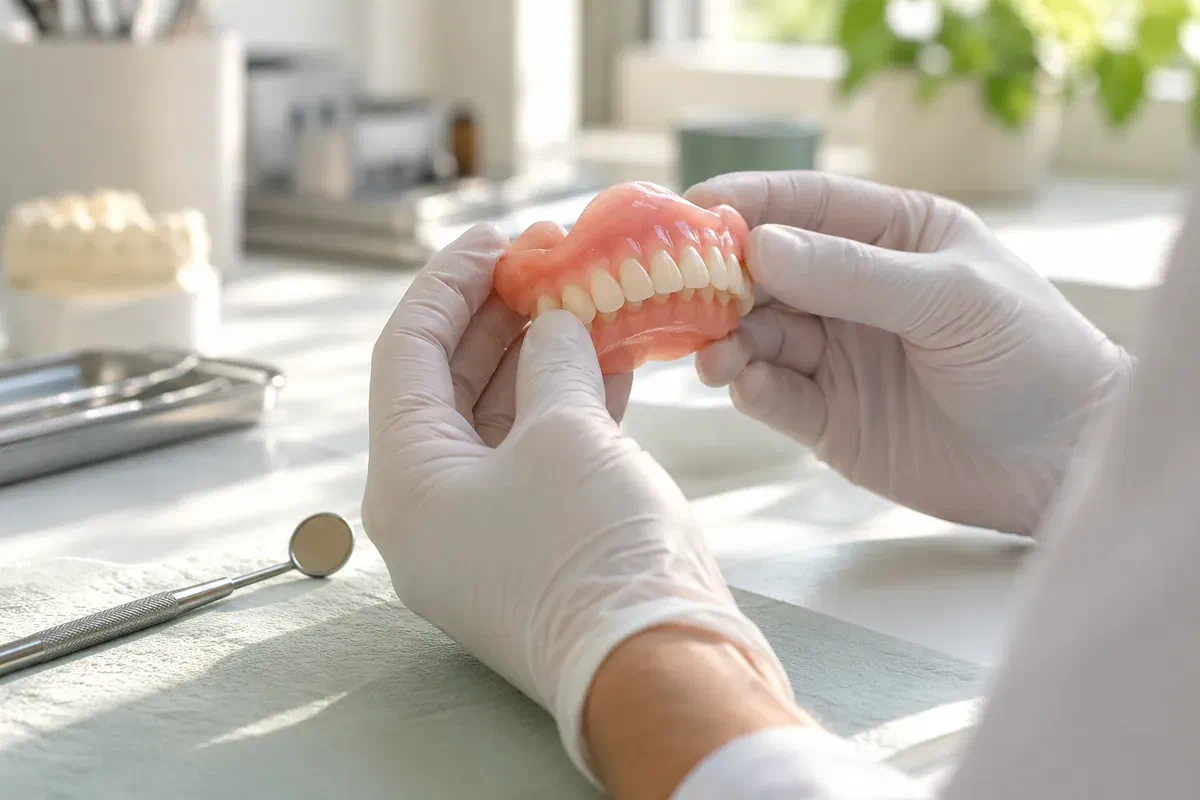
A reline works on the fitting surface; a rebase replaces the base. The second is considered when the base material needs renewing and keeping the current teeth still makes good clinical sense.
Worn, porous or repeatedly repaired acrylic may be beyond what a fresh surface layer can help. The dentist checks whether a local repair is reasonable or whether the base should be replaced.
If you like them and they chew well, they may be worth keeping. They are still examined for wear and position, since appearance alone cannot confirm that rebasing is appropriate.
Changes in fit can be addressed several ways, from relining to replacement. Ask which part of the denture the plan targets and whether it considers how the denture is supported and how it bites.
A base that keeps failing deserves an explanation. Renewing it without understanding why could simply set the same unsuitable arrangement into new material.
In a denture that suits it, rebasing replaces the whole base while keeping a tooth arrangement that still works. It sits in the middle in terms of scope, and that middle ground is only useful when the teeth and setup being kept are genuinely sound.
It is not a cure-all. Worn teeth, an unsuitable bite and appearance concerns that stem from tooth position stay as they are after a rebase. Ask what will not change and which limits remain before you pick it in place of a new denture.
Patient information: American Dental Association — dental terms
Where the existing teeth are still suitable, keeping them may preserve a look and feel you are comfortable with. Ask how their wear and placement were judged.
Some bases are past the point where a reline or small repair would resolve the issue, and replacing them may be worth a discussion. Ask what in the findings supports that extent of work.
With an assessment, you can compare benefits, limitations, visits and cost for each option. A new base should serve a clear purpose and not stand in for discussing a denture that may have stopped suiting you.
Each case follows its own path. Before going ahead, ask about the records needed, any lab stage, how long you will be without the denture and when your fitting and review appointments fall.
Your gums and the tissues under the denture are examined, and the appliance is reviewed for seating, bite, tooth wear and base condition. Repairs and symptoms you describe help frame what the dentist looks for.
Compare what each option would achieve with what was found. Be sure you know what a rebase would replace, what it would keep and whether the retained tooth arrangement is still appropriate.
Impressions and other records may be needed so the new base suits your tissues. The team explains how the denture will be handled and what to plan for while it is unavailable.
The rebased denture is checked in your mouth for how it sits, where it contacts and how it functions. You receive care guidance and a review appointment to address concerns from everyday wear.
Even though the teeth have not changed, the denture now meets your gums in a new way. Keep to the instructions you were given, and if chewing or comfort feels different, say so; that is how we judge whether the base is right.
Ask how and when to start wearing it again and whether to avoid anything at first. If a sore spot develops, get in touch rather than wearing through it.
The new base may not suit the cleaner you used before. Confirm which brush, cleanser and storage method are appropriate, particularly if liners or other parts are involved.
Describe any rocking, pressure or change in how your teeth meet. The review helps show whether a minor adjustment will help or whether something else should be investigated.
Rebasing is one specific procedure. These answers explain how it differs from its neighbours and what to ask before choosing.
You do not need to know the right term before you book. Bring the denture to our Bronte Street clinic, and after looking at its base, its teeth and your gums, we will tell you which of the three treatments, if any, fits the problem.
Bring the denture along with any history of repairs or relines; it helps us see how its condition has changed over time.
