Tired or patched acrylic
Discolouration, roughness, cracks or a series of past fixes may all be reasons for a review. The dentist decides whether one local repair would be enough or a new base is the stronger choice.


Most people want to know two things first: can my teeth stay, and how long will I be without the denture? An assessment answers both and shows whether rebasing, a reline or a new appliance fits the problem.
Somewhere between a loose fit and a full replacement sits rebasing. In this procedure the material holding the teeth is removed and a new base is made, and the teeth you already wear are reused, so long as their condition and the way they are arranged still suit you. Because the denture usually has to leave your hands for part of that work, timing is worth discussing early.
Relining can sound similar but is narrower: fresh material goes onto the fitting side and the original base stays. A brand-new denture, by contrast, changes everything. To know which is right, the dentist considers the whole appliance, from how it seats and bites to tooth wear and appearance, alongside the tissues that carry it.
For anyone coming from Mississauga, especially the western neighbourhoods, an unhurried first appointment at our Bronte Street practice saves guesswork later. We look at whether a rebase targets what is really bothering you. Describe past repairs, changes in fit and what you hope to keep, and we will explain why the teeth merit keeping and what a new base can and cannot do.
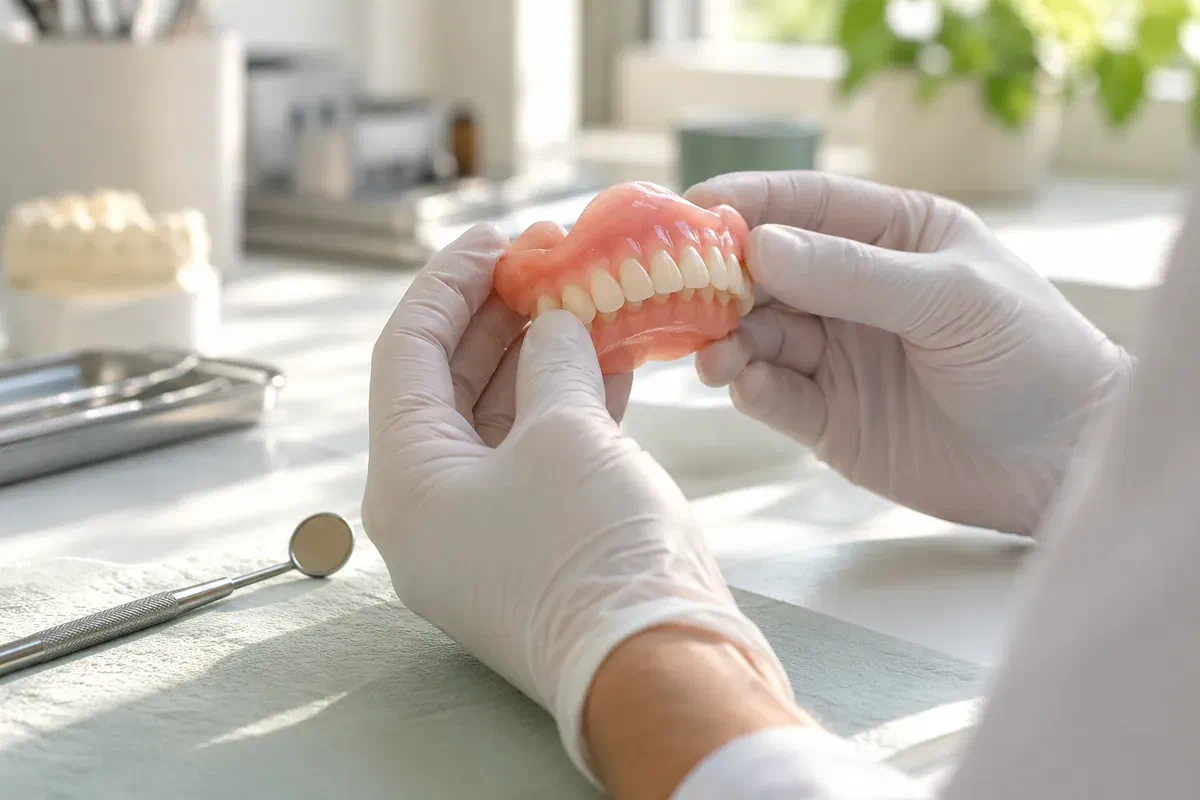
Those three often show up together, but they are not the same problem. A rebase is weighed when the base needs replacing and the existing teeth are still sensible to keep.
Discolouration, roughness, cracks or a series of past fixes may all be reasons for a review. The dentist decides whether one local repair would be enough or a new base is the stronger choice.
They may look natural to you and still chew comfortably. Wear and arrangement are checked as well, since appearance alone does not show that a rebase is the right call.
Gums and bone gradually reshape, which can leave a denture less stable. Ask which part of the appliance needs to change and whether the plan accounts for support and bite, not only the base you can see.
Recurring breaks or sore spots call for a look at why they happen. Setting the same unsuitable arrangement into new acrylic would simply bring the problem back.
If your denture suits it, rebasing renews the base while the tooth arrangement you know stays put. It is a more contained piece of work than a whole new appliance, but containment only helps when the parts being kept are sound.
There are things it leaves untouched. Worn teeth stay worn, an unsuitable bite is not automatically corrected and appearance concerns tied to tooth position remain. It is worth hearing exactly what stays as it is, and which drawbacks you would still live with, before you settle on this instead of a new set.
Patient information: American Dental Association — dental terms
Keeping suitable teeth can preserve the look and bite you have adjusted to. Your clinician should be able to explain how their wear and position were checked.
When a patch or reline is not enough, replacing the base may be worth considering. Ask what led to that recommendation and how it ties back to the findings.
With an assessment in hand you can line up benefits, limits, appointments and cost for each option. A rebase should be chosen for a clear reason, not to avoid an open conversation about a denture that may have run its course.
Each plan is shaped by the appliance and the work involved. Ask in advance about records, lab time, how long the denture will be away and when you will return for fitting and review.
We look at your gums and the ridges that carry the denture, then at how it seats, how the teeth come together and the state of the acrylic. Your history frames the visit; the current condition settles suitability.
Repair, relining, rebasing and a new denture are compared against what was found. Be sure you understand what a rebase would change, what it would keep and whether the kept teeth remain well placed.
Impressions and other records may be taken to shape the new base. This is the point to settle how long the denture will be away and what you will do in the meantime.
Once the denture returns, we try it in and look at how it seats, where the teeth touch and how it works when you talk and bite. Care instructions follow, plus a follow-up for anything that surfaces once you are back to normal routines.
The teeth may be the ones you know, yet the new base changes how the denture meets your mouth. Follow your instructions and mention any difference in comfort or chewing, so the result can be assessed properly.
Ask how to start again and whether to take any precautions. If tenderness develops, call rather than persevering just because the teeth feel the same as before.
A different base material can mean different product advice. Check which brush, cleanser and storage are suitable, especially if your denture has liners or other parts.
Mention any shifting, pressure points or a bite that lands differently. The review helps show whether a small adjustment is enough or something else needs a closer look.
Rebasing has a defined role. These answers help separate it from relining, repairs and full replacement and cover some practical concerns about timing.
At the assessment on Bronte Street we look over the denture and your gums, tell you whether the teeth can stay, and give you a realistic picture of how long the denture would be away if a rebase goes ahead.
Please bring the appliance and what you know of its repairs or relines; this helps us see how its condition has changed.
