Years of wear on the plate
Ageing material, worn areas or several past fixes can all justify a careful look. The dentist decides whether a targeted repair would do or whether the base as a whole should be replaced.


A denture you have worn for years can have teeth you would rather not part with and a base that has quietly aged beneath them. We can help you find out whether those teeth are suitable to carry over into a renewed base.
People who have worn the same denture for a long time often tell us the teeth feel like their own. What changes over the years is usually less visible: the acrylic plate that holds those teeth and rests on the gums. Rebasing replaces that plate while transferring the existing teeth, as long as they and their positions remain suitable.
Two neighbouring treatments are easy to confuse with it. Relining builds up the inner, fitting side of the current base; a new denture starts again from scratch. Telling them apart in your case calls for an honest look at fit, bite, how worn the teeth are, how the denture looks, and the condition of the mouth underneath.
From our Bronte Street practice, close to Milton’s historic downtown, we examine whether a rebase would truly address what you are experiencing. Mention earlier repairs, any shift in fit and the features you hope to keep. You should come away knowing why the teeth are worth keeping and what a new base can realistically change.
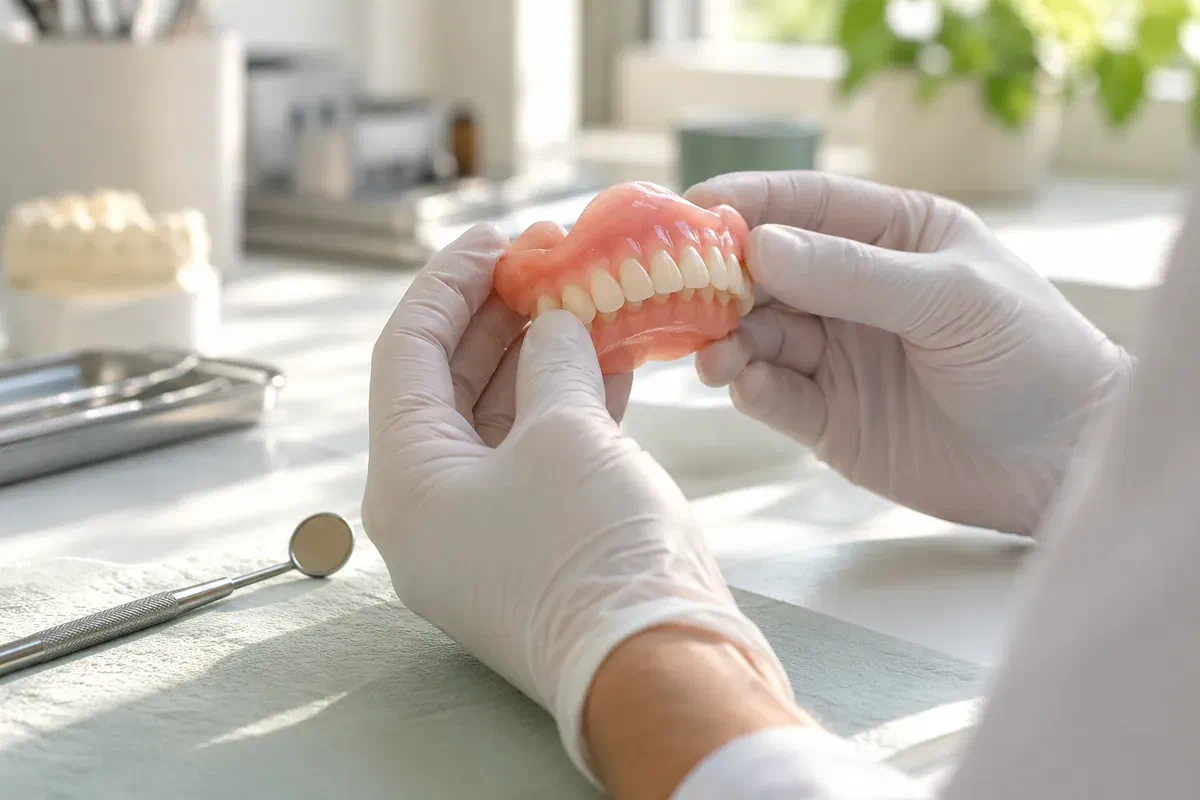
The teeth, the base and the fit are separate pieces of the puzzle, yet they have to be judged together. A rebase is worth considering when the base needs renewal and the current teeth still earn their place.
Ageing material, worn areas or several past fixes can all justify a careful look. The dentist decides whether a targeted repair would do or whether the base as a whole should be replaced.
You might value their look or the way they still bite. Even so, wear and tooth position must be checked, since a nice-looking row of teeth does not by itself prove they belong in a new base.
Gums and bone change over time, and a denture that once sat firmly may not now. Ask which element needs attention and whether the proposed work considers support and bite rather than only the acrylic on show.
If a denture keeps cracking or rubbing, the reason matters as much as the repair. Copying an unsuitable setup into new material would only carry the problem forward.
For the right denture, a rebase lets the base be renewed while a still-suitable tooth arrangement stays as it is. That is a more limited job than a full replacement, and it pays off only when the parts being kept are genuinely sound.
It will not repair worn biting surfaces, rebalance an unsuitable bite or resolve appearance worries linked to where the teeth are set. Ask plainly what stays unchanged and which shortcomings would remain before you pick it over a new denture.
Patient information: American Dental Association — dental terms
Where the existing teeth are still appropriate, keeping them can preserve a look and feel you are used to. Your clinician should describe how their condition and positions were judged.
Sometimes a patch or reline cannot do enough for a tired base. If replacement is suggested, ask what in the examination points to that level of work.
With the findings in hand, you can weigh the pros, limits, visits and cost of each path. A rebase should serve a defined purpose, never stand in for a frank discussion of a denture that has stopped suiting you.
No two dentures follow exactly the same path. It is reasonable to ask about records, lab time, how long the appliance will be away and when the fitting and review appointments happen before saying yes.
Your gums and supporting tissue are examined first, followed by the denture itself: its seating, its bite, its teeth and the condition of the acrylic. Past repairs and your symptoms add context, though the present condition is what decides suitability.
Consider whether repair, relining or a new denture might suit the findings better. Get clear on what a rebase alters, what it keeps and whether the retained tooth setup is still right for you.
Impressions and related records may guide how the new base is formed. You will hear how the denture is handled meanwhile and what to arrange while you are without it.
The rebased denture is tried in for fit, contacts and function. Care and wearing instructions follow, and a review lets you raise anything noticed during normal daily wear.
Even with teeth you know well, the denture may feel different once the base has changed. Stick to the guidance you receive and tell us about any change in comfort or chewing so the new base can be judged fairly.
Ask how to reintroduce the denture and whether anything should be avoided at first. A sore patch is a reason to call, not something to tolerate because the teeth feel like old friends.
Products you used for years may not suit the new material. Check which brush, cleanser and overnight storage are right, particularly where the denture includes liners or other parts.
Note any rocking, pressure or a bite that lands differently. The visit helps show whether a minor adjustment will settle things or whether another cause should be explored.
A rebase does one particular job. These answers explain how it differs from relining, repair and full replacement, so you can choose with confidence.
Book time at our Bronte Street clinic for a review of a denture base that is worn or causing trouble. We examine the teeth, the fit and the tissues beneath, then tell you whether rebasing or another option would address the concern better.
Please bring the denture and anything you know about its past repairs or relines, which helps us understand how it has changed.
