A worn or repaired base
Roughness, cracks, material breakdown or old repairs can irritate the tissues. The dentist decides whether a contained repair could fix it or whether the base needs replacing.


Sore spots, pressure and rubbing are often what bring a denture in for a look. Sometimes the base is to blame, sometimes the teeth or the fit. We can find the source and tell you whether rebasing would help.
Discomfort is a symptom, not a diagnosis. A rough edge on worn acrylic, a base that no longer matches your gums, or teeth that meet unevenly can all feel similar. Rebasing addresses one of those causes: it replaces the base material and keeps the existing teeth, provided they and their arrangement are still suitable.
Two other treatments may fit a different cause. A reline renews the fitting surface while keeping the original base, and a new denture rebuilds the whole appliance. Choosing between them means examining everything at once, including how it fits and bites, how worn the teeth are, how it looks and the health of the tissues that carry it.
From Puslinch, it is worth calling before you come in so we can advise whether the problem needs attention soon. At our Bronte Street practice we then check whether a rebase would remove the real cause of the soreness. Tell us about past repairs, fit changes and what you want to keep; you will hear why the teeth merit keeping and what a new base cannot change.
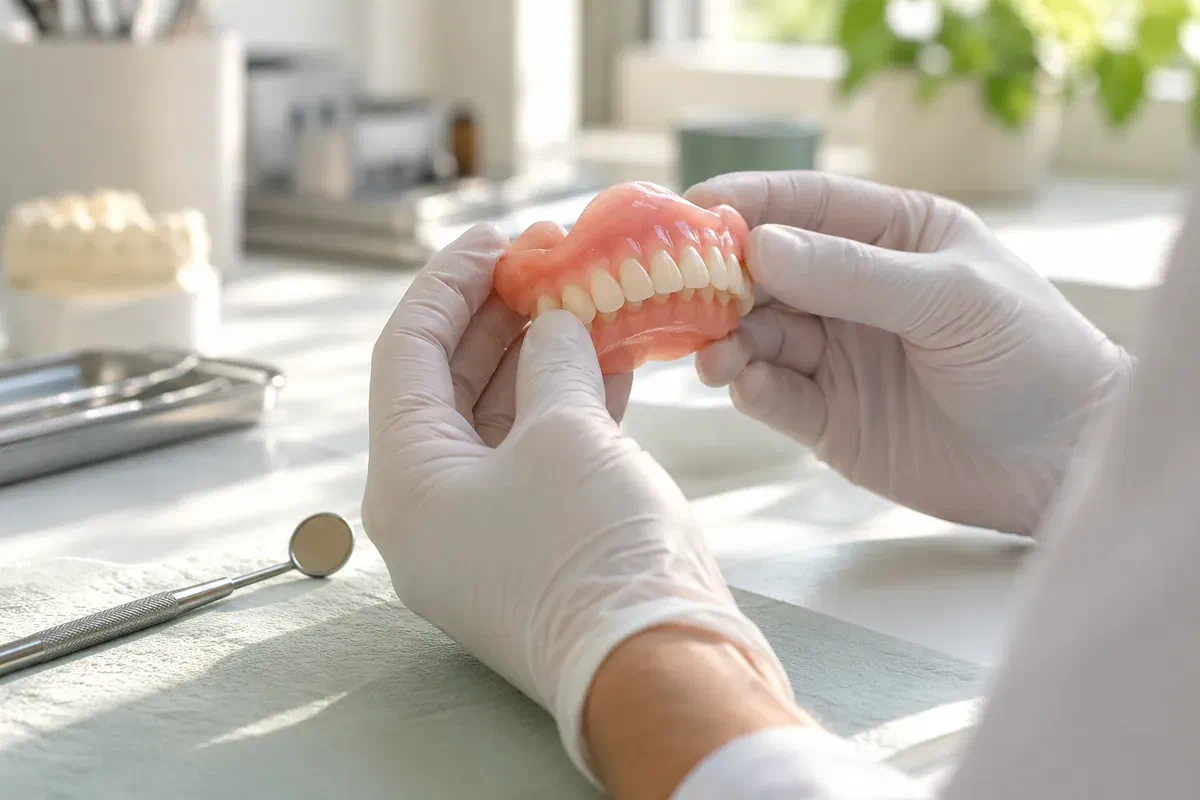
The base, the teeth and the fit each play a part in comfort. A rebase is considered when the base is the main problem and keeping the existing teeth still makes clinical sense.
Roughness, cracks, material breakdown or old repairs can irritate the tissues. The dentist decides whether a contained repair could fix it or whether the base needs replacing.
Teeth you like can still contribute to pressure if they are worn or positioned poorly. That is why their condition is checked, not just their appearance, before a rebase is suggested.
As gums and bone change, the denture may press in some places and lift in others. Ask which part of the appliance needs attention and whether support and bite are part of the plan.
Recurring sore spots or breaks call for an explanation. Renewing the base without finding the cause could rebuild the same discomfort into fresh material.
If the base is behind the problem and the teeth remain suitable, a rebase can renew that foundation while the tooth arrangement stays. It is a narrower job than a new denture and helps only when the parts being kept are sound.
It is not a fix for every source of soreness. Worn teeth, an unsuitable bite and appearance issues tied to tooth position are not resolved by a new base. Ask what will not change, and which discomforts might remain, before choosing it over a new appliance.
Patient information: American Dental Association — dental terms
When the teeth remain appropriate, keeping them may preserve a look and bite you already accept. Ask how their condition and position were assessed.
A rough, cracked or poorly fitting base sometimes needs more than smoothing or relining. Ask what the examination showed and why a full renewal is proposed.
With the cause identified, you can compare benefits, limits, visits and cost for every route. Choose a rebase because it addresses the problem, not because it avoids talking about a denture that may no longer fit your needs.
The path depends on your denture and the work required. Ask about records, lab time, how long you will be without the appliance and when the fitting and review are scheduled before agreeing.
We examine the gums and supporting tissues, noting any irritated areas, and then check the denture’s seating, bite, teeth and base. Your symptoms help us look in the right places.
Discuss whether a repair, reline or new denture would address the findings better than a rebase. If a rebase is chosen, you should understand which parts are new, which are carried over, and why those teeth are judged worth carrying.
The dentist may take impressions to guide the new base. If your gums are irritated, you may be advised on how to wear the denture until the next stage.
The rebased denture is checked in your mouth for seating, contacts and function. You get care guidance and a follow-up appointment for anything that appears in everyday wear.
Even with familiar teeth, the new base will press on your gums in a slightly different way. Follow your instructions, and tell us about any discomfort or change in chewing so the fit can be assessed properly.
Go back to wearing it in the way you were shown. Given why you came in, any new sore spot matters: call us rather than tolerating it because the teeth are familiar.
Cleaning advice can change with a new material. Confirm the right brush, cleanser and storage, particularly if your denture has liners or extra components.
Note where and when you feel movement, pressure or an altered bite. Those details let us tell a spot that needs easing from a problem with a different cause.
Rebasing addresses one possible cause of denture discomfort. These answers help you understand when it applies and what else might be involved.
Call or book a visit at our Bronte Street clinic and bring the denture that is causing discomfort. After examining the base, the teeth and the gums beneath, we explain whether rebasing or a different treatment would ease the problem.
Bring the denture and any history of repairs or relines, and note where it has been sore, so we can see what has changed.
