Thinning, roughness or hairline marks
Early changes in the acrylic, or areas that have been repaired before, can be monitored or treated. The dentist decides whether a contained repair would do or whether the base should be renewed.


Nothing hurts yet, but a check-up has shown the base of your denture is wearing. Acting before it cracks can give you more choice about timing, and a chance to keep teeth that still suit you.
Many denture problems are found quietly, at a routine visit, long before anything breaks. When the wear is in the base rather than the teeth, rebasing becomes one option. The old base material is replaced and the existing teeth are kept, as long as an examination shows they and their arrangement remain suitable.
Two alternatives sit either side. Relining adds fresh material to the surface that touches your gums but keeps the original base. A new denture replaces everything, teeth included. Which makes sense depends on the whole appliance, so the dentist looks at fit, bite, tooth wear and appearance together with the condition of your gums and bone.
Planning from Rockwood gives you the advantage of time. At our Bronte Street practice we can explain whether a rebase would deal with the wear that has been found, and when it would be sensible to do it. Mention earlier repairs, changes in fit and what you would like to keep, so the recommendation explains why the teeth should stay and what a new base leaves as it is.
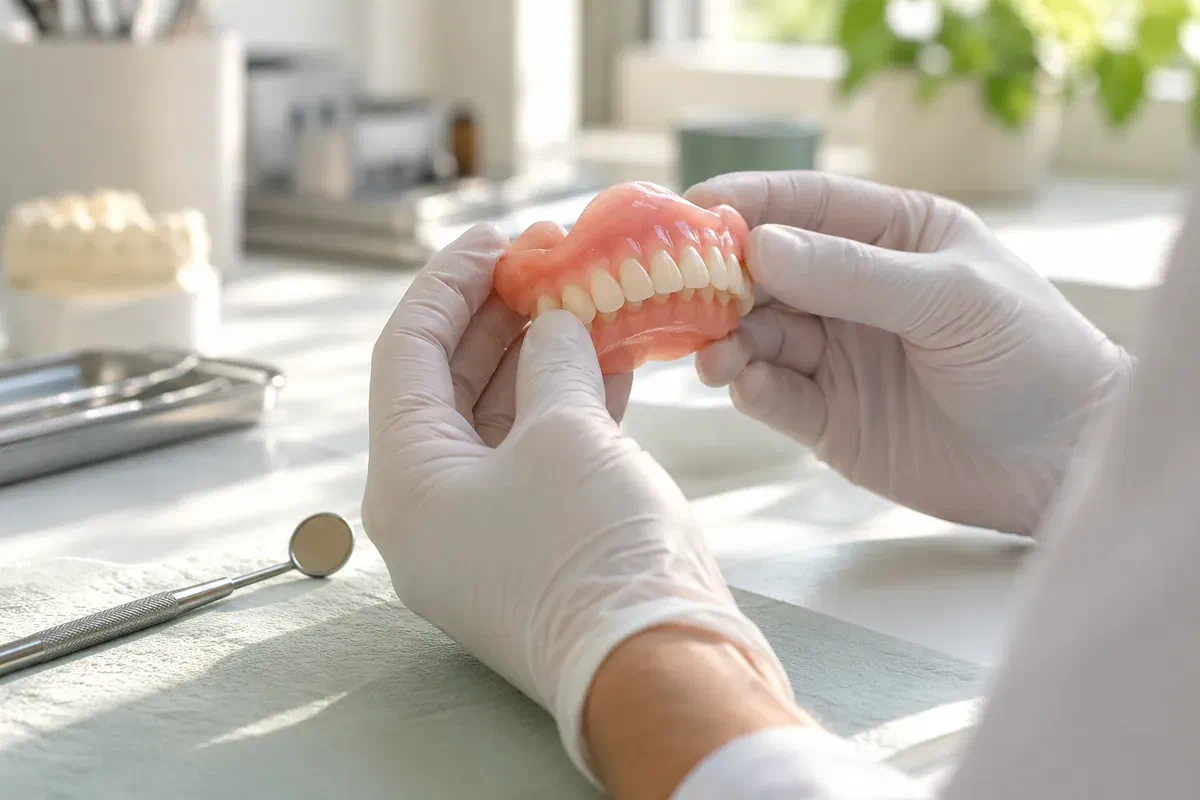
Wear in the base, the teeth and the fit rarely stays still. A rebase is weighed when the base is heading toward renewal and the existing teeth are still a sound choice.
Early changes in the acrylic, or areas that have been repaired before, can be monitored or treated. The dentist decides whether a contained repair would do or whether the base should be renewed.
You may be content with the teeth and how they chew. Their wear and arrangement are still assessed, because appearance alone does not show they should be carried into a new base.
A slight looseness or a new pressure point may lead to talk of relining, rebasing or replacement. Ask which part the plan targets and how it accounts for support and the bite.
Wear that keeps returning in the same place usually has a cause. Identifying it means a new base will not simply repeat an unsuitable arrangement.
In a suitable denture, a rebase replaces the base and keeps a tooth arrangement that still works. Planning it before a breakage may give you more say over when it happens. Its narrower scope only helps, though, if what you are keeping is sound.
A new base does not rebuild worn teeth, correct an unsuitable bite or change appearance concerns that come from tooth position. Ask what will remain, and what limits persist, before you choose it instead of a new denture.
Patient information: American Dental Association — dental terms
If the existing teeth are still suitable, keeping them may preserve the look and bite you know. Ask how the clinician judged their condition.
Early wear may be easier to plan around than a sudden break. If a full new base is advised, the reasons should come from what the dentist found.
Without the pressure of a broken denture, you can weigh benefits, limits, visits and cost for each route. Pick a rebase for a clear reason, and be ready to discuss whether a new denture might serve you better.
Each case varies with the denture and the treatment. Ask what will be recorded, whether a lab is involved, how many days you might be without the denture and when fitting and review take place, then book around your calendar.
The dentist looks at your gums and supporting tissues and checks how the denture sits, how the teeth meet and the state of the base. What you have noticed helps, but the current findings decide suitability.
Compare a repair, reline or new denture with a rebase. Be clear on which parts would be renewed and which carried over, and pick a time that suits you.
Impressions may be taken so the new base suits your mouth. The team explains how the denture is handled and how long it is likely to be away.
The rebased denture is tried in for seating, contacts and function. You receive care advice and a follow-up appointment to deal with anything you notice once it is in daily use.
Even a planned rebase brings a change in how the denture rests on your gums. Follow the guidance you are given and mention any change in comfort or chewing, so the base can be evaluated.
Ask how to begin wearing it again and whether there are precautions. If a sore area develops, contact us rather than waiting for it to settle on its own.
The new material may need different products. Ask which brush, cleanser and storage are suitable, particularly if the denture has liners or other parts.
Describe any movement, pressure or bite change. This is when we decide whether a minor adjustment is needed or something else should be looked at.
Rebasing can be planned rather than rushed. These answers cover timing and how a rebase compares with relining, repair and replacement.
Book an appointment at our Bronte Street clinic to have early wear on your denture base reviewed. We look at the teeth, the fit and your gums, then explain whether rebasing, another treatment or simply monitoring makes most sense.
Bring the denture and any notes from your last check-up or past repairs, so we can see how it has changed.
