It drops or lifts on certain words
Note whether it happens during speech, while chewing or only when you open wide. Movement tied to one activity can point to a different cause than a denture that never feels steady.


A denture that clicks or slips while you talk can make conversation feel tense. From Burlington, you can have the fit examined and learn whether a reline, an adjustment or a different step suits your appliance.
You are telling a story on the phone and the upper denture drops slightly, or the lower one lifts on a certain word. You start choosing phrases around it. Small shifts like these often mean the appliance no longer sits as closely on the gums as it once did.
Relining replaces the contact surface on the inside of the denture so that it can rest more evenly on the tissues beneath. The visible teeth, the shape of the smile and the outside of the base do not change. Speech and stability are influenced by more than the fit, though, so the teeth and the way they meet are examined before a reline is offered as the answer.
Before anything is decided, describe what happens when you speak, eat or yawn and whether any part feels sore. Those observations, together with a hands-on examination, help the dentist tell you whether relining would address the movement or whether a different plan is called for.
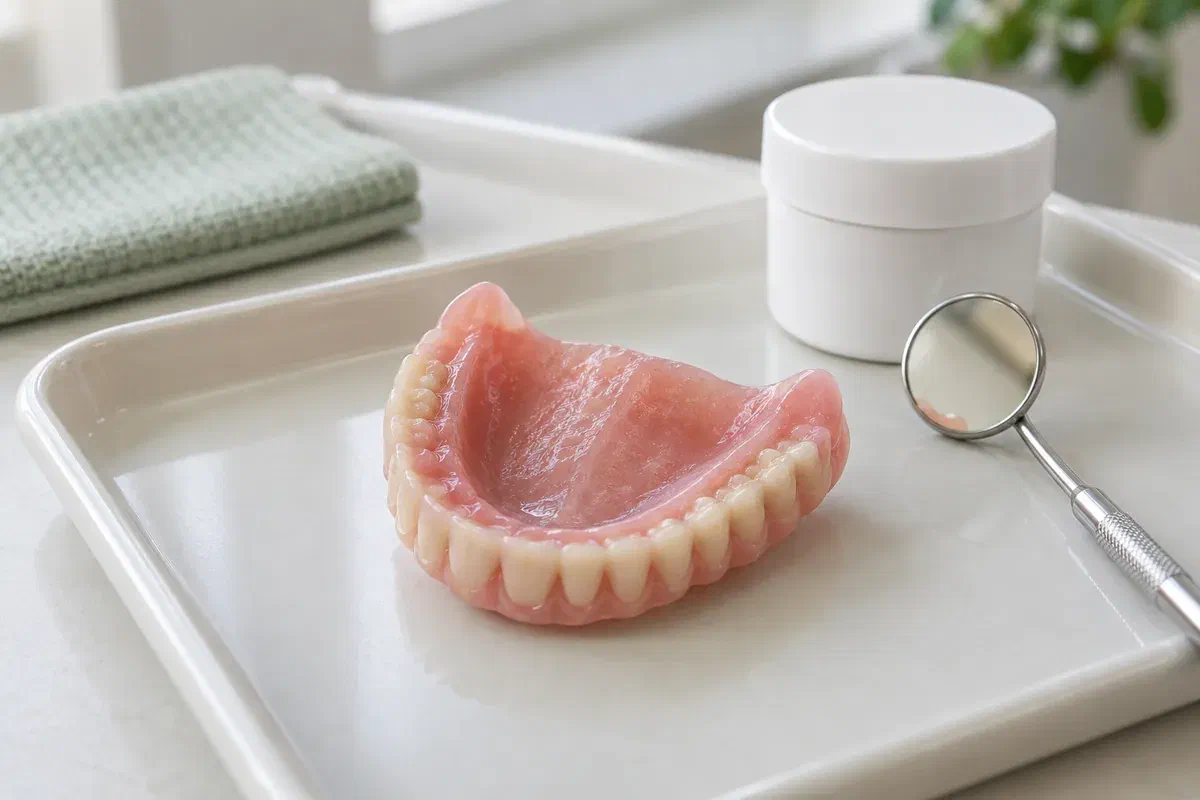
Movement can come from the fit, the edges, the bite or the tissues themselves. A fit review sorts through those possibilities, because the same feeling of looseness can lead to different advice.
Note whether it happens during speech, while chewing or only when you open wide. Movement tied to one activity can point to a different cause than a denture that never feels steady.
After extractions, or simply over time, the ridges under a denture can change. Ask whether your mouth is stable enough for a reline or whether it is still settling.
If crumbs or seeds now slip beneath the base, or a patch of gum feels irritated, mention it. The dentist can check whether the inner surface or edges are part of the problem.
Have the fit checked before using more adhesive or a do-it-yourself liner. Both can cover the symptom while leaving the question of whether the appliance is still suitable unanswered.
When the bite, the base and the tooth arrangement are still working, renewing the fitting layer can be a focused response to gums that have shifted. Any improvement you can expect, including steadier speech, should be explained against what is actually found.
Some problems sit outside a reline’s reach. It does not rebuild worn teeth, correct every border or repair a fragile base. Ask the dentist to separate the concerns likely to improve from the ones that might remain.
Patient information: Canadian Dental Association — dentures
The treatment centres on where the denture meets your gums. Seeing it that way helps you judge whether it matches the slipping or rubbing you notice.
If the teeth and their arrangement still suit you, they can stay. Mention what you like, such as the look or how comfortably you talk, as well as what you want changed.
If tissues are still healing, an interim approach followed by reassessment may be suggested. Ask whether the material and timing are meant to be temporary or longer lasting.
The technique and schedule depend on your appliance, your gums and the lining chosen. You should know what is planned, whether you will be without the denture and how the result will be reviewed.
Bring the denture and describe the situations that cause trouble. Mention extractions, past relines, sore areas and how much adhesive you rely on these days.
The dentist looks at the tissues, the base, the teeth and the bite. A reline is considered alongside an adjustment, a rebase or a new denture.
You will talk about the material, the impressions needed and any lab involvement. Ask how the denture may feel at first, when you can wear it and what to expect while speaking.
Fit and contacts are reviewed in your mouth and you receive cleaning instructions. Attend the follow-up and report any pressure or movement once you are back to your usual conversations and meals.
Instructions vary with the lining material and the condition of your gums. Ask what suits this appliance instead of assuming your old cleaning routine still applies.
Certain liners need gentle products. Find out which brush, cleanser, soak and storage method are suitable, and ask the team to demonstrate how to clean without causing damage.
Note pressure, rocking, changes to your bite or clicks while talking, and when they occur. Do not keep testing a tender area or try to reshape the lining yourself.
Routine oral examinations continue after a reline. Your clinician can advise when the denture and gums should be checked, especially if your mouth is still changing.
Helpful questions connect the proposed lining to your appliance and daily life. Ask what should improve, what the appointments involve and how to care for the result.
Visit our Bronte Street practice to discuss a denture that has become loose or sore. We examine its support, teeth and bite, then explain whether a reline or another fit correction makes the most sense.
Mention any earlier linings, repairs and changes you have noticed while talking or eating.
