Rocking that has returned
Describe whether it moves during meals, conversation or opening wide, and whether the pattern matches what happened before. A different pattern may suggest a different cause.


A denture that has been relined before and is loose again raises a fair question: another lining, or something more? Households in Caledon can have the appliance reviewed and the next step explained.
The last reline worked well for a while. Now the familiar wobble is back, and you are wondering whether to repeat it or whether the appliance has had its day. There is no automatic answer; it depends on what has changed in your mouth and in the denture since then.
Relining adds a fresh surface inside the base so it follows the gums as they are now, while keeping the teeth and outer form. Each time, the decision rests on whether the rest of the denture still deserves to be kept. Teeth wear, bases age and bites drift, and a new lining does nothing for any of those.
Bring whatever you remember about past linings and repairs, and describe how the looseness has come back. After examining the appliance and your gums, the dentist can explain whether another reline is sensible or whether a rebase or new denture would give you more for your time.
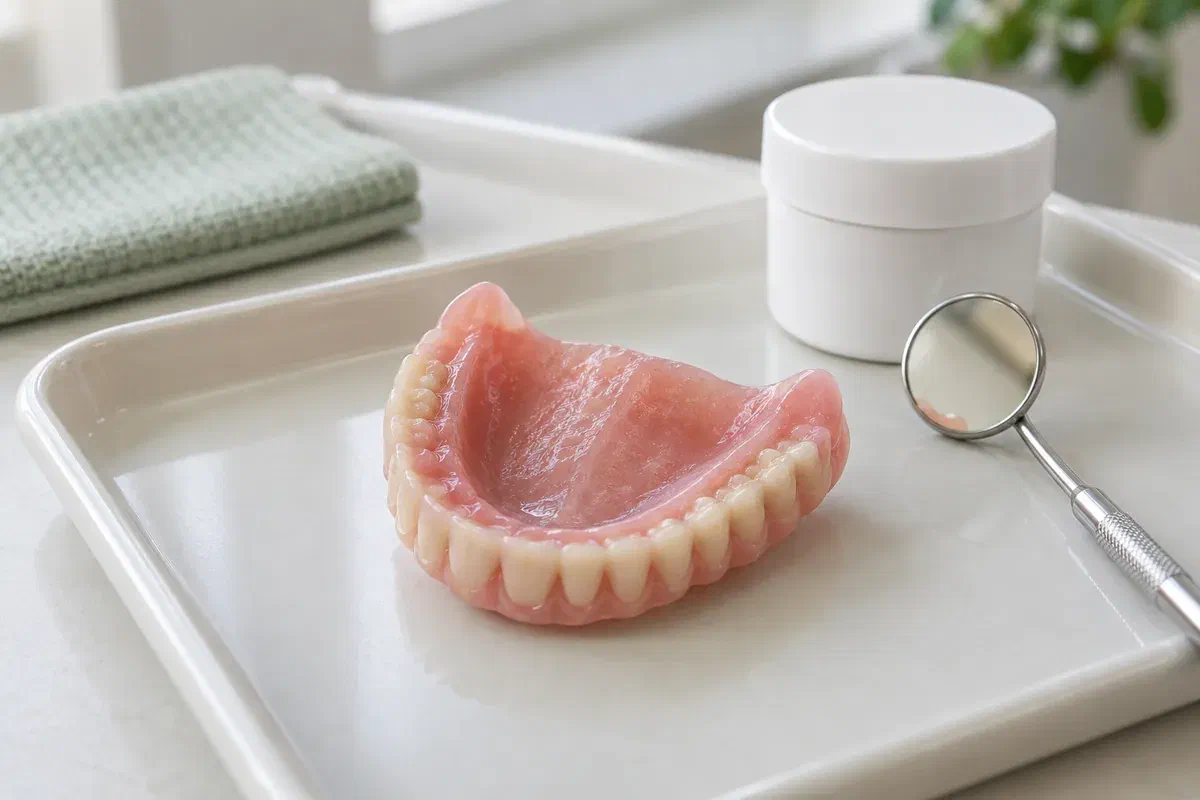
Every review starts fresh. The dentist considers the support beneath the base, how the appliance moves with use and the health of the tissues, because the reasons for looseness can differ from last time.
Describe whether it moves during meals, conversation or opening wide, and whether the pattern matches what happened before. A different pattern may suggest a different cause.
Ridges can keep remodelling over the years, especially after more extractions. Ask how ongoing change affects the value of another lining at this point.
Food under the base or a newly sore area is worth reporting even if the denture looks intact. The lining, borders or another part of the appliance could be involved.
Please let us examine the appliance before adding adhesive or applying a home lining over the old one. Layering materials can hide the cause and complicate any professional work.
If the base, the bite and the teeth have held up, a renewed fitting surface can again respond to gums that have changed. The dentist should explain the expected improvement using what the examination shows about the appliance today.
The limits grow more important with each lining. A reline does not restore teeth that have worn down, rebuild aged borders or strengthen a base that has weakened. Ask which concerns another lining would address and which point toward a bigger step.
Patient information: Canadian Dental Association — dentures
The work focuses on the surface against your gums. That helps you judge whether it targets the returning looseness or whether the problem now lies elsewhere.
When the teeth and their arrangement still look and function well, relining lets you keep them. Tell us what you value about the denture as well as what has slipped.
Ask whether another lining is a bridge to replacement or a reasonable long-term step. Knowing the bigger picture helps you plan both care and visits.
The method and timing depend on the appliance, your tissues and the material. Before treatment, you should understand the steps, any time without the denture and the follow-up plan.
Arrive with the appliance and tell us roughly when it was made, how often it has been relined or repaired and when the looseness returned. Mention any sore areas and your adhesive use.
The dentist checks your gums, the condition of the base, tooth wear and the bite. Another reline is weighed against an adjustment, a rebase or a replacement.
You will talk about the lining material, records needed and any laboratory work. Ask how long the denture may be away and what limitations another reline would carry.
Fit and contacts are checked once the work is done and you receive care instructions. Keep the follow-up and report pressure or movement that appears in daily life.
Care depends on the material placed and your gums. A new lining may need different handling from the last one, so ask for instructions for this appliance.
Different liners tolerate different cleansers. Ask which brush, product, soak and storage are safe now, and get a quick demonstration of a technique that protects the surface.
Note new pressure, rocking or changes in how your teeth meet, and when they occur. Calling early is better than waiting, testing sore spots or altering the lining yourself.
Routine oral checkups help catch changes before the fit slips far. Your clinician can recommend a review interval that suits your mouth and the age of the denture.
Useful questions link the next step to your appliance and its history. Ask what should change, how the appointments will run and what care follows.
At our Bronte Street practice, we can examine a denture that has loosened again, check its support, teeth and bite, and explain whether another reline or a different fit correction would serve you better.
Any details about earlier linings and repairs are useful, along with roughly when the looseness returned.
