It moves as you chew, speak or yawn
Pay attention to the situations that make it shift. A denture that lifts only during one activity may have a different underlying cause from one that never feels secure.


A pharmacy reline kit or a thicker line of adhesive can look like an easy fix for a loose denture. From Georgetown, you can have the fit examined first and hear whether a professional reline would truly help.
A tube of adhesive used to last weeks. Now it runs out fast, and the drugstore shelf offers a home lining kit that promises a snug fit. It is an understandable shortcut, but it skips the question that matters most: why has the denture stopped fitting?
A professional reline adds a new inner surface shaped to your gums so the appliance sits more closely again, leaving the teeth and outer form as they were. It works best when the rest of the denture is still in good condition. Home materials, by contrast, can harden unevenly, change the bite and hide problems that a reline alone would not solve.
We start by listening. Tell us how much adhesive you now use, when the denture slips and whether you have tried any liners at home. Then the dentist examines the appliance in your mouth and explains whether relining makes sense, or whether an adjustment, a rebase or a new denture is the more honest recommendation.
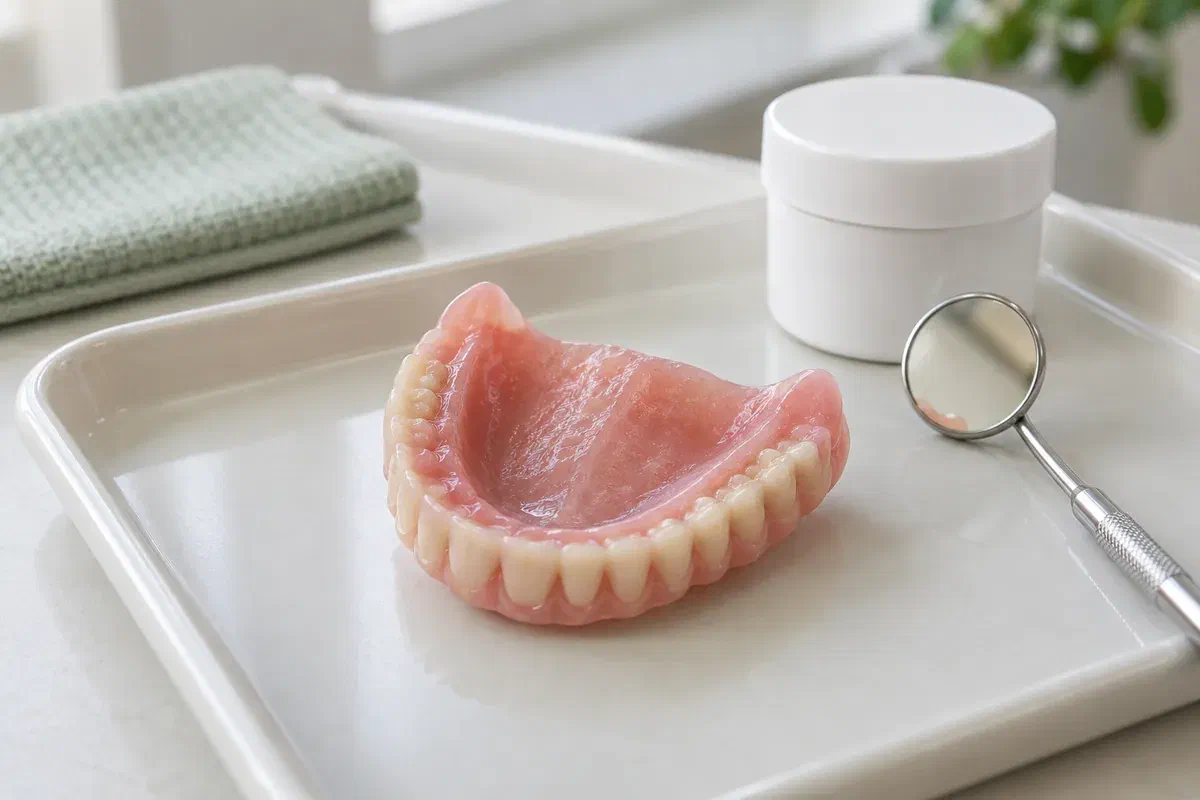
Looseness can stem from changed gums, worn edges, the bite or the condition of the tissues. A proper review sorts out which, since the same feeling can call for different treatment.
Pay attention to the situations that make it shift. A denture that lifts only during one activity may have a different underlying cause from one that never feels secure.
Tissue reshaping after extractions can loosen a denture over time. Ask how far healing has progressed and whether this is a good moment for a reline.
Trapping, rubbing or a newly tender area deserve mention even if nothing looks broken. The inner surface, edges or another part of the appliance may be responsible.
If you have already used a home liner, please tell us. It is not a reason for embarrassment, and knowing what was applied helps the dentist assess the denture accurately.
When the base, the bite and the teeth still do their job, a professionally placed lining can respond to gums that have changed while keeping an appliance you rely on. The improvement you should expect is something the dentist can explain after examining it.
There is a ceiling on what relining achieves. It will not rebuild worn teeth, redesign the borders or strengthen a base that has become fragile. Ask which concerns are expected to improve and which might remain afterward.
Patient information: Canadian Dental Association — dentures
The work aims at the surface that touches your gums. That helps you see whether it addresses the slipping or soreness that adhesive has been masking.
If the existing teeth and their positions still serve you, they are usually left alone. Mention what you like about the denture as well as what you want fixed.
If healing is ongoing, an interim lining with a later review may be suggested. Ask whether the material and timing are temporary or meant for a settled mouth.
The method and schedule depend on your appliance, your tissues and the lining. You should understand the plan, how long the denture may be away and how it will be reviewed before treatment begins.
With the denture in hand, describe when the looseness started, how much adhesive you use and whether any home liner was applied. Also mention extractions, past relines and sore spots.
The dentist checks the gums, the base, the teeth and the bite. Any home material is assessed, and relining is compared with an adjustment, a rebase or a replacement.
You will discuss the lining type, impressions and whether a lab is involved. Ask how the denture will feel afterward, when you can wear it and what it will not change.
Fit and contacts are confirmed in your mouth and you receive care instructions. Keep the review appointment and report pressure or movement that becomes noticeable in daily life.
Care depends on the lining and the condition of your gums. Ask what suits this appliance instead of continuing every product, adhesive habit or home remedy from before.
Some liners react poorly to certain cleansers or stiff brushes. Ask which products, soaking method and storage are suitable, and have the team show you how to clean the surface gently.
If pressure, rocking or a bite change appears, note when it happens and call. Avoid adding adhesive to compensate, pressing on a sore spot or shaving the lining yourself.
A reline does not replace routine oral checkups. Your clinician can recommend when the denture and gums should be looked at again, particularly if the mouth is still changing.
Useful questions connect the lining to your own denture and habits. Ask what should change, how the appointments run and how to care for the result.
Our Bronte Street practice can examine a denture that slips or causes soreness. We look at the gums, teeth and bite, then explain whether a professional reline or a different correction would help.
Please tell us which adhesive you use, whether you have tried a home liner and about any earlier linings or repairs.
