It tips when you chew or talk
Note whether the movement comes with biting, certain words or opening wide. A denture that lifts only during meals may have a different issue from one that feels unsteady all day.


When a denture starts lifting as you bite into dinner, the gums beneath it may have changed. Talk with our Milton team about whether a reline could restore closer support for the appliance you already wear.
Many people first notice the problem at the table. You bite into a sandwich or a piece of fruit, and the front of the denture tips away from the gum. Nothing has cracked, yet the appliance no longer settles the way it used to.
Relining renews the inner surface that sits on your gums, so the denture can rest more closely on tissues that may have shifted since it was made. The teeth and outer shape stay as they are. That focus is useful when the rest of the appliance still serves you well, and it is also why a reline cannot fix every cause of movement.
Your visit starts with questions rather than materials. Which foods make it lift? Is any spot tender? Have you been using more adhesive lately? With those answers and an examination, the dentist can tell you whether a new fitting surface makes sense or whether something else is driving the looseness.
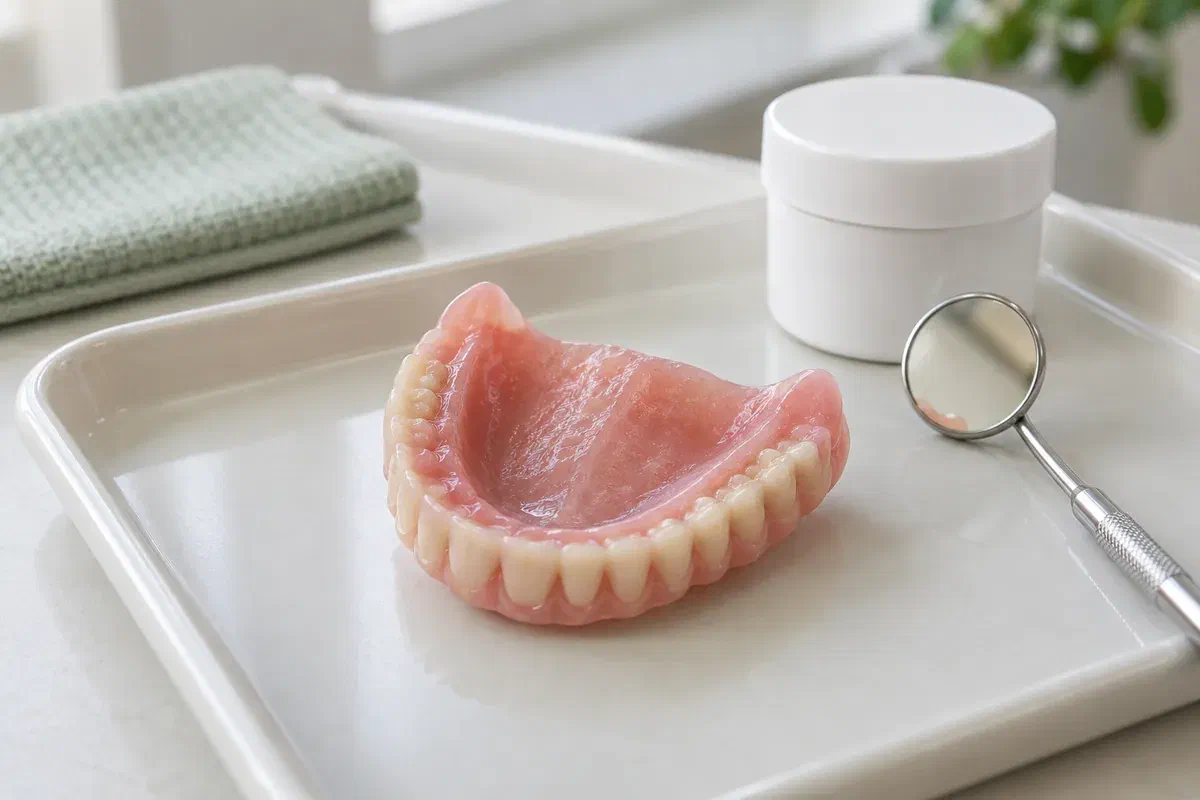
Looseness is a starting point, not a diagnosis. We look at where the denture gets its support, how it behaves in use and how healthy the gums are.
Note whether the movement comes with biting, certain words or opening wide. A denture that lifts only during meals may have a different issue from one that feels unsteady all day.
Tissues can keep changing for some time after teeth are removed, so a denture made in that period may need its fit revisited. Ask how far along healing is and how that affects when a reline would be sensible.
Crumbs that never used to get trapped, or a new patch of irritation, are worth reporting even when the appliance looks intact. The dentist can check the fitting surface, the edges and other features that might be involved.
Please have the denture examined before anything is changed. Extra adhesive or a drugstore liner can mask a poor fit without answering whether the appliance is still right for you.
If the teeth, the bite and the base are still in good shape, a fresh fitting surface can be a targeted way to deal with gums that have changed underneath. Any expected improvement should be explained using what the dentist finds in your appliance.
It helps to be clear about what stays the same. Worn teeth remain worn, the borders are not fully redesigned, and a weakened base does not become sound simply because it has a new lining. Before you agree to treatment, ask which of your concerns should improve and which may still need attention.
Patient information: Canadian Dental Association — dentures
Treatment concentrates on the surface that touches your gums. Knowing that lets you judge whether the plan matches the lifting, rubbing or trapping you notice.
When the current teeth and their arrangement are still suitable, they can usually stay. Tell us what you are happy with, such as the look or the way you speak, as well as what bothers you.
While tissues heal, the plan may involve an interim lining and a later recheck. Ask whether the proposed material and timing are meant for a temporary phase or for a mouth that has largely settled.
Methods and timing vary with the appliance, your gums and the material chosen. Before work begins, you should know the steps, any time without the denture and when it will be rechecked.
Bring the denture with you and describe when it started to feel different. Recent extractions, earlier relines, sore spots and how much adhesive you now rely on all help us focus the examination.
The dentist checks whether your mouth is ready for treatment and whether the rest of the appliance is still suitable. Relining is weighed against an adjustment, a rebase or a new denture where those make more sense.
We discuss which type of lining fits your situation, what impressions are needed and whether a dental laboratory will be involved. You can ask how it may feel afterward, when you can wear it again and what limits to expect.
Once the work is done, fit and tooth contacts are checked in your mouth and you receive care instructions. Keep the follow-up visit and report pressure or movement that appears later.
How you look after the appliance depends on the lining placed and on your gums. Ask for instructions that match your denture rather than assuming every cleanser or soak you used before is still a good choice.
Certain liners need gentler handling. Ask which brush, cleaning product, soaking routine and storage method suit the new surface, and have the team demonstrate how to clean it without scratching or wearing it down.
Make a note of fresh pressure, rocking or a change in how your teeth come together, and when it happens. Avoid pressing on a sore area again and again, and never trim or reshape the lining at home.
A relined denture still calls for routine oral examinations. Your dentist can recommend when the appliance and gums should be looked at again, especially if your mouth is still healing or changing.
Good questions tie the proposed lining to your own denture and daily routine. Ask what should change, how the appointments will run and how to care for the appliance afterward.
Come to our Bronte Street practice to talk about a denture that has become loose or sore. We examine the support, teeth and bite, then explain whether a reline or a different fit correction is the better option.
Let us know about earlier linings, repairs and any recent change in how the appliance feels when you eat or speak.
