It shifts when you eat or speak
Pay attention to the moments it moves. Lifting during chewing may have a different cause from looseness that you feel even when your mouth is resting.


An immediate denture placed after extractions often loosens as the gums heal. If you are coming from Oakville, we can help you understand when a reline fits into that healing and what to expect from it.
It surprises many people. The denture fitted on extraction day felt secure, and a few weeks later it slips. That is often a sign of the gums and bone reshaping as they heal, rather than a fault in the appliance.
Relining is one way to respond. A new layer is added to the inside of the base so it follows the changed contours more closely, while the teeth and outward appearance stay the same. During healing, that lining may be meant as a stepping stone, with further review once your mouth has settled. It is not a cure for every kind of movement, so the bite and the appliance itself are checked as well.
Let us know when the teeth were removed, how the denture has behaved since and whether any area is tender. With that and an examination, the dentist can say whether this is the right moment for a reline or whether waiting, adjusting or another plan is better.
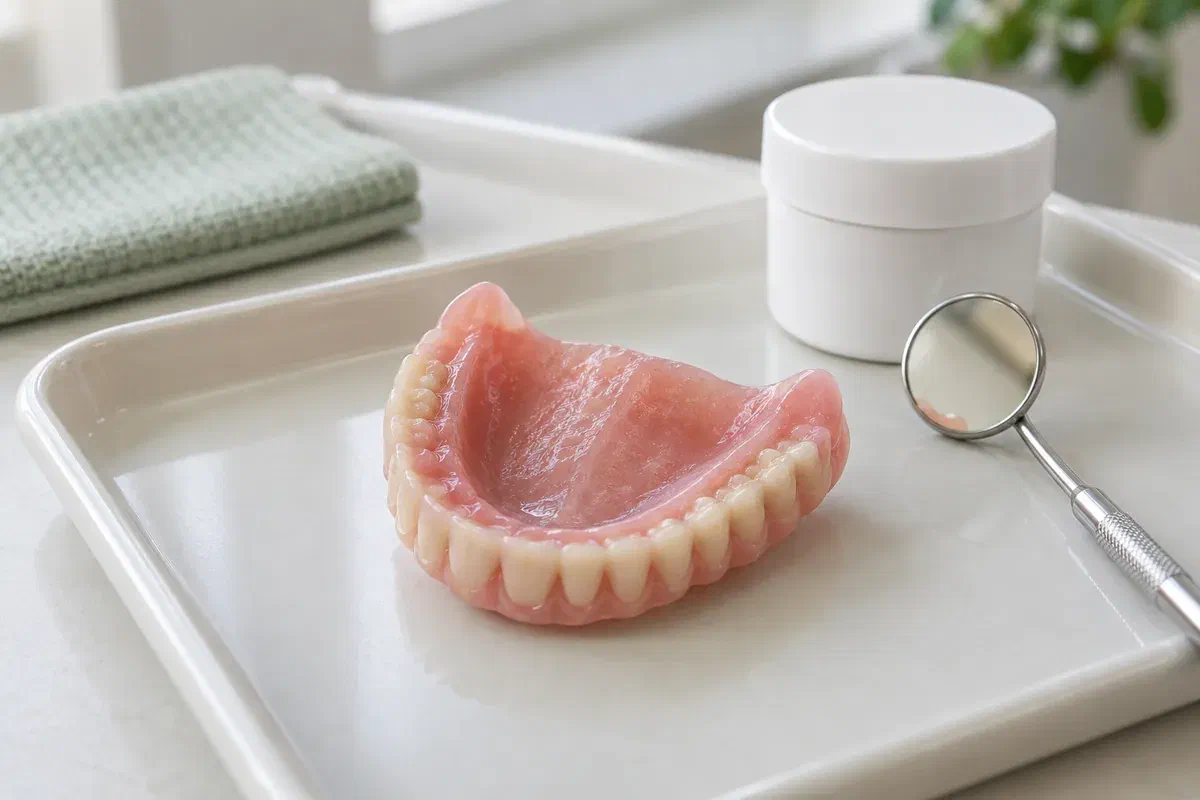
No two mouths heal at the same pace. The assessment looks at where the denture is supported now, how it behaves when you use it and whether the tissues are healthy enough for work.
Pay attention to the moments it moves. Lifting during chewing may have a different cause from looseness that you feel even when your mouth is resting.
As extraction sites heal, the ridges can shrink and change shape. Ask how your stage of healing affects whether a reline would help now or be more useful later.
New gaps can let food collect and irritate the gums. Mention it even if the denture looks undamaged so the fitting surface and borders can be checked.
Please do not try to fix the fit with a lining kit from the pharmacy or with extra layers of adhesive. Those can mask what is happening and make it harder to judge your healing.
When the teeth, bite and base are doing their job, a fresh fitting surface can help the denture keep pace with gums that are still changing. The dentist should explain what improvement is reasonable given your particular findings.
It is worth knowing the limits. Relining does not reset the healing process, replace worn teeth or fix a cracked base. Ask which of your concerns it should address and whether more treatment is expected once things have stabilized.
Patient information: Canadian Dental Association — dentures
The lining addresses the surface that sits on your tissues. That clarity helps you see whether it targets the slipping or soreness you notice day to day.
If the teeth and their arrangement suit you, they normally stay. Tell us what already feels right as well as what is bothering you.
Early on, the conversation may include an interim lining with reassessment to follow. Ask whether a proposed material is meant for the healing phase or for a mouth that has settled.
The technique and number of visits depend on your tissues, the denture and the lining material. Before treatment, you should know the steps, whether the appliance will be away from you and when it will be rechecked.
Bring the denture and describe how it has felt since it was placed. Note any sore spots, how much adhesive you now use and whether it has been adjusted or relined already.
The dentist examines your gums, the base, the teeth and your bite. Relining is weighed against an adjustment, waiting a little longer, rebasing or replacement as appropriate.
You will talk through whether an interim or longer-term material suits you, what impressions are needed and whether lab work is involved. Ask how it may feel and when you can wear it.
Fit and tooth contacts are checked after the reline and you leave with care instructions. Keep the review visit and report pressure or movement that shows up as you return to normal eating.
Instructions depend on the lining and on how far healing has progressed. Ask what suits your appliance now rather than relying on general denture advice.
Interim and soft linings can be more delicate. Ask which brush, cleanser and soaking routine are safe, how to store the denture and how to clean the surface without wearing it.
Jot down any new pressure, rocking or change in your bite and when it happens. Avoid pressing on a sore patch repeatedly or trimming the lining at home.
Because tissues may keep changing, your clinician may want to see the denture again. Routine oral examinations still matter, and further adjustment or relining may be discussed later.
Useful questions link the proposed lining to your healing and your appliance. Ask what should change, what the appointments involve and how to look after it.
Visit our Bronte Street practice to talk about a denture that has loosened since extractions or has become uncomfortable. We will examine its support, teeth and bite and explain whether a reline or another fit correction fits this stage.
Tell us the date of your extractions and about any linings, adjustments or changes you have noticed since.
