Movement during meals or speech
Let us know if the denture shifts while you chew, talk or open wide. Small, repeated movements across a day can add up to tender gums by evening.


Fine at breakfast, aching by supper: a denture that grows uncomfortable through the day may no longer spread pressure evenly. From Puslinch, have it examined and learn whether a reline could help.
Mornings feel normal. By late afternoon the gums ache and you are counting the minutes until the denture comes out. That pattern is easy to dismiss as tiredness, yet it can mean the appliance is no longer resting evenly, so a few areas carry more of the load.
Relining addresses this by renewing the inside of the base so it meets the gums more uniformly, while the teeth and outer appearance stay the same. It suits a denture that is otherwise in good condition. Soreness can also arise from a rough area, an edge that presses or a bite that has changed, so the full appliance is checked before a reline is advised.
Describe your day with the denture: when discomfort begins, where it is felt and whether it eases once the appliance is out. Together with an examination, those details let the dentist explain whether relining is likely to spread the pressure better or whether another fix is more appropriate.
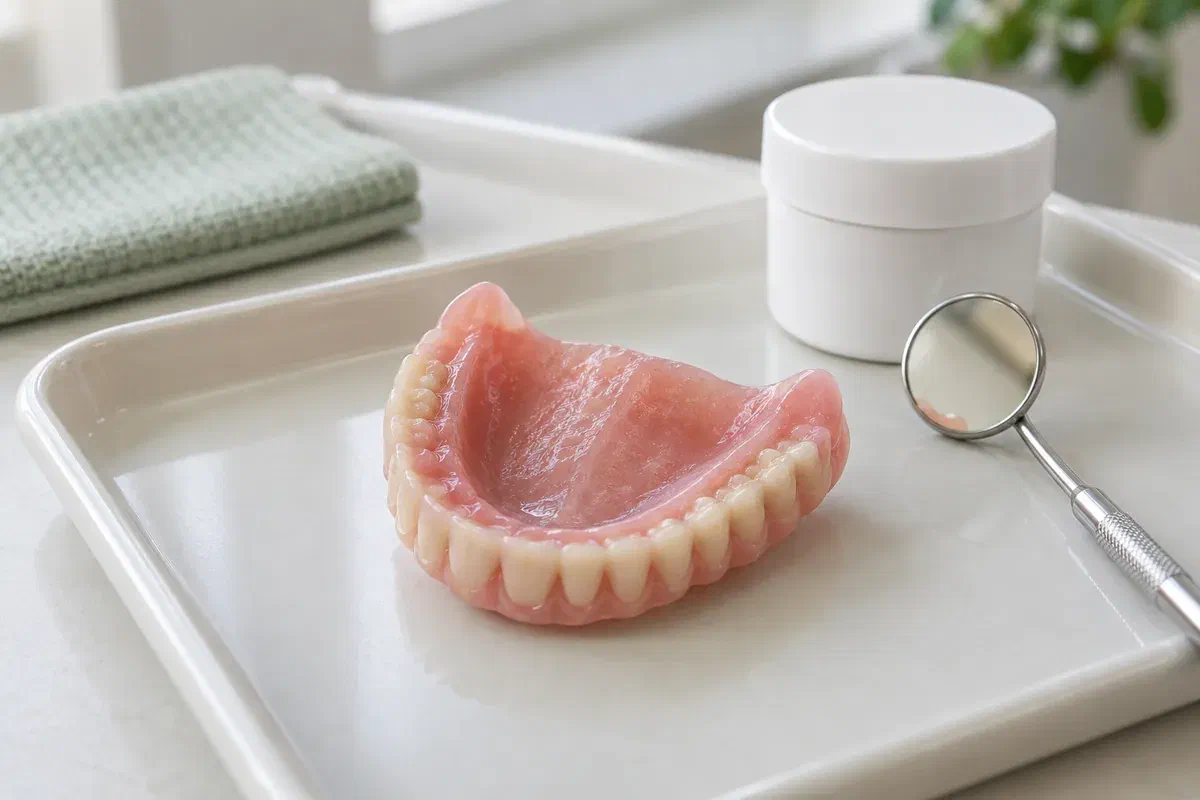
The dentist considers where the denture is supported, how it behaves with use and how healthy the tissues are. Gradual soreness and sudden pain can have different causes, and so can similar-sounding complaints.
Let us know if the denture shifts while you chew, talk or open wide. Small, repeated movements across a day can add up to tender gums by evening.
Gums continue to remodel after extractions. If teeth were removed around the time the denture was made, ask whether healing has reached a stage where a reline would be timely.
Food collecting under the base or an irritated spot that appears later in the day deserves mention. The fitting surface, edges or another feature may be the reason.
Please do not try to cushion the soreness with a home liner or extra adhesive. Those can mask uneven pressure without revealing whether the denture still suits your mouth.
If the base, teeth and bite remain in working order, a renewed fitting surface may distribute pressure more evenly over gums that have changed. The dentist should explain what improvement is realistic given the examination of your own appliance.
Relining does have limits. It does not rebuild worn teeth, redesign every border or make a deteriorated base dependable. Ask which sources of soreness it is expected to address and which might need another approach.
Patient information: Canadian Dental Association — dentures
The lining works on the surface in contact with your gums. That makes it easier to judge whether it matches the end-of-day aching you experience.
When the existing teeth still look and function well, they can usually be kept. Share what you like about the appliance alongside what you want improved.
If the gums are still healing, an interim lining with a later review may be discussed. It is fair to ask if that lining is meant for this stage only or for the long term.
The method and number of visits depend on the denture, your tissues and the lining material. Before anything is changed, you should understand the steps, any time without the appliance and the review plan.
With the denture in hand, tell us when soreness starts, where it is felt and how long you usually wear the appliance. Mention extractions, previous relines and adhesive use too.
The dentist examines your gums for signs of irritation and checks the base, teeth and how they meet. Adjusting, relining, rebasing and replacement are all considered.
We talk through the material, any impressions and whether laboratory work is involved. Ask how the denture may feel afterward and when you can wear it again.
After the work, fit and contacts are checked in your mouth and you receive care guidance. Attend the review, and mention any soreness that still builds through the day.
Care varies with the lining and your gums. Ask for guidance for this denture rather than relying on the products and routine you used before.
Some liners scratch or wear easily. Ask which brush, cleanser, soaking routine and storage method suit the new surface, and practise the technique at the clinic before you go.
Note when pressure, rocking or a bite change appears, and whether it worsens as the day goes on. Avoid pressing on tender spots or reshaping the lining yourself.
Regular oral checkups still matter after a reline. Your clinician can advise when to have the appliance and tissues reviewed, especially if your mouth is still changing.
Good questions link the proposed lining to your denture and your day. Ask what should change, how the visits run and what care follows.
If your denture grows uncomfortable or loose as the hours pass, book a visit at our Bronte Street practice. We examine its support, the teeth and the bite, and explain whether a reline or another fit correction would help most.
Tell us when the soreness usually begins and about any past linings or repairs.
