A crack in the pink base
A fine line or a complete fracture needs review before continued use. Describe whether the appliance was dropped or whether the crack appeared during ordinary wearing, and avoid flexing it to show the damage.


A crack, loose tooth, or damaged clasp can interrupt everyday life with a denture. Arrange a denture repair assessment in Milton to understand the damage, whether it can be repaired, and what needs attention before you wear it again.
Denture repairs address damage to an existing removable appliance. That might involve a fractured base, a detached artificial tooth, or another damaged component. The appropriate work depends on the material, extent of the damage, and whether the denture remains suitable for your mouth.
A break can happen suddenly after a fall, or it can be the final sign of a problem that has been developing for some time. Tell us if the denture rocked, clicked, or felt uncomfortable before it broke. Rejoining a damaged part does not necessarily address the reason it failed.
At Milton Dental Clinic, we assess the appliance and discuss the practical options with you. Bring every piece you can safely collect, including a detached tooth. We can explain whether repair is reasonable, whether fit also needs attention, and whether a more extensive change should be considered.
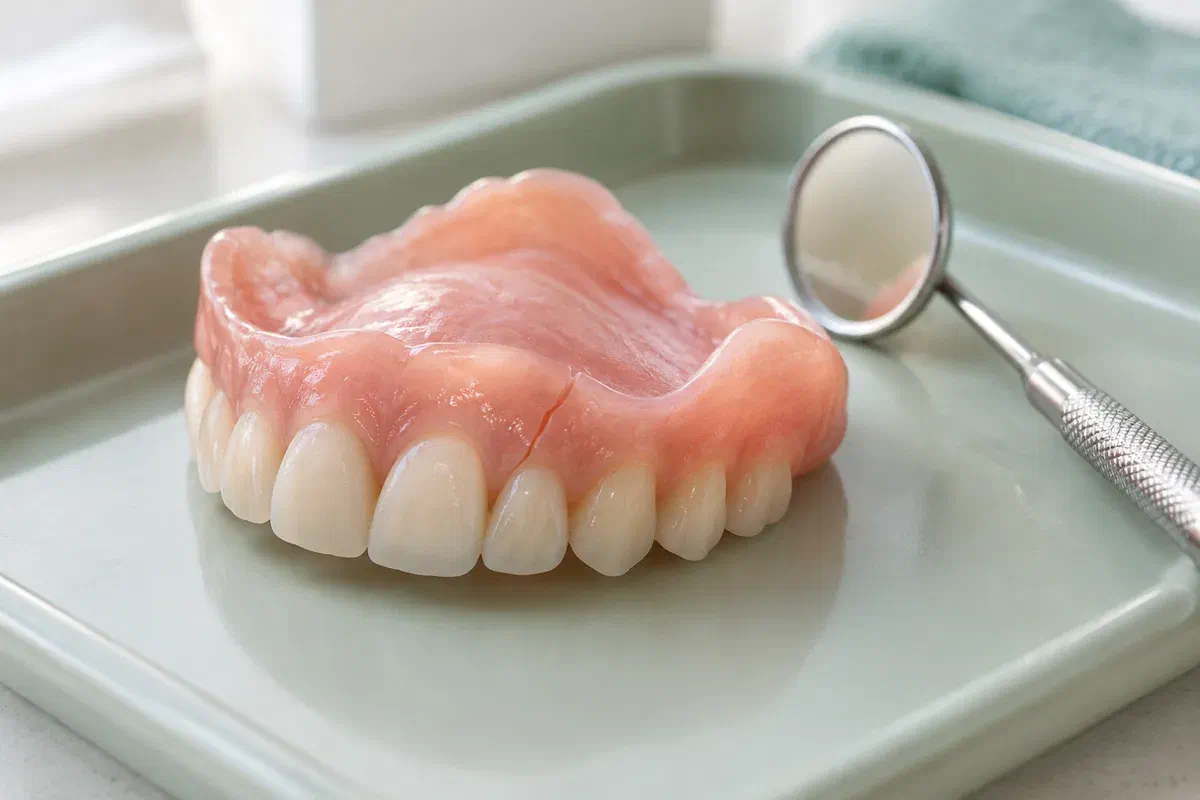
The visible break is the starting point for an assessment. How the appliance fits, whether a component is loose, and what happened immediately before the damage all help guide the next step.
A fine line or a complete fracture needs review before continued use. Describe whether the appliance was dropped or whether the crack appeared during ordinary wearing, and avoid flexing it to show the damage.
Keep any detached denture tooth in a secure container and bring it with the appliance. The dentist can assess the surrounding material and whether the original tooth can be retained within a suitable repair.
A damaged clasp or other fitting component can alter how a partial denture sits. Do not bend it back with household tools; the material, supporting teeth, and intended fit need to be considered together.
Call before coming in so the team can advise on an assessment. Repair timing depends on the findings and any laboratory work; a same-day result cannot be assumed.
A suitable repair can preserve a useful appliance by addressing a defined area of damage. The decision should consider the condition of the remaining base and teeth, not just whether the broken pieces can be brought together.
An assessment also creates an opportunity to discuss repeated problems. If a denture has fractured more than once, ask whether its fit, design, or bite may be contributing. The best plan may include attention to those factors as well as the immediate repair.
Patient information: Canadian Dental Association — caring for dentures
A missing tooth, split base, and damaged metal component involve different decisions. Having the defect explained helps you understand the proposed work and why a particular method may or may not be suitable.
A repair may retain an acceptable tooth arrangement and familiar appearance when the rest of the denture remains appropriate. Tell us what worked well before the damage so those priorities are part of the discussion.
Ask what the repair is expected to achieve, what limitations remain, and how the denture will be checked afterward. A clear review plan is especially useful when the appliance has a history of repairs.
You do not need to decide whether the denture is repairable before contacting us. The assessment establishes the condition of the appliance and the mouth, then explains the options and arrangements for any work.
Tell the team when the damage occurred, whether you are without a usable denture, and whether there is pain or injury. Bring the appliance, detached pieces, and information about earlier repairs if available.
The dentist examines the affected component and the remaining appliance. Where appropriate, the mouth, supporting teeth, and bite are also assessed to identify concerns that a repair alone would leave unresolved.
Discuss the proposed work, cost, expected timing, and whether laboratory involvement is needed. Ask if the repair is intended as a longer-term solution or an interim measure while another plan is developed.
The result needs assessment for fit and function, not just appearance. Follow the advice on wearing and care, and arrange review if the denture feels different or develops renewed movement or pressure.
A repair becomes part of an appliance that still needs daily care and periodic assessment. Ask whether any instructions differ because of the repaired material, retained components, or the reason the original damage occurred.
Use a protected surface when handling or cleaning the denture, and keep it in a suitable container when transporting it. Ask for a demonstration if gripping or removing the appliance has become difficult.
Do not wait for a familiar defect to become a complete break. Explain any clicking, visible line, or change in fit so the team can decide how promptly the appliance should be reassessed.
The appliance and the mouth can change independently. Attend the recommended dental examinations and discuss soreness, worn teeth, or increasing reliance on adhesive rather than treating each new problem as an isolated repair.
A damaged denture can be inconvenient, especially when it is your only appliance. These questions help with the immediate arrangements and the conversation about a repair's suitability.
Contact our Bronte Street clinic about a cracked base, missing denture tooth, or damaged component. We can review the appliance, explain repair options, and discuss any fit concerns that should be addressed at the same time.
Call to discuss availability before travelling, and bring all safely collected pieces without gluing them together.
