A line or split across the base
Look gently without flexing the denture. Note whether there was a fall, or whether the crack seemed to develop with ordinary wear, and pass that on when you call.


Often it is a son, daughter, or caregiver who first spots the crack in a parent’s denture. Families coming from Brampton can call our Milton team to talk through the damage, plan the visit together, and learn what a repair could involve.
In many households, denture problems surface during a family meal or while helping an older relative get ready in the morning. Perhaps a tooth is missing from the front, or there is a line across the palate that was not there last week. The person wearing it may not have mentioned anything, or may not have noticed.
Before booking, gather what you can. When did it happen? Was it dropped, or did it fail during eating? Had it been loose, sore, or clicking? These answers matter, because a repair that rejoins the pieces without considering fit or wear can leave the original problem behind.
Our team is happy to speak with a family member or caregiver from Brampton, with the wearer’s permission. At the visit, the dentist examines the appliance, any pieces, and the wearer’s mouth, then explains whether repair is reasonable, whether the fit needs attention, and when a new denture might be worth discussing.
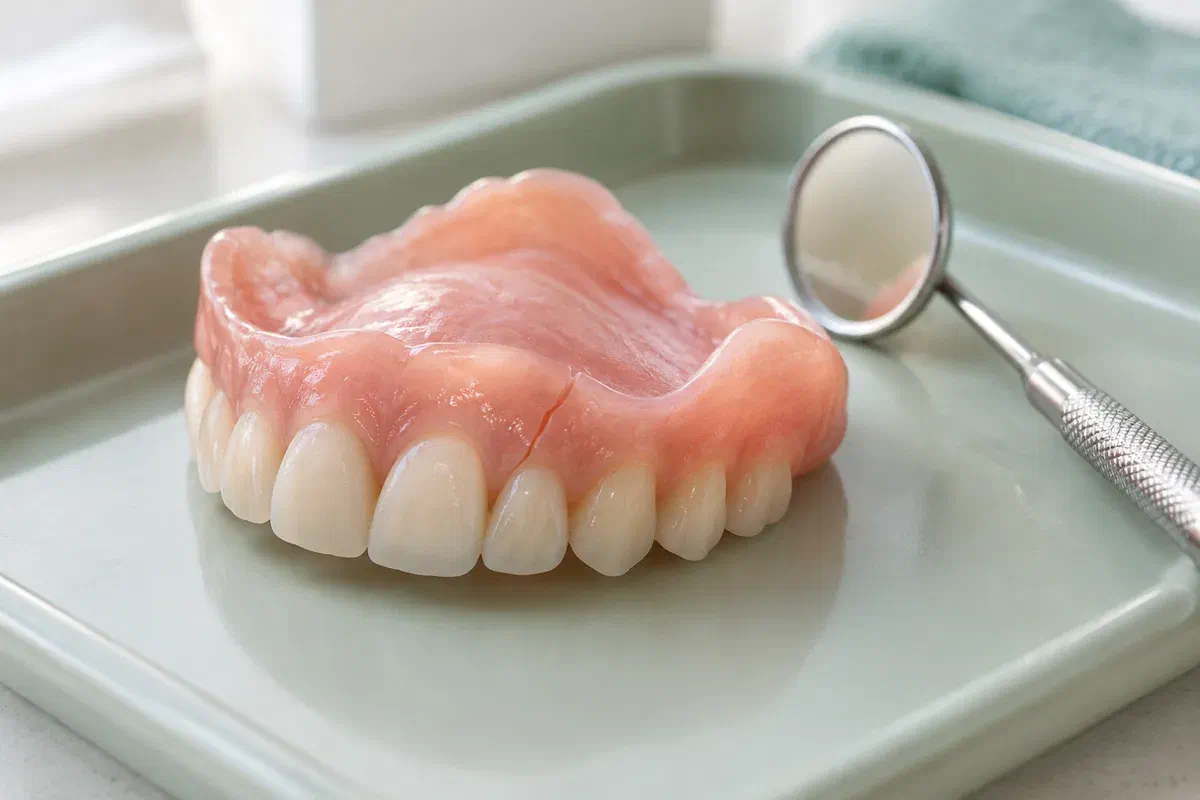
Damage is sometimes obvious and sometimes subtle. Changes in eating, speech, or comfort can be just as telling as a visible crack, and they help the dentist understand what led to the problem.
Look gently without flexing the denture. Note whether there was a fall, or whether the crack seemed to develop with ordinary wear, and pass that on when you call.
Check the bathroom, bedside, and pockets for the missing tooth, then keep it in a sealed container. The dentist can assess whether it can go back in place as part of a sound repair.
If a clasp has bent or snapped, the partial may tilt, pinch, or slip. Please do not bend it back; the clasp, the natural tooth it holds, and the overall fit need a proper look.
Please call before coming in so we can suggest the right appointment. Repair time depends on the findings and on whether a lab is involved, and finishing on the same day cannot be promised.
A repair can keep a familiar denture in use when the damage is contained and the rest of the appliance is sound. Familiarity can matter a great deal, particularly for someone who has worn the same denture for years.
If breaks keep recurring, the dentist can look at fit, design, or bite as possible contributors. That broader view helps the family plan rather than responding to each new problem as it comes.
Patient information: Canadian Dental Association — caring for dentures
A split base, a lost tooth, and a broken clasp involve different choices. Hearing what has happened, in plain terms, makes it easier for the wearer and helpers to follow the recommendation.
If the wearer is attached to how the denture looks or feels, a repair may keep those qualities. Let the dentist know what matters most to them.
Ask what the repair should achieve, what limits remain, and when to return. A written note of the follow-up plan can be useful for anyone helping at home.
No one needs to know beforehand whether the denture can be saved. The assessment works that out, considers the wearer’s mouth as well as the appliance, and explains the arrangements.
Share when it broke, whether the wearer has another denture, and any pain, sores, or injury. Bring the appliance, any pieces, a list of current medications, and notes on earlier repairs.
The dentist inspects the damage and the rest of the appliance, and where relevant the gums, remaining teeth, and bite, so problems a repair alone would not solve are identified.
Review the proposed work, cost, timing, and any lab step. Ask whether the repair is expected to be a lasting answer or a bridge to another plan, and involve the wearer in the decision.
The repaired denture is checked for fit and function. Make sure the wearer and helpers know the care instructions, and arrange a review if it starts to rub or move.
A repaired denture still needs daily cleaning and periodic exams. Ask whether the repair or the cause of the break changes anything about how it should be handled.
A towel in the sink or a basin of water softens any drop. Use a labelled case when the denture is out. If removing it is hard for the wearer, ask the team to show both of you an easier method.
Clicking, avoiding certain foods, or a new mark on the base can be early signs of trouble. Call so the team can decide how soon the denture should be reviewed.
Gums and any natural teeth keep changing. Mention sore spots, worn teeth, or extra adhesive use at regular exams, so each problem is seen as part of the whole picture.
Caring for someone with a broken denture brings practical questions. These answers cover the visit itself and the days around it.
Our Bronte Street practice can help with a cracked base, a lost denture tooth, or a clasp that has bent. The dentist examines the appliance, explains the repair options in plain language, and notes any fit concerns best handled at the same visit.
Phone first to check availability, and bring all the pieces, unglued, in a closed container.
