Cracked or broken acrylic
A crack can be a hairline or a complete break. Avoid twisting the denture to see it more clearly. Tell us whether it was dropped or whether the crack seemed to appear on its own while you wore it.


A partial denture that suddenly sits crooked, a clasp that no longer grips, or a full denture with a split down the middle each needs a careful look. If you are travelling from Burlington, we assess the damage and the fit together before suggesting a repair.
With a partial denture, damage is not always dramatic. A clasp might bend slightly when the appliance is pushed into place the wrong way, and from then on it seems to sit higher on one side or pinch a natural tooth. Full dentures fail differently, more often with a crack in the acrylic or a tooth that lets go.
In either case, the repair is only part of the job. The dentist also needs to understand how the appliance fits your mouth now, how your remaining teeth are doing, and what led to the damage. Something that was rocking or rubbing before it broke may need attention of its own.
Our team welcomes people from Burlington and the surrounding area. Call first, then bring the denture and anything that came off it. At the assessment, we explain what is damaged, whether it can sensibly be repaired, and whether the fit or a different appliance should be part of the conversation.
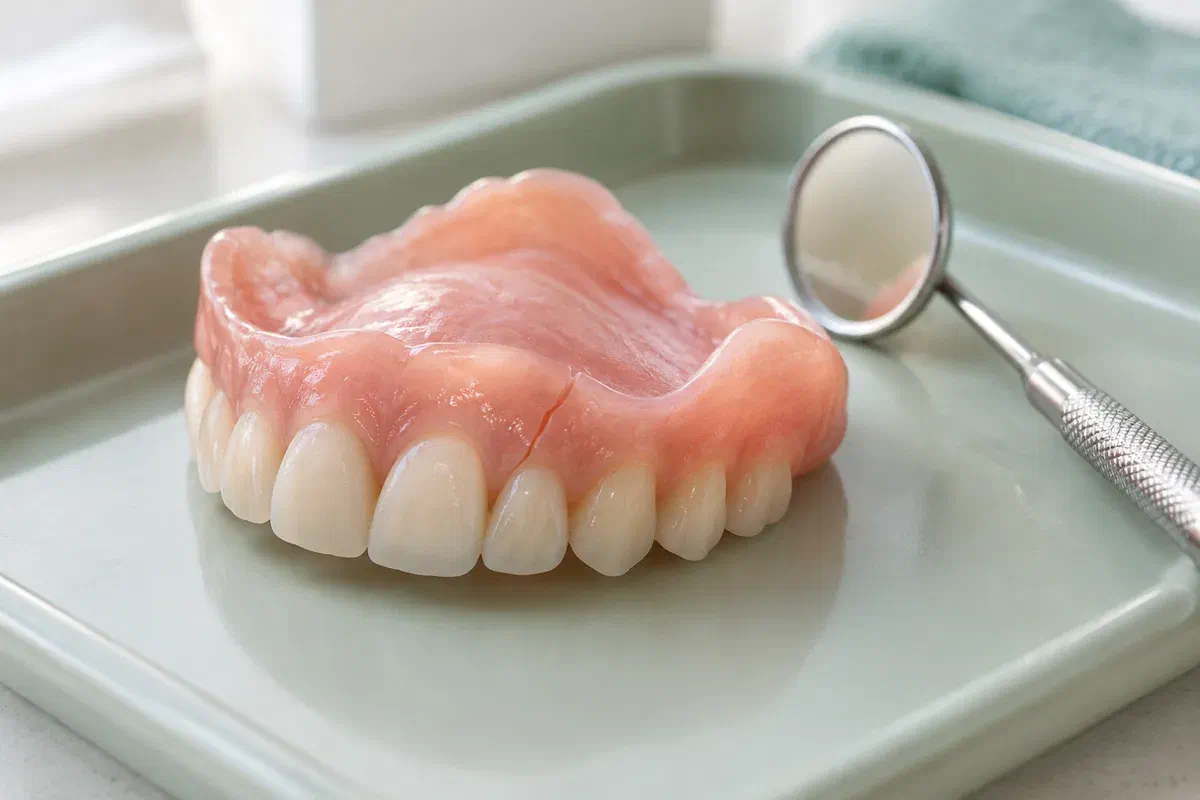
Knowing which part failed is the first step, but the details around it matter too. How the denture was fitting, and what you were doing when it broke, help point toward the right recommendation.
A crack can be a hairline or a complete break. Avoid twisting the denture to see it more clearly. Tell us whether it was dropped or whether the crack seemed to appear on its own while you wore it.
Keep the loose tooth in a sealed container rather than wrapping it in a tissue, where it is easily thrown away. The dentist will judge whether it can be reattached within a sound repair.
Clasps help hold a partial against your natural teeth, so even a small bend can affect comfort and stability. Leave it untouched rather than using pliers; the metal, the tooth, and the fit all need assessing.
Please phone before coming in so we can advise you. The time a repair takes depends on the findings and on any laboratory step, so it may not be completed on the day.
A repair can extend the useful life of a denture when the damage is limited and the rest of the appliance is sound. The decision rests on the whole denture, including the base, the teeth, and for a partial, the clasps and the natural teeth they rely on.
Recurring problems are worth raising. If a clasp keeps loosening or a base keeps cracking, the dentist can consider whether fit, design, or bite forces are involved, and the plan can reflect that.
Patient information: Canadian Dental Association — caring for dentures
A broken clasp, a lost tooth, and a split base call for different decisions. Understanding the specific damage helps you follow why one repair is suggested over another.
If you are comfortable with the denture’s appearance and bite, a repair may keep those. Tell the dentist which aspects you would like to keep so they guide the plan.
Ask what the repair should do, what limits remain, and how it will be checked later. That matters even more if the appliance has been repaired before.
You do not have to diagnose the problem yourself. The assessment looks at your denture and your mouth together and explains the options, the timing, and the next steps.
Describe what broke and when, whether you have a denture you can wear, and whether anything hurts. Bring the appliance, any pieces, and details of earlier repairs if you have them.
The dentist checks the damaged part and the rest of the appliance. For a partial, the teeth that support it are examined too, along with your gums and bite where relevant.
Review the proposed repair or alternative, its cost and timing, and whether a lab will be involved. Ask whether the work is a lasting fix or a temporary measure while you plan something else.
The repaired appliance should be tried for fit and comfort. Follow the advice on wear and cleaning, and arrange a review if it starts to pinch, move, or press.
A repaired denture still needs daily cleaning and regular checks. For a partial, the natural teeth it rests on need the same attention. Ask whether anything changes because of the repair.
Follow the path of insertion you are shown, and never bite a partial into place, which can strain the clasps. Clean it over a towel and store it in a case when it is out.
A clasp that starts to dig in or a fresh line in the acrylic is worth reporting early. The team can tell you how soon it should be looked at.
Natural teeth that hold a partial need careful brushing and regular exams. Mention soreness, gum changes, or more reliance on adhesive, so each issue is seen in context.
Partial and full dentures each bring their own questions after damage. These answers cover the first few days and the decisions that follow.
Get in touch with our Bronte Street clinic about a split base, a lost tooth, or a damaged clasp. We will examine the appliance, explain realistic repair options, and point out any fit issues worth handling together.
Call to confirm availability before setting out, and bring all the pieces you kept, unglued and safely packed.
