The base
A crack may be faint or run right through. Do not flex the denture to see it better, and mention whether a fall was involved or whether it cracked while you were wearing it.


Cost, timing, lab work, and whether the fix is meant to last: these are the questions worth asking before any denture repair. For households in Caledon, our Milton team examines the damage and answers them plainly so you can decide with confidence.
A broken denture brings a rush of practical concerns. How long will I be without it? Will it go to a lab? Is this a lasting fix or a stopgap? What will it cost? Writing those down before your visit makes it easier to leave with clear answers and a plan that suits your week.
There is one more question to add: why did it break? A drop onto a hard floor is one thing. A crack that followed weeks of rocking, clicking, or soreness is another, and the answer affects whether repairing the damage alone is enough.
From Bolton or any of Caledon’s villages, start by calling our Bronte Street practice. Then bring the denture, every piece, and your list. The dentist will examine the appliance and your mouth, work through your questions one by one, and set out the realistic choices: mending the damage, mending it and improving the fit, or moving to a replacement. You leave knowing what each would involve.
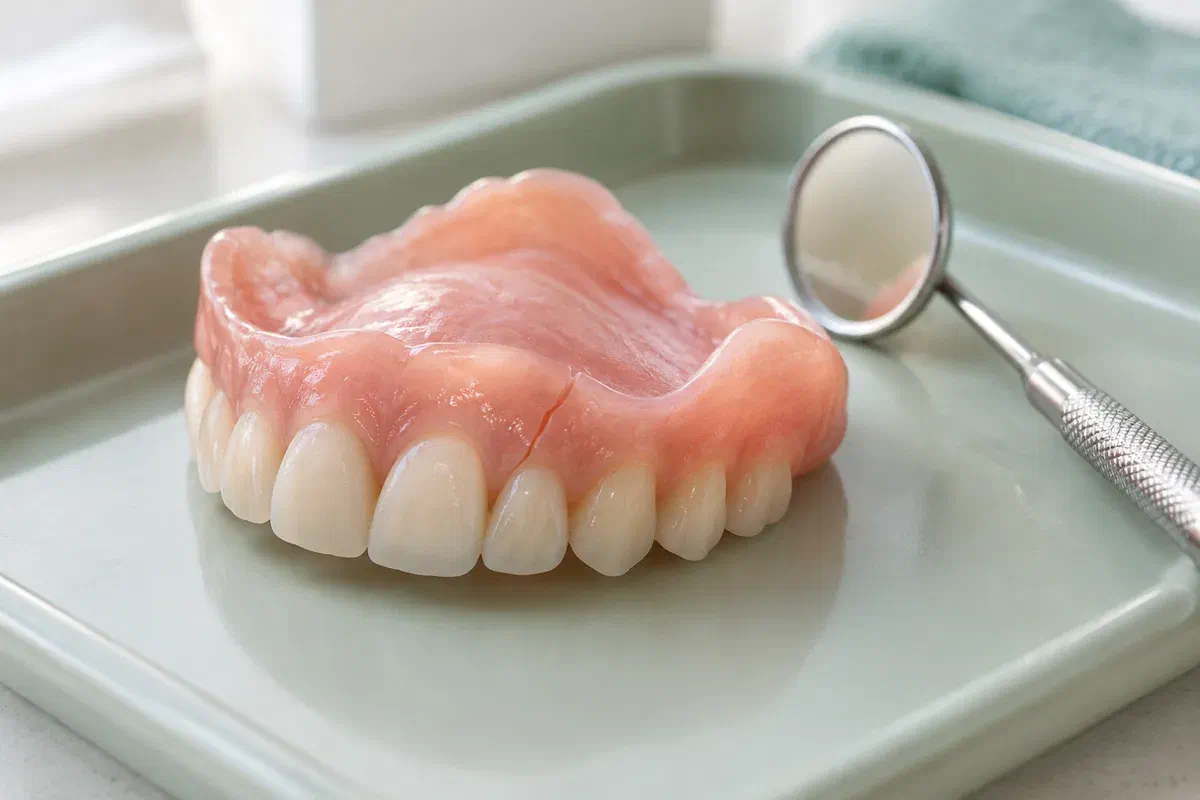
Being clear about the damage helps the team plan, and the dentist will ask about the circumstances too: how the denture had been fitting and what happened just before it broke.
A crack may be faint or run right through. Do not flex the denture to see it better, and mention whether a fall was involved or whether it cracked while you were wearing it.
If a tooth has come off, keep it in a small container with a lid. The dentist will look at the tooth and the surrounding acrylic before deciding whether it can be reattached.
On a partial denture, a bent or broken clasp can affect stability and press on a natural tooth. Please leave it alone; the dentist assesses the component, the tooth, and the fit together.
Please call before you come in. The length of a repair depends on what the dentist finds and whether lab work is involved, so we cannot promise completion on the day.
A repair can return a useful denture to service when the break is contained and the surrounding base and teeth are sound. Knowing that the rest of the appliance is in reasonable shape helps you judge whether the work is worthwhile.
If there is a pattern of breaks, raise it. Fit, design, and bite forces can all play a part, and a plan that considers them may save you from returning for the same problem.
Patient information: Canadian Dental Association — caring for dentures
A split base, a lost tooth, and a broken clasp involve different work. Understanding which you have makes the proposed method, and its limits, easier to follow.
A repair may keep the appearance and bite you are used to. Tell the dentist which features matter to you so they are part of the conversation.
Ask about the purpose of the repair, what it will not change, and when it should be reviewed. A clear follow-up plan is especially helpful for a denture repaired before.
You do not need to work out beforehand whether the denture is repairable. The assessment settles that, looks at your gums and bite as well, and lays out the arrangements.
Explain what happened and how you are managing: is there a spare to wear, and is anything sore or cut? Ask what to bring, and mention any earlier repairs you know about, even if they were done elsewhere years ago.
The dentist inspects the damage and the overall condition of the appliance, checking your gums, natural teeth, and bite where relevant to find causes a repair would not address.
This is the moment for your list. Go over the proposed work, the cost, how long it should take, and whether a laboratory is involved. Ask if the repair is intended to be lasting or interim.
Once repaired, the appliance is checked in your mouth for comfort and function. Keep to the instructions provided, and call if it starts to rub, rock, or feel different.
A repaired denture still needs cleaning every day and professional checks over time. Ask whether anything about the repair, or what caused the break, should change your routine.
Lay a folded cloth in the sink, or half-fill the basin with water, before you start cleaning. Keep a sturdy case handy for times the denture is out of your mouth. If gripping it has become harder, ask the team to show you an easier technique.
Clicking, a new line, or a change in how the denture sits is worth a phone call. The team can tell you whether it needs to be seen soon.
Your gums and any natural teeth change over time. Mention sore spots, worn teeth, or increased adhesive use during exams, so concerns are addressed together.
These answers cover the practical points most people want settled before agreeing to a denture repair.
Our Bronte Street clinic can assess cracked acrylic, a tooth that has come away, or a clasp that no longer holds. The dentist will examine the appliance, answer your questions about cost and timing, and point out any fit concerns worth addressing together.
Please call to confirm availability before you set out, and bring all the pieces in a closed container, unglued.
