Cracks in the acrylic base
A crack can be faint or run all the way through. Do not bend the denture to test it, and let us know if it was dropped or if the crack seemed to appear during normal wear.


A denture tooth that snaps off mid-meal leaves a gap you notice every time you smile. From anywhere in Halton Hills, our Milton team can assess the loose tooth, the acrylic around it, and the rest of the appliance before recommending a repair.
It can happen with something as ordinary as a crusty roll. You bite down, feel an odd give, and an artificial tooth is suddenly loose in your mouth or sitting on the plate. A lost denture tooth is one of the most common reasons people need a repair, along with cracked acrylic and damaged clasps.
Why the tooth came off matters as much as reattaching it. The surrounding acrylic may have weakened, the denture may have been rocking and stressing that area, or your bite may concentrate pressure there. If you had noticed movement or clicking beforehand, tell the dentist.
Households across Halton Hills, from Georgetown to Acton and the smaller hamlets, can call our team for advice. Bring the denture and the tooth to the assessment. The dentist will examine both, and explain whether the tooth can be reattached, whether the fit also needs work, or whether a different approach is more suitable.
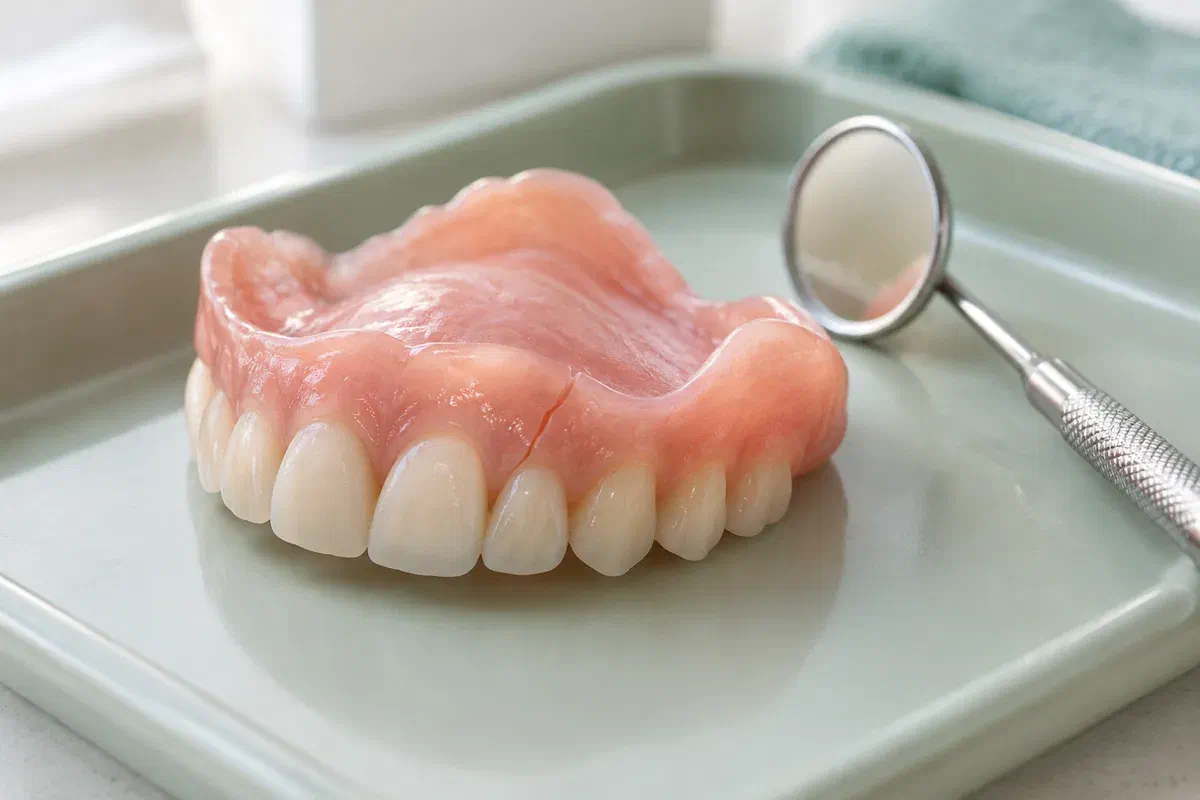
Each kind of damage leads to its own questions. The dentist will want to know how the denture was sitting, whether anything felt loose, and what you were doing when the problem appeared.
A crack can be faint or run all the way through. Do not bend the denture to test it, and let us know if it was dropped or if the crack seemed to appear during normal wear.
Rinse the tooth gently and keep it in a lidded container, not in a napkin. The dentist will check its condition and the acrylic where it sat to judge whether it can be secured again.
If a clasp on a partial has bent or broken, the appliance may sit unevenly or press on a natural tooth. Do not straighten it with tools; the clasp, tooth, and fit are assessed together.
Please call before coming so the team can advise on an appointment. How long the repair takes depends on the assessment and on whether a lab is needed, so it may not be completed on the day.
When the rest of the denture is in good condition, reattaching a tooth or repairing a small area can restore a useful appliance. The decision depends on the acrylic around the gap and the overall state of the denture.
If teeth have come off before, the dentist can look into why. Wear, fit, or the forces of your bite may be involved, and a plan that considers them is usually more dependable than another isolated fix.
Patient information: Canadian Dental Association — caring for dentures
A lost tooth, a cracked base, and a broken clasp involve different choices. Having the damage explained helps you understand the recommended approach.
Reattaching the original tooth, where it is suitable, can keep the look you know. Tell the dentist what you liked about the denture so those preferences guide the plan.
Ask what the repair should accomplish, what limits remain, and when to return. That is especially important if more than one tooth has come away over time.
Calling does not require knowing whether the denture can be fixed. The assessment answers that, considers your mouth as well as the appliance, and explains timing and arrangements.
Let the team know when the tooth came off or the damage occurred, whether you have another denture, and whether there is pain or injury. Bring everything, including notes on earlier repairs.
The dentist studies the spot where the tooth or acrylic failed, then the whole appliance. Your gums, any natural teeth, and your bite are checked where relevant, so problems hiding behind the obvious damage are not missed.
You will hear what the work involves, what it costs, and how long it may take, including any time at a dental lab. Ask whether the repair is expected to last or is a temporary step toward another plan.
The repaired denture is checked for fit and function. Follow the care advice and book a review if it feels different, presses, or begins to move.
Reattaching a tooth does not change the basics: brush the denture every day and keep your dental appointments. Ask whether the repaired area or the reason it failed calls for any change in care.
Cutting firm foods into smaller pieces can reduce strain on the front teeth. Clean the denture over a towel or basin of water, and store it in a case.
If a tooth feels wobbly again, or you notice clicking or a new line in the base, call. The team can decide how soon the denture should be seen.
Your gums and natural teeth change over time. Mention sore spots, worn teeth, or more adhesive use at your regular exams, so issues are not handled in isolation.
These answers cover what to do with a tooth that has come away, and how the dentist decides on the best way forward.
Call our Bronte Street practice about a lost denture tooth, a cracked base, or a damaged clasp. The dentist will examine the appliance, outline what can be repaired, and raise any fit concerns to look at in the same visit.
Please phone first to check availability, and bring the tooth and any pieces in a closed container, unglued.
