A split or line in the acrylic
Some cracks run right through; others are a faint line you only see under good light. Try not to bend the denture to test it, and let us know whether it broke in a fall or appeared during wear.


A denture that slips from wet hands and hits the sink can go from fine to unwearable in a second. Our team in Milton looks at the break, explains whether a repair makes sense, and helps you work out what to do until it is sorted.
Most denture damage happens during ordinary handling. A rinse under the tap, a slippery grip, and the appliance lands on porcelain or tile. The result might be a split through the pink acrylic, a tooth that has come free, or a partial denture clasp that no longer sits right. Each needs a different kind of repair.
It also helps to think back a little. A denture that already felt loose, clicked when you spoke, or pressed on one spot may have been under strain before it fell. Mending the break without that history can leave the same weak point in place.
When you call our Milton office, we will ask what happened and whether you have another appliance to wear meanwhile. The dentist then examines the denture and every fragment you gathered, and talks through whether a repair is reasonable, whether the fit needs work, or whether a broader change makes more sense.
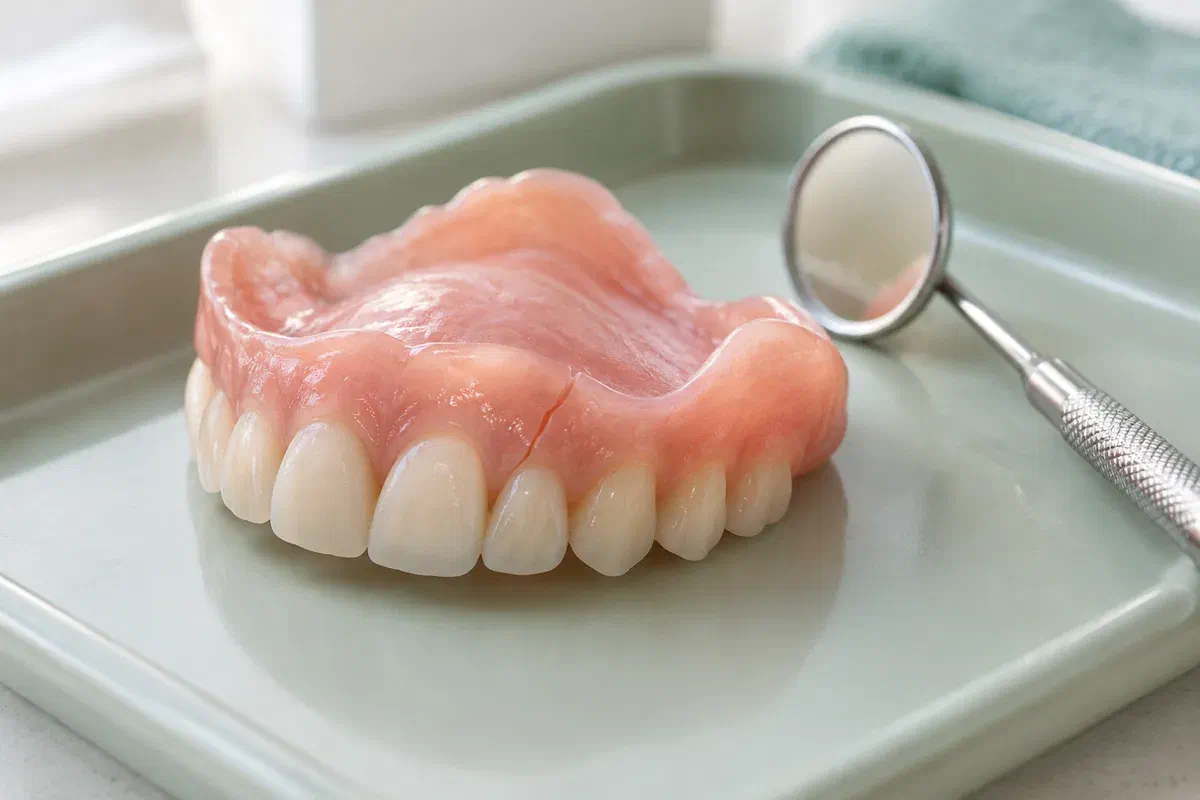
The obvious break tells only part of the story. The dentist also wants to know how the denture was sitting, whether anything was moving, and exactly how the damage happened, because those details shape what is recommended.
Some cracks run right through; others are a faint line you only see under good light. Try not to bend the denture to test it, and let us know whether it broke in a fall or appeared during wear.
Put the loose tooth in a small closed container so it does not get lost or thrown out. The dentist will look at the tooth and the acrylic around the gap to decide whether it can be put back as part of a sound repair.
On a partial denture, a clasp helps hold the appliance against your natural teeth. If it is bent, avoid reshaping it with pliers. How the clasp is fixed depends on its material, the tooth it grips, and the way the partial is meant to fit.
Please phone ahead so the team can suggest the right appointment. How long a repair takes depends on what the dentist finds and whether a dental laboratory is involved, so same-day results cannot be promised.
A good repair can give a useful denture more life by fixing one clearly defined problem. Whether that is sensible depends on the rest of the appliance, such as how worn the teeth are and how sound the base is.
The visit is also the right time to talk about a pattern. A denture that keeps cracking may be telling you something about its fit, its design, or your bite. Looking at those factors alongside the current damage is usually more useful than another quick fix.
Patient information: Canadian Dental Association — caring for dentures
A lost tooth, a split base, and a broken metal part each lead to different choices. Once the dentist explains what is wrong, you can follow why one approach is suggested and why another may not suit your denture.
If the rest of the denture is in good shape, a repair may preserve a tooth arrangement and look you are used to. Tell the dentist what you liked about it before it broke so those preferences guide the conversation.
Ask what the repair should accomplish, what it cannot change, and how the result will be checked. Knowing when to come back matters most for a denture that has already been mended before.
There is no need to work out on your own whether the appliance can be fixed. The assessment looks at the denture and your mouth, then sets out the options, the likely timing, and what happens next.
Share when the damage happened, whether you have a denture you can wear, and whether you have any pain, cuts, or swelling. Bring the appliance, all the pieces, and any notes about earlier repairs.
The dentist examines the damaged area and the rest of the denture. When it is relevant, your gums, supporting teeth, and bite are checked too, so problems a simple repair would miss can be discussed.
Go over the proposed work, its cost, the expected timing, and whether a lab will be involved. It is fair to ask whether the repair is meant to last or is a stopgap while a different plan is prepared.
A repaired denture needs to fit and work properly, not just look whole. Follow the wearing and cleaning advice you are given, and book a review if it starts to rock, rub, or feel different.
A mended denture still needs the same daily care as before, plus attention to any weak spots. Ask whether the repaired material or the reason it broke changes how you should clean, store, or wear it.
Clean the denture over a folded towel or a sink with some water in it, and carry it in a proper case. If removing it has become awkward, ask us to show you an easier grip.
A repeat problem is easier to deal with before it becomes another full break. Let us know about any new line, clicking sound, or shift in how the denture sits so we can judge how soon it should be seen.
Your gums and remaining teeth change over time, separately from the denture. Keep up with regular dental exams and mention sore spots, worn teeth, or needing more adhesive, rather than treating each issue as a separate repair.
When a denture breaks, the first worries are usually about getting through the next few days. These answers cover the practical steps and whether a repair is the right choice.
Call our Bronte Street practice about a split base, a missing tooth, or a bent clasp. We will examine the denture, explain the realistic repair options, and point out any fit problems worth addressing at the same visit.
Please phone first to check availability, and bring every piece you have kept, unglued and in a safe container.
