The base has cracked
Whether it is a faint line or a clean break, avoid flexing the denture to inspect it. Let the team know if it was dropped, or if the crack showed up while you were simply wearing it.


Fix it or replace it? That is usually the first question when a denture cracks or loses a tooth. For people coming from Oakville, our Milton team examines the damage and the rest of the appliance, then gives you a clear basis for deciding.
It is natural to hope a broken denture can simply be fixed. Often it can. A crack through the base, a single tooth that has come loose, or a damaged clasp may all be repairable when the rest of the appliance is in reasonable condition. The catch is that the answer depends on more than the break.
Think about how the denture was behaving beforehand. Had it started to rock when you chewed, click when you talked, or leave a sore patch on your gums? Those changes can contribute to a fracture, and a repair that ignores them may not last as well as you would like.
From Oakville, the most useful first step is a call to our team, followed by an assessment with the denture and any pieces you managed to keep. The dentist will look at the damage, the fit, and the wear on the teeth, and explain whether a repair, a repair with a fit correction, or a replacement fits your situation.
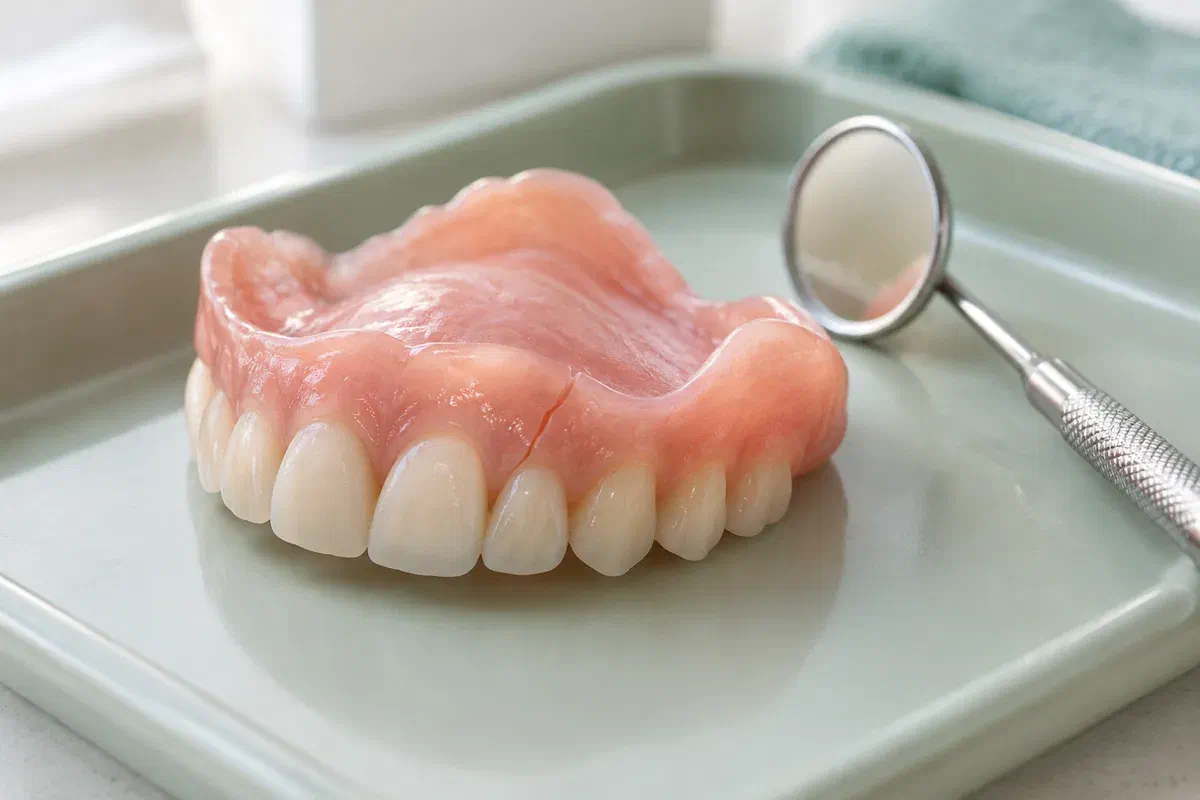
Each type of damage brings different considerations. What happened right before it broke, and how the denture had been sitting, help the dentist decide whether a repair is realistic.
Whether it is a faint line or a clean break, avoid flexing the denture to inspect it. Let the team know if it was dropped, or if the crack showed up while you were simply wearing it.
Keep the tooth in a lidded container and bring it along. Its condition, and the state of the acrylic it came from, help determine whether it can be secured again.
A bent or broken clasp can change how a partial denture sits against your own teeth. Resist bending it back; the dentist needs to consider the metal, the supporting tooth, and the planned fit together.
Please call ahead for advice on booking. Turnaround depends on what the assessment finds and whether laboratory work is required, so same-day completion should not be assumed.
When the rest of a denture is sound, a repair can keep a useful appliance working by addressing one specific area. If the base is thin, the teeth worn, or the fit poor, repairing just the break may not give you much.
If this has happened before, the visit is a chance to ask why. Repeated fractures can relate to fit, design, or your bite, and a plan that looks at those factors usually serves you better than repairing the newest crack alone.
Patient information: Canadian Dental Association — caring for dentures
A split base, a missing tooth, and a broken metal part each raise different questions. Seeing exactly what is wrong helps you understand why a method is suggested or ruled out.
A repair can preserve the look and tooth arrangement you are used to, if the remaining appliance still serves you well. Mention what you were happy with before the damage.
Ask what the repair should accomplish, what it will not change, and how it will be reviewed. That is especially important if the denture has been repaired before.
Nobody expects you to know whether a denture can be saved before you call. The visit sorts that out, covering both the appliance and your mouth, and explains the arrangements for any work.
Tell us when it happened, whether you have another denture to use, and whether there is pain or a cut. Bring the denture, the loose pieces, and any record of earlier repairs.
The dentist inspects the damaged area and the rest of the denture, and may check your gums, remaining teeth, and bite to find issues a repair alone would miss.
Go over the work involved, the cost, the timing, and whether a lab will be used. It is reasonable to ask whether the repair is a long-term answer or an interim step.
The repaired denture is checked for fit and function, not only appearance. Follow the care advice, and arrange a review if it begins to move, press, or feel unfamiliar.
A repaired denture needs daily cleaning and periodic checks like any other. Ask whether the repaired material or the original cause of the break calls for any special care.
Hold the denture over a towel or a basin of water while you clean it, and keep it in a proper case away from home. If removing it has become tricky, ask for a demonstration.
Clicking, a visible line, or a change in how the denture sits is worth a call. The team can then decide whether it should be looked at soon.
Your gums and natural teeth change over time on their own schedule. At your regular exams, mention soreness, worn teeth, or relying on more adhesive, instead of waiting for something else to break.
These answers cover the decision most people face after a denture breaks, along with what to do in the meantime.
Reach our Bronte Street practice about a cracked base, a lost tooth, or a bent clasp. We will review the appliance, explain whether a repair makes sense, and raise any fit concerns that should be dealt with alongside it.
Phone before you travel to confirm availability, and bring all the pieces together, unglued.
