Illustrative dentist and patient discussing a damaged removable denture
Restorative Dentistry

Denture Repairs in Rockwood

A denture repair is not finished when the pieces are joined. It is finished when the appliance sits comfortably and works in your mouth. From Rockwood, our Milton team assesses the damage, plans the repair, and checks the result with you.

Repaired, and then what?

Looking good is only half of a successful repair.

A mended denture can look perfect on the tray and still press on one side of your gums, or meet your other teeth a fraction off. That is why the repair process includes more than rejoining a base, replacing a tooth, or fixing a clasp. The appliance needs to be tried and checked in your mouth before it goes back into daily use.

Good results also depend on understanding the break. Was it a fall onto tile, or had the denture been loose, clicking, or tender for weeks? Fit problems and worn materials can lead to repeat damage, so the dentist looks at those along with the visible defect.

If you are in Rockwood, phone our Bronte Street practice to describe what happened. At the assessment, the dentist examines the denture, any pieces, and your mouth, and explains whether repair, fit work, or a new appliance suits your situation. After any repair, we review how it feels and what to watch for.

Start with a denture repair assessment
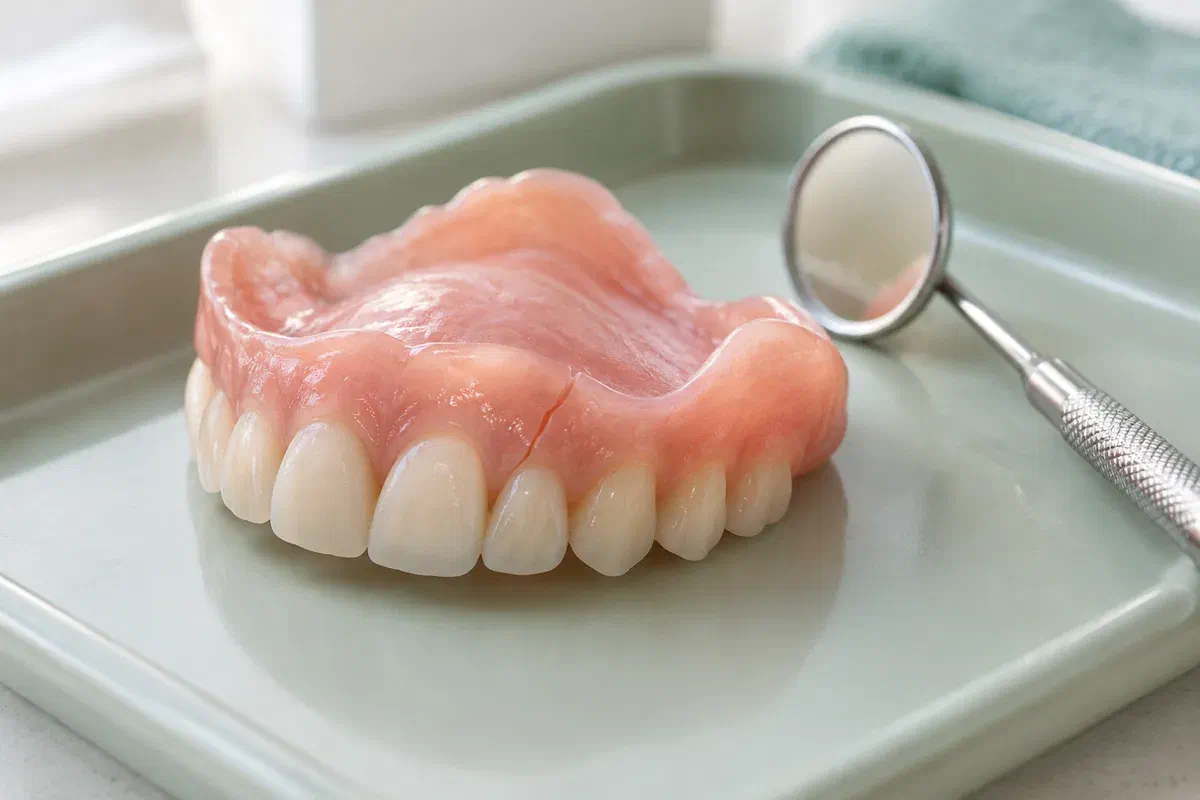
Upper acrylic denture resting on a clean tray for inspection
Kinds of denture damage

What brings people in

The type of damage shapes the repair, and the circumstances matter too. How the denture was fitting and what you were doing at the time help the dentist plan work that will hold up.

Broken or cracked acrylic

Keep the pieces apart rather than testing how they fit together, and avoid flexing a cracked base. Let us know if the denture was dropped or cracked during wear.


A missing denture tooth

Store the tooth in a closed container and bring it. The dentist will check it and the acrylic where it sat to see whether it can be secured again within a sound repair.

A bent or snapped clasp

A damaged clasp can let a partial denture shift or pinch a natural tooth. Please do not bend it at home; the clasp, tooth, and fit are considered together.

Please call ahead for advice on the right appointment. How long the work takes depends on the assessment and any lab step, so a same-day repair cannot be promised.

Planning for the result

A repair should fit, function, and last as well as it can.

Repairing a contained area can keep a good denture working, as long as the base and teeth around the break are in reasonable condition. The dentist checks those first, because a repair is only as dependable as what surrounds it.

If the denture has needed repairs before, it helps to say so. Fit, design, or bite pressures may be part of the reason, and dealing with them can make the result more reliable.

Patient information: Canadian Dental Association — caring for dentures

Know what is being repaired

Base fractures, lost teeth, and clasp damage involve different methods. Understanding which applies to you helps you follow the plan and the reasoning behind it.

Keep a familiar feel

A repair may preserve the tooth arrangement and look you are used to when the rest of the appliance still serves you. Mention what you want to keep.

Leave with a clear review plan

Find out the purpose of the repair, its limits, and when it should be looked at again. That is especially useful for a denture with earlier repairs.

From assessment to final check

Each stage, including the last one

You can contact us without knowing whether the denture is repairable. The assessment answers that question, includes your gums and bite, and explains the arrangements.

  1. Phone with the details

    Explain when it broke, whether you have another denture, and whether there is pain or a sore. Bring the appliance, any pieces, and any notes from earlier repairs.

  2. Assessment in the chair

    The dentist inspects the damage and how the appliance is holding up overall. Your gums, natural teeth, and bite are checked where relevant to find causes a repair would not resolve.

  3. Decide together

    Review the work, its cost, timing, and any laboratory involvement. Ask whether the repair is expected to last or whether it is a step toward a different plan.

  4. Try in and fine-tune

    The repaired appliance is placed and checked for comfort and how your teeth meet. You will receive care instructions, and you can arrange a review if it presses or moves.

The first weeks after repair

Pay attention, then settle into routine.

In the days after a repair, notice how the denture feels while eating and speaking. Long term, it needs the same daily cleaning and dental checks as before. Ask about any care specific to the repair.

Watch for pressure spots

A small sore or a tight area after a repair is worth reporting rather than putting up with. The dentist can check whether a minor adjustment is needed.

Listen for clicking

A new click, a wobble, or a line near the repaired area should prompt a call. The team can decide how soon the denture needs to be seen.

Clean and store it carefully

Clean the denture over a towel or basin of water and keep it in a case when it is out. Keep up regular exams so changes in your gums or teeth are noticed early.

Options the dentist may raise

Repair, refit, or a fresh start

The plan depends on the damage and on the overall state of the denture. It is fair to ask the dentist which parts are holding up well, which are worn, and whether the work responds to the reason it broke.

Sound overall condition

A focused repair

A localized crack, a lost tooth, or a damaged clasp may be repaired when the remaining appliance is sound. The type of material and the pieces available shape what is offered.

Movement before the break

Repair with fit correction

Movement can stress a repair. An adjustment, a reline, or another fit correction may be suggested so the repaired denture sits more steadily.

Extensive wear or repeated breaks

A new denture

When wear is widespread or the teeth no longer suit you, replacement may be more reasonable, so all of those concerns are addressed at once.

Rockwood denture repair questions

Life after a denture repair

These answers focus on the result: how a repaired denture should feel, how to look after it, and when to call.

(905) 876-4488
How long does it take to get used to a repaired denture?
Many people notice little difference, while others need a short time to adjust, particularly if fit work was done at the same time. Start with softer foods if that feels easier. If discomfort persists or gets worse, call the clinic for a review.
What should I do if my repaired denture rubs a sore spot?
Contact the clinic rather than waiting it out. A sore spot may mean an area needs adjustment. If the soreness is significant, you may be advised to leave the denture out until it is checked.
How should I clean a denture after it has been repaired?
Usually the same way as before, unless the dentist advises otherwise. Clean it daily over a soft surface, brush gently around the repaired area rather than scrubbing it hard, follow the product instructions you were given, and avoid very hot water, which can distort some materials.
Will my repaired denture be as strong as before?
That depends on the damage, the materials, and the condition of the rest of the appliance. Ask the dentist what the repair is expected to achieve and whether any limitations remain.
Is it normal for my bite to feel slightly different after a repair?
A small difference can be noticeable at first. If your teeth meet unevenly, or you feel pressure when chewing, book a review so the dentist can check the repaired denture.
When should a repaired denture be checked again?
The dentist will suggest a review based on the repair and your mouth. Keep up regular exams, and call sooner if you notice clicking, rocking, or a new line in the base.
For Rockwood denture wearers

From the first look to the final fit

Call our Bronte Street practice about a crack in the base, a tooth that has come off, or a damaged clasp. We will assess the denture, explain repair options, and check the result with you so it fits and works as it should.

Phone ahead to confirm availability, and bring all saved pieces in a closed container without glue.

Visit Milton Dental Clinic
Unit 1, 342 Bronte St. S, Milton, ON L9T 5B7
Get directions Clinic hours
Monday–Thursday
11am–7pm
Friday–Sunday
By appointment only

Areas we serve

  • Milton
  • Oakville
  • Mississauga
  • Georgetown
  • Halton Hills
  • Acton
  • Campbellville
  • Brampton
  • Burlington
  • Puslinch
  • Rockwood
  • Erin
  • Caledon
  • Etobicoke
  • Old Milton
  • Bronte Meadows
  • Timberlea
  • Dorset Park
  • Dempsey
  • Clarke
  • Beaty
  • Coates
  • Harrison
  • Scott
  • Willmott
  • Ford
  • Bowes
  • Cobden
  • Walker
  • Mountain View
  • Milton Heights
  • Hawthorne Village
  • Valley View
  • Fallingbrook
  • Nassagaweya
  • Trafalgar
  • Esquesing
  • Nelson
  • Brookville
  • Moffat
  • Glen Williams
  • Norval
  • Limehouse
  • Stewarttown
  • Ashgrove
  • Hornby
  • Silver Creek
  • Speyside
  • Scotch Block
  • North Oakville
  • River Oaks
  • Glen Abbey
  • West Oak Trails
  • Palermo
  • Bronte Creek
  • College Park
  • Joshua Creek
  • Uptown Core
  • Preserve
  • Iroquois Ridge
  • Lisgar
  • Meadowvale
  • Meadowvale Village
  • Churchill Meadows
  • Erin Mills
  • Central Erin Mills
  • Streetsville
  • East Credit
  • Creditview
  • Heartland
  • Sheridan
  • Mount Pleasant
  • Credit Valley
  • Huttonville
  • Churchville
  • Springbrook
  • Northwest Brampton
  • Bram West
  • Fletcher's Meadow
  • Fletcher's Creek South
  • Alton Village
  • Orchard
  • Millcroft
  • Headon Forest
  • Tansley
  • Brant Hills
  • Tyandaga
  • Kilbride
  • Lowville
  • Aberfoyle
  • Morriston
  • Arkell
  • Hillsburgh
  • Freelton
  • Carlisle
  • Waterdown
  • Flamborough
  • Mountsberg

How can we help?

Milton Dental Clinic

Have a question about your smile? Choose the option that works best for you.

For urgent dental concerns, please call.
Messages are reviewed during clinic hours.