Chewing takes longer than it used to
Flattened teeth, movement and appearance changes often arrive together. Tell us which matters most at your meals, so the conversation reflects your daily eating rather than the most visible sign of wear.


If you have started skipping certain foods or cutting everything into tiny pieces, your denture may be shaping your meals more than it should. A denture replacement visit for Burlington wearers looks at chewing, fit and wear, and whether a new appliance would serve you better.
Meals are often where an aging denture shows itself first. Crusty bread gets set aside, steak is cut paper-thin, and chewing drifts to one side. These habits form so gradually that many wearers only realize how much they have adapted when someone asks.
That kind of change can come from several sources: artificial teeth worn smooth, a base that no longer sits evenly, damage, or shifts in the gums underneath. A new denture is one way to address them together. How long you have had the current set is background, not a verdict.
When you come from Burlington, our Bronte Street team will ask about the foods you avoid and the ones you miss. We examine the appliance and your mouth, explain whether a repair or reline could still help, and describe honestly what a replacement might improve at the table and where removable teeth have limits.
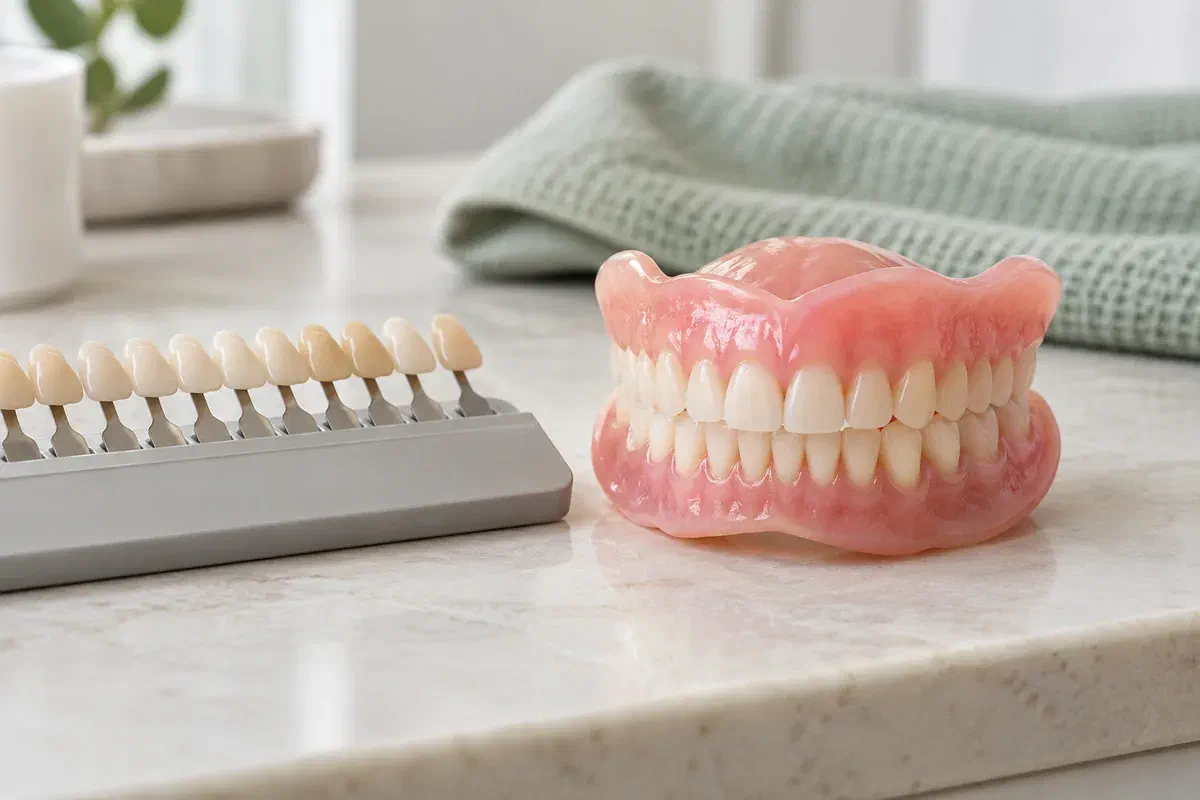
A denture can stay in daily use while its chewing ability quietly fades. A review combines the condition of the teeth and base, the health of your mouth, and what actually happens when you eat.
Flattened teeth, movement and appearance changes often arrive together. Tell us which matters most at your meals, so the conversation reflects your daily eating rather than the most visible sign of wear.
Teeth that pop off or a base that cracks while eating may be repaired, but frequent breakage deserves a broader look. Ask whether another fix keeps a good denture working or puts off a needed redesign.
New dietary needs, changes in remaining teeth, or more difficulty cleaning after meals can all affect whether the appliance still suits you. Mention them, even if they seem outside the dentist's concern.
Dentures do not come with an expiry date. Regular assessment shows whether continued wear, maintenance or a new appliance makes the most sense.
Starting over opens more to reconsideration than a single repair, including the arrangement of the teeth, how they meet, and their surfaces. That matters when the examination shows that worn or poorly positioned teeth are part of the chewing problem.
Being realistic is part of the plan. Chewing with a removable denture is different from chewing with natural teeth, and a new set usually needs a period of practice and some adjustment. A good replacement aims for steady, practical improvement rather than a dramatic transformation.
Patient information: American College of Prosthodontists — denture replacement
Write down meals you avoid and the moments when the denture shifts. Sharing that list gives a concrete starting point for discussing tooth arrangement, support and comfort while eating.
A replacement can weigh teeth, base and bite together instead of patching one at a time. Ask how your examination findings guided the proposal and what alternatives were considered.
Knowing the stages, fitting visits and reviews helps you plan around meals out, travel, work and family events. Raise any concern about going without a usable denture during the process.
The real number of visits depends on your appliance and oral health. Ask how impressions, tooth selection, try-in checks and any preliminary care will be arranged for you.
Bring your current denture, even an uncomfortable one, and tell us its repair history and how you eat with it. The dentist examines your mouth and separates concerns a replacement could help from ones needing other care.
We discuss whether repair or relining is still reasonable and what a new set would change about chewing and comfort. Scope, likely visits, costs and limits are explained before you agree to a plan.
Impressions or other records guide how the denture is built. Depending on the technique, you may review the appearance of the teeth and assess a trial version before the final appliance is completed.
The finished denture is checked in place, and you learn how to insert, remove and look after it. A review visit lets us address any bite or comfort issues that turn up once you start eating normally.
Many wearers find a new denture takes practice at meals, even after years of experience. Follow the advice for your appliance, and tell us about specific problems instead of assuming every difference is permanent.
Small pieces and softer textures are often easier at first, chewing on both sides where you can. Ask the team how to progress, and confirm the cleaning products and storage that suit your new set.
Pay attention to sore spots and to any movement with particular foods or words. Contact us about persistent issues so the bite and fit can be checked, rather than adjusting the denture yourself.
Fitting is one stage of the process. Keep the planned follow-up, ask whether you need more adaptation tips, and continue routine oral exams after the denture feels settled.
A useful replacement discussion blends what the examination shows with how you eat each day. These answers can help you prepare without implying any design or timetable is already fixed.
Visit our Bronte Street practice to review a denture that makes meals harder than they should be. We will look at what still works and explain whether a new appliance is a sensible next step.
Please have the denture with you, along with a short list of the foods you avoid or find difficult to chew.
