Recurring frustrations
Movement, worn teeth and appearance concerns may have been with you for years. Tell us which you would most like to leave behind, so planning targets your priority rather than the most visible wear.


When it is time for a new denture, many people wonder whether the next one should simply be a copy or something different. Coming from Caledon, a replacement consultation compares a like-for-like denture with other designs and support, so the choice is based on your mouth and your priorities.
Asking for "the same as before" feels safe. Yet a replacement is also a chance to question the parts of the old design you have simply tolerated. You may have heard friends mention dentures held in place by other means, and wonder whether something similar would suit you.
Replacement means planning a new appliance once the current one no longer suits your mouth, for reasons such as a looser fit, worn teeth, damage, or several concerns at once. A denture's age is part of the background, but the decision should rest on what the examination shows.
For households in Caledon, our Bronte Street team will lay out the realistic choices side by side. We examine the denture and the supporting mouth, explain whether a repair or reline could still serve you, and discuss what a conventional replacement or a different type of support would involve, including the trade-offs of each.
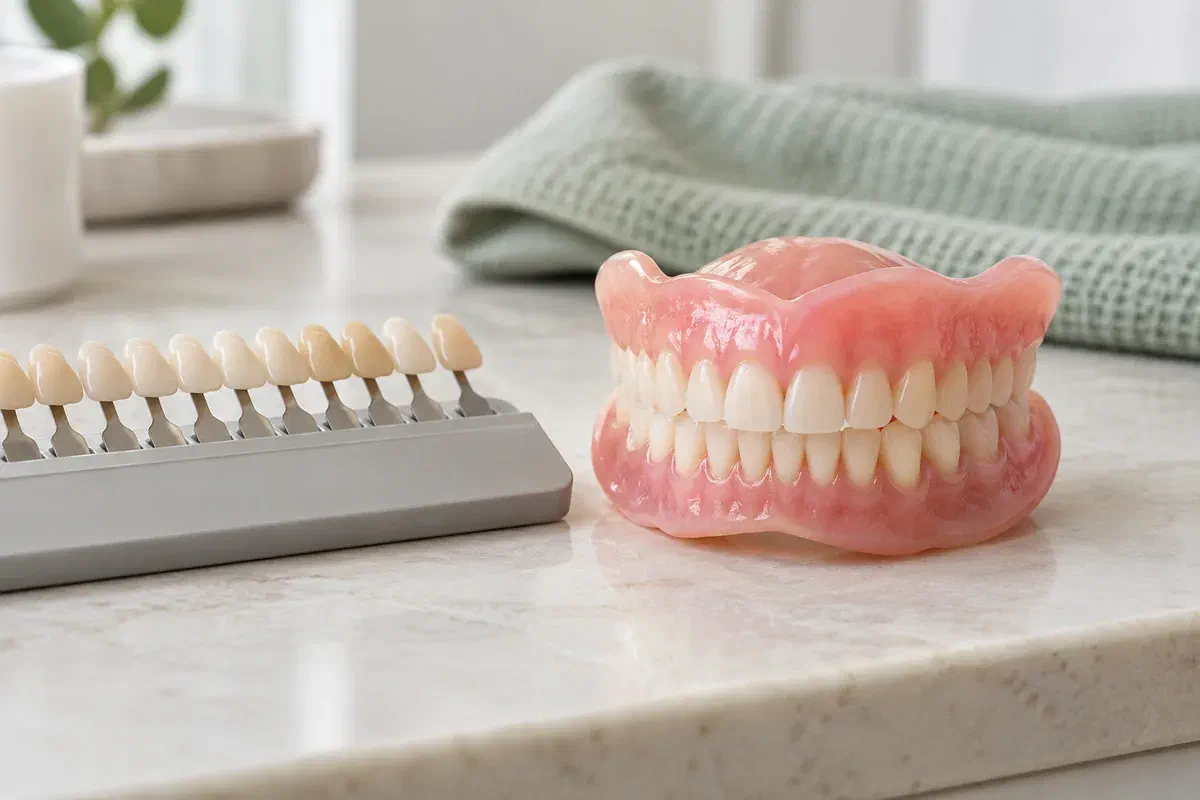
Long-time wearers often accept limitations as part of life with a denture. An assessment considers the appliance, the condition of your gums and any natural teeth, and which everyday difficulties you would most like to change.
Movement, worn teeth and appearance concerns may have been with you for years. Tell us which you would most like to leave behind, so planning targets your priority rather than the most visible wear.
Many past repairs suggest it is time to step back. Ask whether one more limited fix keeps a useful appliance going, or whether a redesign would address the reasons it keeps needing work.
Changes in the gums, remaining teeth, general health or your ability to handle the appliance can influence which designs are suitable. Mention these even if they seem unrelated.
No fixed rule says when a denture must be replaced. An examination helps decide whether continued use, maintenance or a new appliance is right.
Unlike a repair or reline, a replacement lets the teeth, base and overall design be reconsidered, and in some cases the way the denture is supported. That broader view matters when the examination shows that the current approach is no longer serving you well.
Every option has limits. A conventional denture remains removable and may need time and adjustment. Other forms of support involve their own treatment, maintenance and costs, and are not suitable for everyone. Neither should be presented as equivalent to natural teeth.
Patient information: American College of Prosthodontists — denture replacement
Decide what matters most: stability, appearance, ease of cleaning, or keeping treatment simple. Clear priorities make it easier to compare designs, support and handling in a meaningful way.
A fresh plan can address several issues together. Ask how the examination findings led to the recommendation, and what the alternatives would involve in treatment, upkeep and limits.
Different approaches may require different numbers of visits and stages. Discuss work, travel and caregiving, and ask whether there might be a time without a usable denture.
The sequence varies with the appliance, your oral health and the option you choose. Ask how records, tooth selection, fit checks and any preliminary care would be arranged for each possibility.
Bring the appliance you wear now, even if it is uncomfortable, and share its history. Following an examination of your mouth, the dentist explains which concerns replacement could address and which need other care.
We discuss repair, relining, a new conventional denture and, where suitable, other support. For each, you hear the scope, expected visits, costs and limits before choosing.
Impressions and bite measurements guide the new appliance. Depending on the approach, there may be a trial stage to review appearance and fit before completion.
The finished denture is assessed in your mouth, and you learn how to insert, remove and maintain it. A follow-up visit addresses anything that arises once it is part of daily life.
Whatever design you choose, there will be a learning period. Keep to the care advice for your specific appliance, and describe problems clearly instead of assuming they come with the territory.
Ask for a demonstration of handling and cleaning, as routines vary between designs. Confirm suitable products and storage, and mention any difficulty with grip or eyesight.
Notice sore spots and any movement when eating or speaking. When discomfort keeps coming back, let us examine it rather than reshaping anything at home.
Some designs need more regular maintenance than others. Attend reviews, ask what long-term upkeep involves, and keep up routine oral exams even when everything feels comfortable.
Choosing well depends on both the examination and your priorities. These answers can help you prepare, without assuming any particular design or timetable has been decided.
Book a consultation at our Bronte Street clinic to review a worn or troublesome denture and talk through conventional replacement and other possibilities. We will explain what suits your mouth and why.
Bring your current denture and a short list of what you would most like your next one to do better.
