Shorter teeth, looser fit, different face
These often travel together. Tell us which bothers you most, whether it is the look of your smile or how food breaks down, so the assessment is not guided only by the most visible wear.


A recent photo can be the moment you notice it: the teeth look shorter, the smile seems smaller, the lips sit differently. From Georgetown, a denture replacement consultation looks at how worn teeth and a changing fit affect appearance, and what a new set could realistically change.
Artificial teeth wear down, just as natural ones do. Over the years their edges flatten and the bite can close slightly, and some people find that changes how much of the teeth show and how the lips rest. Often it is a family picture, not the mirror, that makes it obvious.
Appearance is only one reason to consider a new appliance. Fit can change as the gums and supporting bone alter, bases can crack, and chewing may become less efficient. A replacement is usually discussed when several of these combine, rather than because a certain number of years have passed.
When you come from Georgetown, our Bronte Street team will ask what you see in those photos and what you would like to look like. We examine the denture and your mouth, explain what a new design could and could not alter, and say plainly when a smaller fix might be enough.
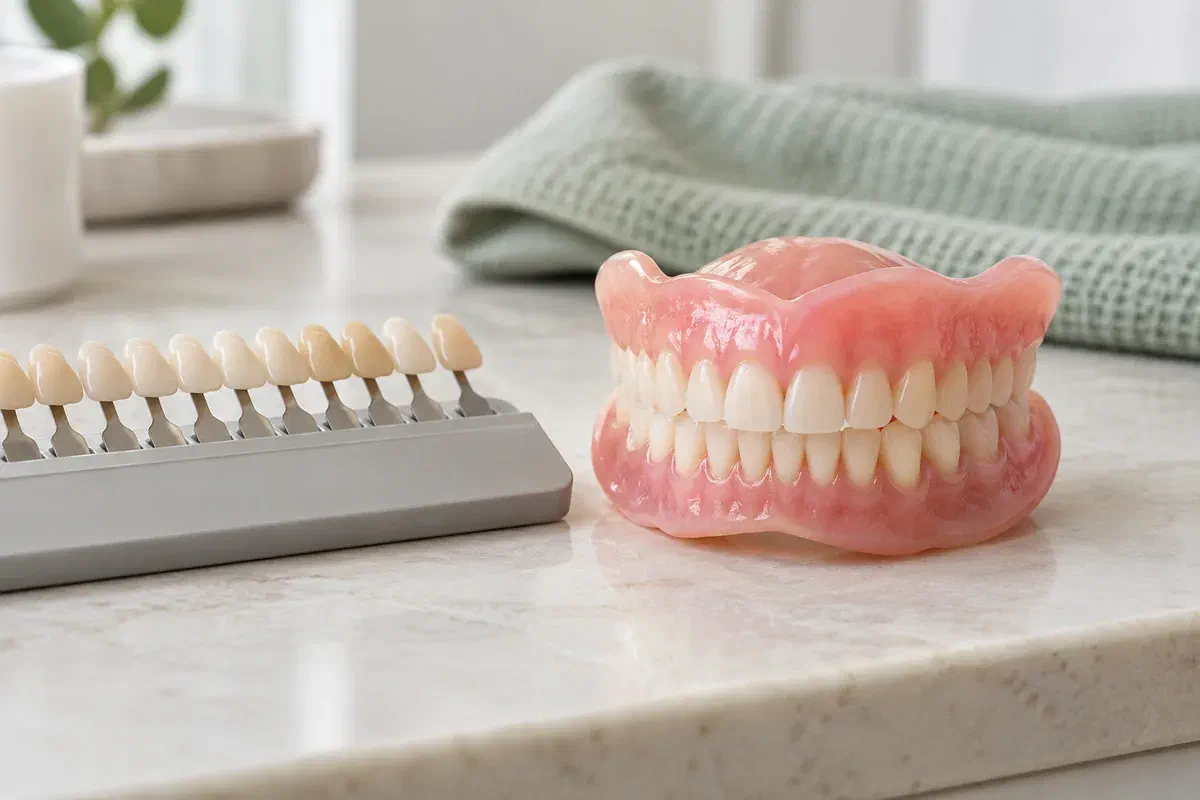
A denture can still be worn every day while its look and function have shifted. A review combines what we find in the appliance, the condition of your gums and any natural teeth, and what you notice in daily life.
These often travel together. Tell us which bothers you most, whether it is the look of your smile or how food breaks down, so the assessment is not guided only by the most visible wear.
A tooth replaced here, a crack mended there: each fix may have made sense, but a long list deserves a wider look. Ask whether another repair preserves a useful denture or delays a needed redesign.
Shifts in the gums or remaining teeth, or new difficulty handling and cleaning the denture, can affect its suitability. Mention them even if they seem unconnected to appearance.
Age by itself does not tell you when a denture should go. An examination helps decide between continued use, maintenance and a new appliance.
A replacement lets the length, shade and position of the teeth be reconsidered along with the base and bite. That is useful when the examination shows that worn surfaces or the old arrangement are behind both appearance and comfort concerns.
Expectations should be honest. A new set can look different from the one you are used to, and both appearance and feel may take some getting used to. A replacement is not a way to recreate natural teeth, and any changes should be discussed openly before the denture is finished.
Patient information: American College of Prosthodontists — denture replacement
Pictures of your smile at a time you liked it can be helpful, alongside the current denture. Point out what you want back and what you would happily change, such as length or colour.
A new plan can balance appearance with fit and function instead of compromising around the old appliance. Ask how the examination shaped the proposal and which alternatives exist.
If a wedding, trip or family event is coming up, mention it early. Knowing the stages, fitting visits and reviews helps you plan, and you can ask about any period without a usable denture.
The sequence depends on your appliance and oral health. Ask how measurements, tooth selection, try-in stages and any preliminary care will be arranged in your case.
Wear or bring the current set, even if it is uncomfortable, and share any photos. The dentist examines your mouth and sorts out what a new appliance may help with and what needs its own treatment.
We explain whether repair or a reline remains sensible and what a new denture would alter in look and function. You hear the scope, likely visits, costs and limits before deciding.
Impressions and bite measurements help build the new appliance. Depending on the method, you may review a trial arrangement, which is the moment to judge the look and speak up.
The finished denture is assessed in place, and you learn how to insert, remove and clean it. A follow-up visit lets the team look at anything that comes up once you are wearing it every day.
A replacement can look and feel unfamiliar for a while, even to people who have worn dentures for decades. Follow the care advice for your appliance and describe particular concerns rather than assuming you must accept them.
Ask for a demonstration, particularly if the new design differs from the old one. Confirm which cleaners and storage suit it, and let us know about any difficulty with grip or vision.
Note sore areas and whether the denture moves during speech or certain meals. Contact the clinic about problems that persist so fit and contacts can be checked, and avoid adjusting it at home.
The fitting visit is one stage of the process. Keep the follow-up, ask whether more adaptation advice would help, and continue regular oral exams even when the denture feels comfortable.
Good planning blends what the dentist finds with what you see and feel. Use these answers to prepare, without assuming that any design or timetable is already settled.
Arrange a visit at our Bronte Street clinic to review a denture that looks worn, feels loose or no longer suits you. We will explain what still works and whether a new appliance is the right next step.
Bring your current denture and one or two photos of a smile you were happy with.
