An edge that seems to cut in
Pointing to one sore spot may suggest a border or contact on the appliance, but it should be examined before anything is reduced. Please do not file or sand the denture at home on someone’s behalf.


Sometimes it is a family member who notices first: a denture left in the glass, meals pushed aside, a hand going to the jaw. Households in Brampton can arrange a visit where we examine the gum and appliance and explain the cause and care clearly.
People do not always say when a denture hurts. They simply wear it less, choose softer food or skip a meal out. If you are helping a parent or partner, those changes can be the first clue. The sore itself might be along an edge, under the base or somewhere that only hurts with chewing, and its location is a starting point rather than an explanation.
A new appliance can need refining, and a long-worn one can start to rub as the mouth or the denture changes. Still, not every sore gum is a pressure mark. The tissue needs to be examined, particularly if an area has lasted, keeps coming back or looks unlike earlier irritation.
At the appointment, we talk with the denture wearer, and with you if they would like you there, about how the discomfort is affecting daily life. The dentist examines the mouth and the appliance together and explains the findings plainly. Care might be a focused adjustment, a fit correction or treatment aimed at the tissue. Nobody should have to tolerate pain in silence to be heard.
It helps to know when the soreness started, whether removing the denture brings relief, and whether the appliance was recently made, repaired or relined. Changes in eating or wearing habits count too.
Pointing to one sore spot may suggest a border or contact on the appliance, but it should be examined before anything is reduced. Please do not file or sand the denture at home on someone’s behalf.
Turning down chewier meals, or chewing only on one side, can reflect movement of the appliance or how the teeth meet. Mention these habits so the denture can be assessed while it is being used.
Gum that stays tender after days out of the appliance, or that changes colour or bleeds, needs to be seen for itself. Jot down roughly when you first noticed it and whether anything similar has appeared in other parts of the mouth.
Any ulcer in the mouth lasting more than three weeks should be assessed by a dentist or doctor. For pain that is getting worse, bleeding, or other worrying changes, call for advice right away.
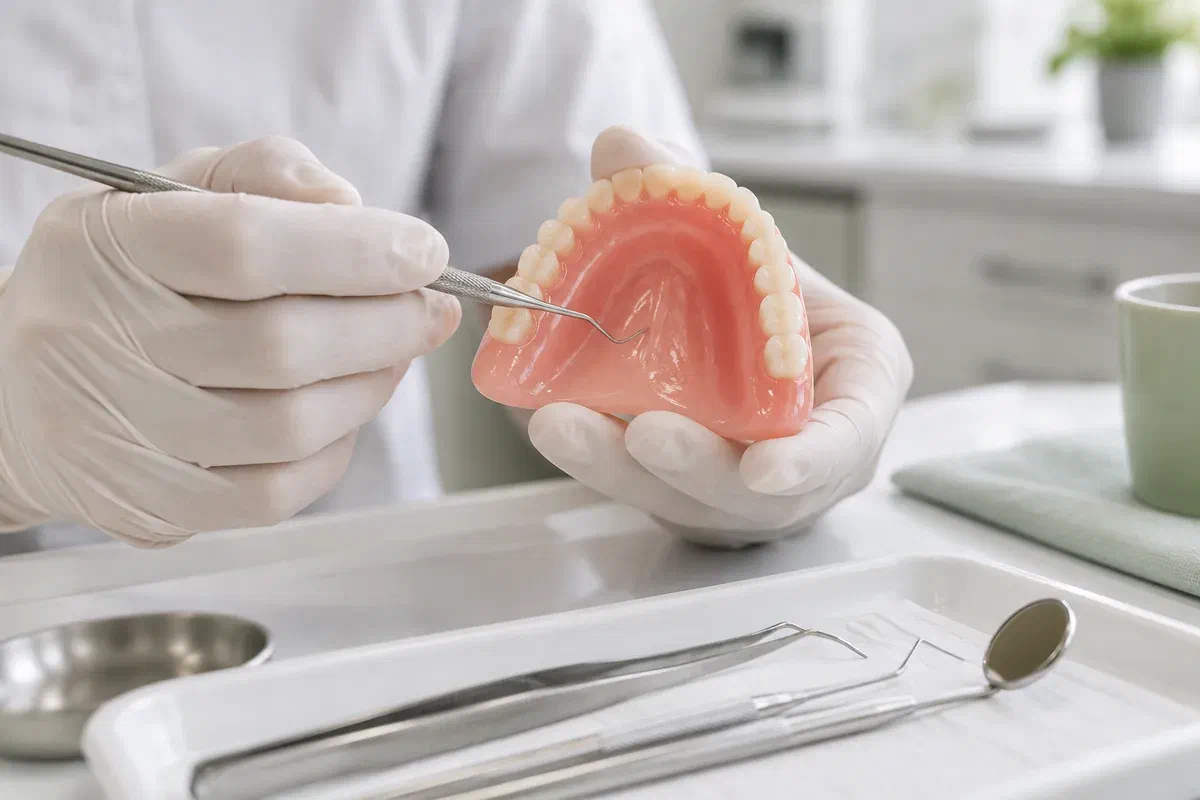
Looking at both the denture and the gum lets the dentist distinguish a single contact from a loose or unstable appliance, or from a tissue condition that needs other care. It also means the explanation you take home is based on what was actually found.
When everyone understands the reason, helping at home becomes easier. Ask what is being changed, what improvement to watch for and when to come back. A review is particularly important when the first sore does not settle.
Patient information: NHS — mouth ulcers and when to seek care
Combining the wearer’s description with the examination reduces guesswork about which surface to change, and it shows whether adjusting the appliance is appropriate at all.
Unplanned trimming can affect support and retention, which matters for someone who relies on the appliance daily. A careful adjustment takes the whole denture into account.
You should both know how the appliance should be worn while the gum heals and which signs mean calling the clinic. Follow-up may include another check of the denture and the tissue.
When booking, ask whether the denture should be worn before the visit. Nobody needs to endure a hurting denture all morning so that the mark stands out for the dentist.
The wearer, helped by you if that makes it easier, explains the location, the timeline and what tends to trigger the ache. It is useful to hear about recent dental work, anything put on the gum, and whether the appliance has started to feel loose.
The dentist looks at the tender area and relevant parts of the denture, such as edges, support and bite contacts, and considers whether the tissue needs further investigation.
A clear pressure point may be adjusted; other findings may lead to a different plan. Ask what the treatment is for and whether additional work or a referral will be needed.
At home, the advice on wear, cleaning and other care is followed as given. Should soreness hang on or worsen, tell us, and keep the review date so an ongoing change is not blamed on rubbing time after time.
The plan for home reflects what the dentist found and treated. Before leaving, check how many hours the appliance can be out, when full wear can restart, and what cleaning or soothing steps make sense.
Rest periods and resuming wear should follow the dentist’s advice. After recent extractions, the specific post-operative instructions come before any general denture habits.
Ask how the mouth and appliance should be cleaned without irritating the area. Mention cleansers, adhesives, rinses or gels in use, so the advice covers everything that touches the tissue.
If the area stays sore, recurs or changes, it needs reassessment. Let us know how wearing and eating have gone and whether the appliance feels different, rather than trying the same remedy again.
These answers cover signs to notice, visits and support at home. Your relative’s own advice will come from an examination, which matters most for sores that last, change or follow recent surgery.
Phone our Bronte Street clinic when a denture, yours or a relative’s, has started to hurt. The dentist will look at the gum and the appliance, talk through suitable care and book a follow-up to confirm healing.
Please bring the appliance itself, plus a rough date for when the trouble started and details of any reline, adjustment or tooth removal.
