One spot, first time
A first, clearly localized sore often points to a single border or contact, which may be suited to a targeted adjustment. That decision belongs to the examination, so avoid reshaping anything at home beforehand.


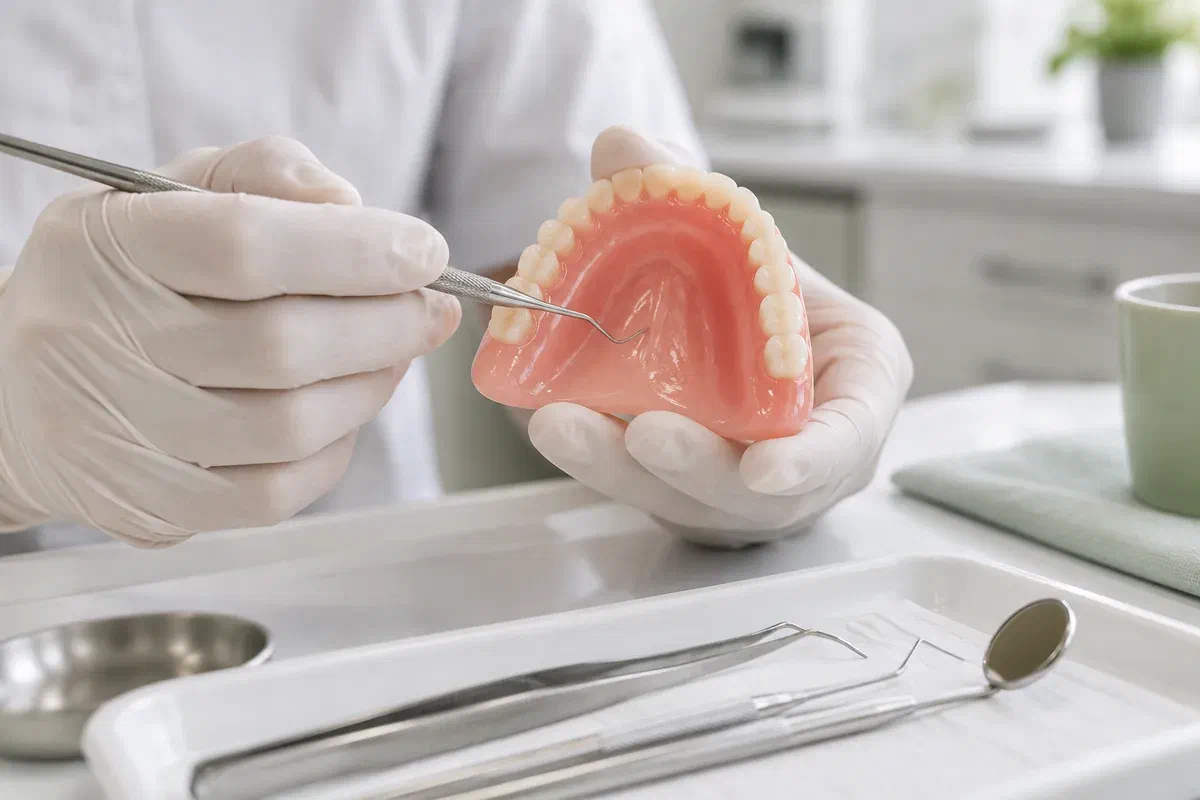
Adjust it, reline it or replace it? When a denture keeps causing sore spots, the choice matters. People from Caledon can book an examination of the gum and the appliance, with each option explained against what the dentist actually finds.
Most people with a sore denture want to know one thing: can this be fixed quickly, or is something bigger needed? The honest answer is that it depends. A single high spot can often be eased, while a denture that no longer matches the mouth may need a new fitting surface or, eventually, a replacement.
Getting to that answer takes more than finding the sore. The appliance might be new and in need of refinement, or older and gradually out of step with gums that have changed. And the sore may have nothing to do with fit, in which case the tissue, not the denture, is where attention belongs.
For those coming from Caledon, the visit starts with your priorities, whether that is comfort for meals, a secure fit or avoiding a long series of appointments. The dentist then examines the gum and the appliance together and lays out the options that make sense, from a careful adjustment through a reline to separate tissue care. You do not need to tolerate pain until a big decision feels justified.
Let us know how old the denture is, when the soreness started and whether it eases with the appliance out. Mention past adjustments, repairs or relines, and how often sore spots have recurred.
A first, clearly localized sore often points to a single border or contact, which may be suited to a targeted adjustment. That decision belongs to the examination, so avoid reshaping anything at home beforehand.
Irritation that shifts from place to place, especially with chewing, can suggest the appliance is moving or the bite has changed. Tell us how often it happens and on which side, as this bears on whether a reline is worth considering.
If the gum stays sore with the denture out, bleeds or changes colour, a fit option may not be the answer. Note how long you have noticed it and whether there are other areas like it in the mouth.
Have a mouth ulcer that has lasted three weeks or longer examined by a dentist or doctor. Do not wait if pain is worsening, there is bleeding, or anything else is concerning.
Reviewing the gum and the appliance together lets the dentist distinguish a single rubbing point from wider instability or a tissue condition that calls for a different response. Without that distinction, choosing between adjustment, reline and replacement is guesswork.
Once the cause is explained, the options become easier to compare. Ask what each would involve, what it is meant to achieve and what review would follow. Revisiting the decision is reasonable if the first approach does not settle the sore.
Patient information: NHS — mouth ulcers and when to seek care
Matching your history with the examination helps the dentist decide whether a small adjustment is likely to be enough or whether the fit needs broader attention, and whether the tissue needs separate care.
Repeatedly easing a poorly fitting appliance can reduce support and retention over time. Considering the whole denture helps decide when a reline or replacement is more sensible than another adjustment.
You should leave knowing what your chosen option involves, how to wear the appliance meanwhile and when to call. The plan can include follow-up of both denture and tissue.
When you book, ask whether to wear the denture beforehand. Please do not force yourself through a painful day in the appliance just so the dentist has a clearer mark to look at.
Tell us its age, past work, where it hurts now and what brings it on. Mention any gel or rinse you have tried and whether the fit has gradually loosened or changed.
The dentist examines the sore area and the denture’s borders, fitting surface, support and bite, and considers whether the appearance of the tissue calls for further investigation.
Depending on the findings, you may be offered a targeted adjustment now, a reline or rebase, a discussion of replacement, or a referral. Ask what each option addresses and how many visits it may require.
Follow the wearing and cleaning guidance and report any lasting or worsening soreness. A planned review checks whether the chosen approach worked or whether a different option should be considered.
Your instructions reflect the cause and the option chosen. Confirm how long the denture should stay out, when regular wear can resume, and which cleaning or comfort measures suit your situation.
Resting the tissue and returning to full use should follow the dentist’s guidance. Where extractions were recent, the specific surgical instructions apply ahead of any general routine.
Ask how to care for your gums and the appliance without aggravating the area. Mention the cleansers, adhesives, rinses or gels you rely on so the advice covers each of them.
If the area stays tender, comes back or looks different, contact us for reassessment. Explain how the denture has felt since treatment, as this can influence which option is considered next.
These answers cover options, appointments and follow-up. Advice for your mouth depends on an examination, particularly when a sore lingers, changes or is related to recent surgery.
Contact our Bronte Street clinic about a denture that keeps causing sore spots. The dentist will assess your gums alongside the appliance, explain the options that suit the findings and plan follow-up to make sure the chosen approach is working.
Bring the denture and let us know its approximate age, when the soreness started, and any adjustments, relines or extractions.
