

Illustrative patient describing denture discomfort during a consultation
Restorative Dentistry

Denture Sore-Spot Treatment in Milton

The first weeks with a new denture often bring a spot or two that aches. Instead of waiting it out, book a visit at our Milton clinic so the dentist can look at the gum, check the appliance and explain what care that particular spot calls for.

New dentures, tender gums

Settling in should not mean putting up with a sore.

Most people expect a new denture to feel strange for a while. What catches them off guard is a single tender place, often along a border or under the base, that gets worse by the end of the day. That spot tells the dentist where to start looking, though its position alone does not explain why it hurts.

A freshly made appliance may need small refinements once it has been worn through ordinary meals and conversation. Still, a sore gum is not automatically a pressure mark. The tissue deserves its own look, particularly if the area lingers, keeps changing, or feels unlike the minor rubbing you may have had before.

Here in Milton, our team starts by asking what the soreness is doing to your day: eating, speaking, sleeping with the denture out. Then we examine your mouth and the appliance together. Depending on the findings, care may be a precise adjustment, a different fit correction, or treatment aimed at the tissue. There is no need to keep wearing through pain to show us there is a problem.

Book a check on your new denture
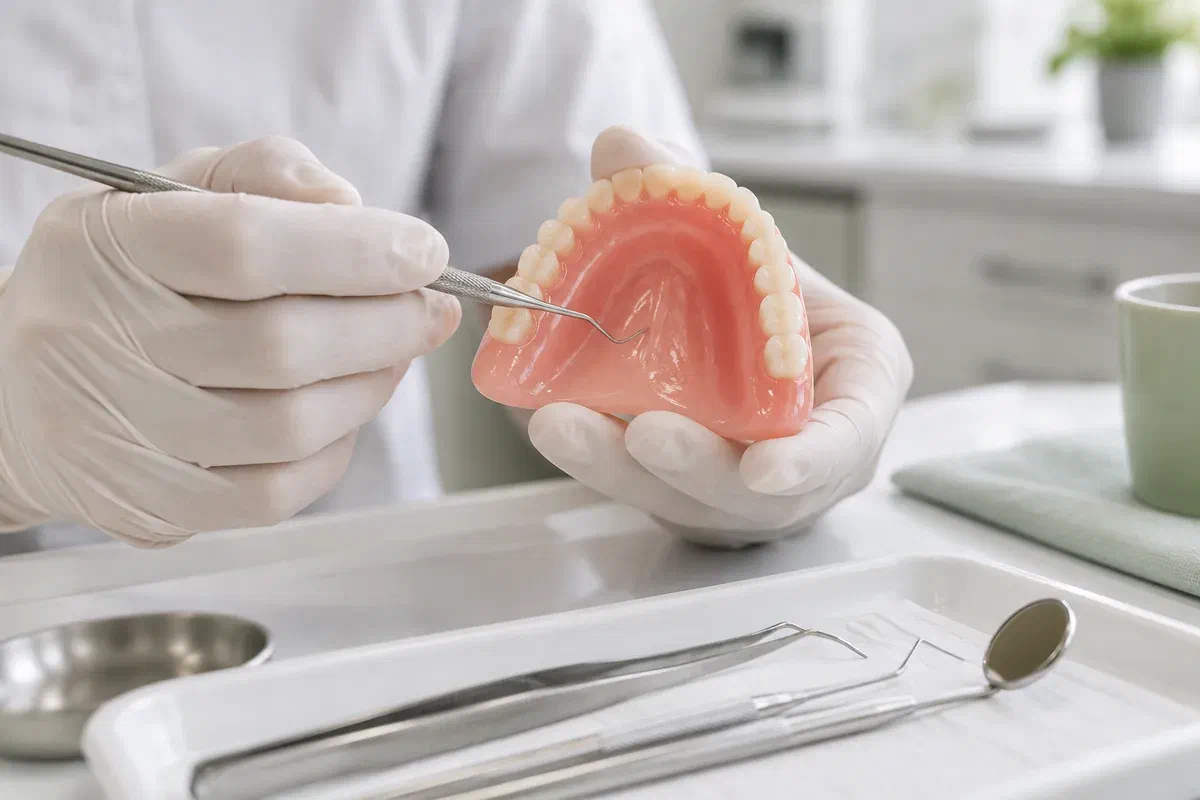
Dental professional inspecting the inner surface of a removable denture
Helping us read the symptom

Small details point to the cause.

Before the visit, think about when the tenderness first appeared, whether it eases with the denture out, and how recently the appliance was made, repaired or relined. Notes like these make the examination more focused.

A rim seems to dig in

A single pressure point can come from an edge or contact on the appliance, yet nothing should be trimmed until the area has been examined. Please resist sanding or filing the denture yourself, even when you are sure you know the spot.

Meals bring the same ache back

Pain while eating may relate to the appliance shifting or to how the upper and lower teeth come together. Let us know whether it happens on one side or with a certain kind of bite so the dentist can judge the denture in use.

Tenderness outlasts the pressure

A sore that stays after the denture comes out, or looks unusual, should not be blamed on the appliance by default. Mention how long it has been there, any bleeding or change in colour, and whether other parts of your mouth look similar.

Any mouth ulcer that has not healed within three weeks should be assessed by a dentist or doctor. If pain is increasing, the area bleeds, or something else about it worries you, call sooner rather than waiting out the three weeks.

Why we look at both sides

An exam of the gum and the denture guides the fix.

Your gum and the fitting surface of the appliance each hold clues. Looking at both helps the dentist tell a small, local contact apart from a denture that is moving too much, or from a mouth condition that needs a different kind of care.

Knowing the reason makes the plan easier to follow. You are welcome to ask what will be changed, how the tissue should feel as it heals, and when a recheck makes sense. That review matters most when the first sore is slow to calm down.

Patient information: NHS — mouth ulcers and when to seek care

Pinpoint what is really irritating the gum

By linking what you feel to what the examination shows, the dentist relies less on guesswork about which border to change. It also helps decide whether adjusting the denture is the right step at all.

Protect the fit you already have

Taking away material without a clear reason can loosen the denture or reduce its support. A careful approach considers the whole appliance, so solving one rubbing spot does not create a new problem elsewhere.

Leave with a follow-up you understand

You should know how to wear the appliance while the gum recovers and which signs mean you should phone us. The plan may include a second look at both the denture and the sore area.

What the visit involves

Tell us the story, then we examine the source.

When you call, ask whether you should wear the denture before coming in. Please do not push through hours of pain just so the mark shows up more clearly at the appointment.

  1. Share how the soreness behaves

    Point to where it hurts, say how long it has lasted and what sets it off. Tell us about recent treatment, anything you have put on the gum, and whether the denture now feels loose or different.

  2. Look closely at gum and appliance

    The dentist checks the tender area and the relevant parts of the denture, such as its borders, support and how the teeth meet. Part of this step is deciding whether the tissue looks like it needs further investigation.

  3. Agree on the right treatment

    A clear pressure point may be adjusted, while a different finding could need another plan. Ask what the treatment is meant to correct and whether more work or a referral will follow the visit.

  4. Recheck comfort as the gum heals

    Follow the advice on wearing, cleaning and any other care. Let us know if symptoms continue or get worse, and keep the review appointment, so a lasting change is not mistaken for the same sore again and again.

After your adjustment

Watch how the gum heals, not only how the denture sits.

Your instructions will reflect what was found and what was done. Ask how long the appliance should stay out, when to start wearing it again, and which cleaning or comfort steps suit your mouth.

Stick with the wearing plan you were given

Rest periods and the return to full-time wear should follow the dentist’s advice. If the denture was placed after recent extractions, the surgical aftercare instructions come first, ahead of any general denture routine.

Clean softly and with the right products

Ask how to keep the mouth and the denture clean without aggravating the sore. Tell us about any cleanser, adhesive, rinse or gel you use, so the advice takes into account everything that touches the gum.

Call us if the spot is not getting better

When a spot hangs on, keeps coming back or starts to look different, it needs another look. Describe what has happened since the visit and whether the appliance feels changed, rather than trying the same home remedy once more.

Care that fits the cause

Different findings, different treatment.

The examination shows whether the focus belongs on one contact, the overall fit, the gum itself, or a mix of these. Feel free to ask how the suggested treatment connects to what the dentist found.

When one contact is the culprit

A precise, limited adjustment

If the assessment supports it, a small area of the denture may be adjusted. The dentist should still weigh the effect on support and explain how the treated spot will be checked afterwards.

When the denture moves or lacks support

Correcting the overall fit

Irritation that keeps returning may need more than one edge changed. A reline, rebase or a new denture may come up if the appliance no longer fits the mouth the way it should.

When the sore has another cause

Looking at the tissue on its own

A lesion that is unusual or lasting may need more testing or a referral. Adjusting the appliance is not a substitute for properly assessing a change in the gum that is not healing as expected.

Your questions, answered

What people ask about denture sore spots.

These answers cover the early weeks, visits and follow-up. Advice for your own mouth depends on an examination, particularly if a sore is lasting, changing or linked to recent surgery.

(905) 876-4488
Is some soreness normal with a brand-new denture?
A new appliance often takes time to feel familiar, and a few tender areas are common in the early weeks. That does not mean you should simply wait. A spot that keeps hurting usually benefits from an examination, and small refinements are a routine part of fitting.
How soon after getting a denture should I book a check?
Follow the review schedule you were given when the appliance was fitted. If a specific area becomes painful before then, call rather than waiting for the planned date. Describe where it hurts and how long it has been sore.
Can I take the denture out to let a sore spot rest?
Often that helps, but ask the clinic first, because the right approach depends on your situation, especially after recent extractions. Let us know how long you have kept it out, as that can affect what the dentist sees.
Why does my gum hurt even after the denture is out?
Irritated tissue can stay tender for a while after the pressure stops. A sore that does not ease, or looks unusual, still needs to be examined rather than assumed to be rubbing. Note how long it has lasted.
Should I stop using adhesive while my gum is sore?
Ask before changing your routine. Adhesive is not a treatment for a pressure point, and the cause needs to be assessed. Tell the dentist which product you use so the advice covers it while the area is managed.
What if the first adjustment does not fix the sore?
Come back for a review instead of reshaping the appliance yourself. The denture may still have a fit issue, or the tissue may need another explanation. Say whether the sore is in exactly the same place and whether it changed after the first visit.
Sore-spot care in Milton

Show us where it hurts, and we will take it from there.

Call our Bronte Street practice about tenderness under or along the edge of your denture. We can examine both the gum and the appliance, talk through suitable care, and book a follow-up to make sure things are healing.

Bring your denture along and let us know when the discomfort began, including any recent adjustments, relines or extractions.

Visit Milton Dental Clinic
Unit 1, 342 Bronte St. S, Milton, ON L9T 5B7
Get directions Clinic hours
Monday–Thursday
11am–7pm
Friday–Sunday
By appointment only

Areas we serve

  • Milton
  • Oakville
  • Mississauga
  • Georgetown
  • Halton Hills
  • Acton
  • Campbellville
  • Brampton
  • Burlington
  • Puslinch
  • Rockwood
  • Erin
  • Caledon
  • Etobicoke
  • Old Milton
  • Bronte Meadows
  • Timberlea
  • Dorset Park
  • Dempsey
  • Clarke
  • Beaty
  • Coates
  • Harrison
  • Scott
  • Willmott
  • Ford
  • Bowes
  • Cobden
  • Walker
  • Mountain View
  • Milton Heights
  • Hawthorne Village
  • Valley View
  • Fallingbrook
  • Nassagaweya
  • Trafalgar
  • Esquesing
  • Nelson
  • Brookville
  • Moffat
  • Glen Williams
  • Norval
  • Limehouse
  • Stewarttown
  • Ashgrove
  • Hornby
  • Silver Creek
  • Speyside
  • Scotch Block
  • North Oakville
  • River Oaks
  • Glen Abbey
  • West Oak Trails
  • Palermo
  • Bronte Creek
  • College Park
  • Joshua Creek
  • Uptown Core
  • Preserve
  • Iroquois Ridge
  • Lisgar
  • Meadowvale
  • Meadowvale Village
  • Churchill Meadows
  • Erin Mills
  • Central Erin Mills
  • Streetsville
  • East Credit
  • Creditview
  • Heartland
  • Sheridan
  • Mount Pleasant
  • Credit Valley
  • Huttonville
  • Churchville
  • Springbrook
  • Northwest Brampton
  • Bram West
  • Fletcher's Meadow
  • Fletcher's Creek South
  • Alton Village
  • Orchard
  • Millcroft
  • Headon Forest
  • Tansley
  • Brant Hills
  • Tyandaga
  • Kilbride
  • Lowville
  • Aberfoyle
  • Morriston
  • Arkell
  • Hillsburgh
  • Freelton
  • Carlisle
  • Waterdown
  • Flamborough
  • Mountsberg

How can we help?

Milton Dental Clinic

Have a question about your smile? Choose the option that works best for you.

For urgent dental concerns, please call.
Messages are reviewed during clinic hours.