A spot that seems to press harder than it used to
A border or contact on the appliance may be involved, but it needs to be assessed before anything is trimmed away. However obvious the place may seem, please do not file or sand the denture at home.


A denture you have worn comfortably for years can start to rub without warning. For anyone in Old Milton, our nearby Bronte Street practice can examine the gum and the appliance and explain what is behind the change and how to treat it.
Plenty of people living around Old Milton have worn the same denture for a long time without a second thought. Then one week a patch along the gum turns tender, and chewing or simply wearing the appliance becomes something to dread. Where the tenderness sits gives the dentist a starting point, not an answer.
Mouths change gradually, and appliances wear, crack or warp over time. Either can turn a once-comfortable fit into a source of rubbing. Even so, a painful area is not always a pressure mark. The tissue has to be examined directly, all the more so when a sore lingers or seems different from anything you have had before.
Our approach is to hear first how the discomfort is affecting meals, speech and daily routine, then to examine the appliance and your mouth side by side. The cause shapes the response: perhaps a focused adjustment, perhaps a correction to the overall fit, perhaps care for the gum on its own. Enduring pain is not a requirement for being taken seriously.
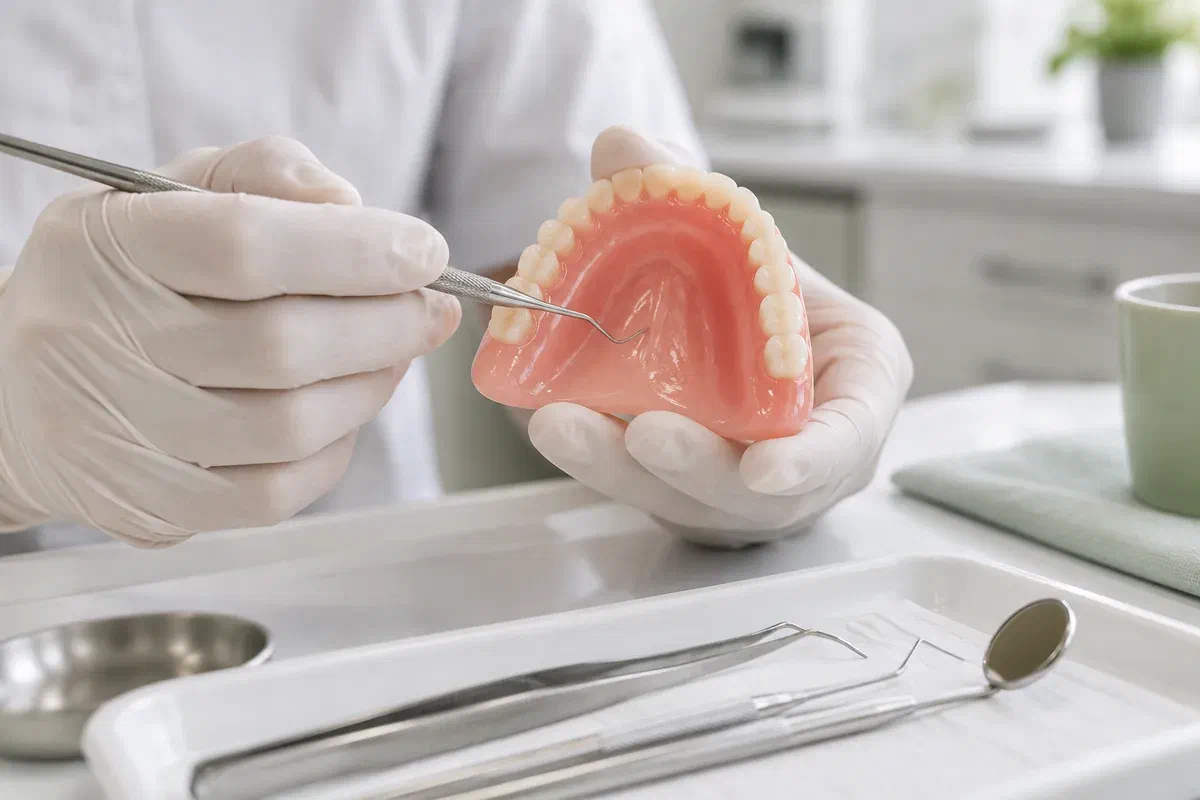
A short history helps. Mention roughly when the soreness began, whether taking the denture out brings relief, and whether the appliance has had any recent repair, reline or replacement, even a minor one.
A border or contact on the appliance may be involved, but it needs to be assessed before anything is trimmed away. However obvious the place may seem, please do not file or sand the denture at home.
Soreness during meals may reflect movement of the appliance or a change in how the teeth meet. Tell us whether one side is worse or whether a particular action triggers it, so the denture can be judged while it is working.
An area that stays sore, or changes in appearance, should not be put down to the appliance without an examination. Note how long it has been present, any bleeding or colour change, and whether other places in your mouth look alike.
Mouth ulcers that last beyond three weeks need checking by a dentist or physician. If the pain is getting worse, the area bleeds, or anything else concerns you, call well before that point.
With an older appliance, the gum and the fitting surface may both have changed. Examining them together shows whether the issue is one rough contact, a denture that has become unstable, or a tissue concern needing different attention.
Once the reason is clear, the plan makes more sense. It is reasonable to ask what will be altered, how the area should feel over the following days, and when it ought to be looked at again. A return visit is especially important if the sore does not settle the way it was expected to.
Patient information: NHS — mouth ulcers and when to seek care
The dentist connects your description with what the examination shows. That way, deciding which surface to change, or whether to change the denture at all, rests on findings rather than on a hunch.
Trimming without a plan can reduce support or loosen the appliance, which matters even more with a denture you rely on. A considered adjustment keeps the full fit in view while the problem spot is treated.
You should leave understanding how to wear the denture while the gum heals and which symptoms are a reason to call. Follow-up can cover both the appliance and the area that was sore.
Ask when booking whether to wear the denture before you arrive. Wearing a painful appliance for hours just to make the sore easier to see is not necessary and is best avoided.
Say where it hurts, how long it has been going on and what makes it worse. Mention any recent dental work, products you have applied to the gum, and whether the denture feels looser or simply different.
The dentist examines the tender area and the parts of the denture that matter, including its edges, support and bite contacts. The assessment also weighs whether the tissue looks like it needs further investigation.
A confirmed pressure point may be adjusted, and other findings may call for a separate plan. Feel free to ask what the treatment targets and whether further work or a referral is likely.
Follow the guidance for wearing, cleaning and any other care. Tell us if symptoms continue or worsen, and keep the scheduled review so a lasting problem is not treated as the same simple sore every time.
What you are asked to do depends on the cause and the treatment. Ask how long to keep the denture out, when to wear it again, and which cleaning and comfort steps are appropriate for you.
How long to rest the gum and when to resume wear should come from the dentist’s advice. If the appliance went in after recent extractions, the specific post-surgical guidance takes priority over a general routine.
Ask how to clean your mouth and the denture without irritating the spot further. List any cleanser, adhesive, rinse or gel you use, so the advice reflects everything that comes into contact with the tissue.
A sore that stays, recurs or looks different needs to be reassessed. Tell us what has happened since your appointment and whether the appliance feels changed, rather than repeating the same home remedy.
These cover older appliances, visits and aftercare. Your own advice depends on an examination, especially if a sore is persistent, changing or connected to recent surgery.
Our Bronte Street practice is a short way from Milton’s historic downtown. Contact us about tenderness under or beside your denture, and we can examine the gum and appliance, discuss care and plan a follow-up to confirm the area is settling.
Please bring the denture and tell us when the soreness started, along with any recent adjustments, relines or extractions.
