The appliance lifts during conversation
Describe the movements or sounds that bring on the problem. The dentist can assess how the denture relates to the surrounding tissues and whether its borders or support need closer consideration.


A denture that lifts or shifts can make meals and conversation feel uncertain. Explore denture stabilization in Milton with an assessment of support, fit, bite, and the options that may help your appliance work more predictably.
Denture stabilization describes the goal of improving how securely an appliance behaves during use. It is not a single procedure that suits every loose denture. The appropriate approach depends on the appliance, the supporting mouth, the way the teeth meet, and the circumstances in which movement occurs.
One denture may lift when speaking, while another rocks mainly during chewing. Some concerns relate to fit changes in an otherwise useful appliance; others involve worn teeth, design limitations, or insufficient support for the result the person wants. Those differences matter when comparing adjustments, renewed fitting surfaces, replacement, or implant-related options.
At Milton Dental Clinic, we begin with an examination and a conversation about daily use. Tell us what you avoid because of the movement and what improvement would make a difference. We can then explain which options merit consideration and what each would require from treatment through ongoing care.
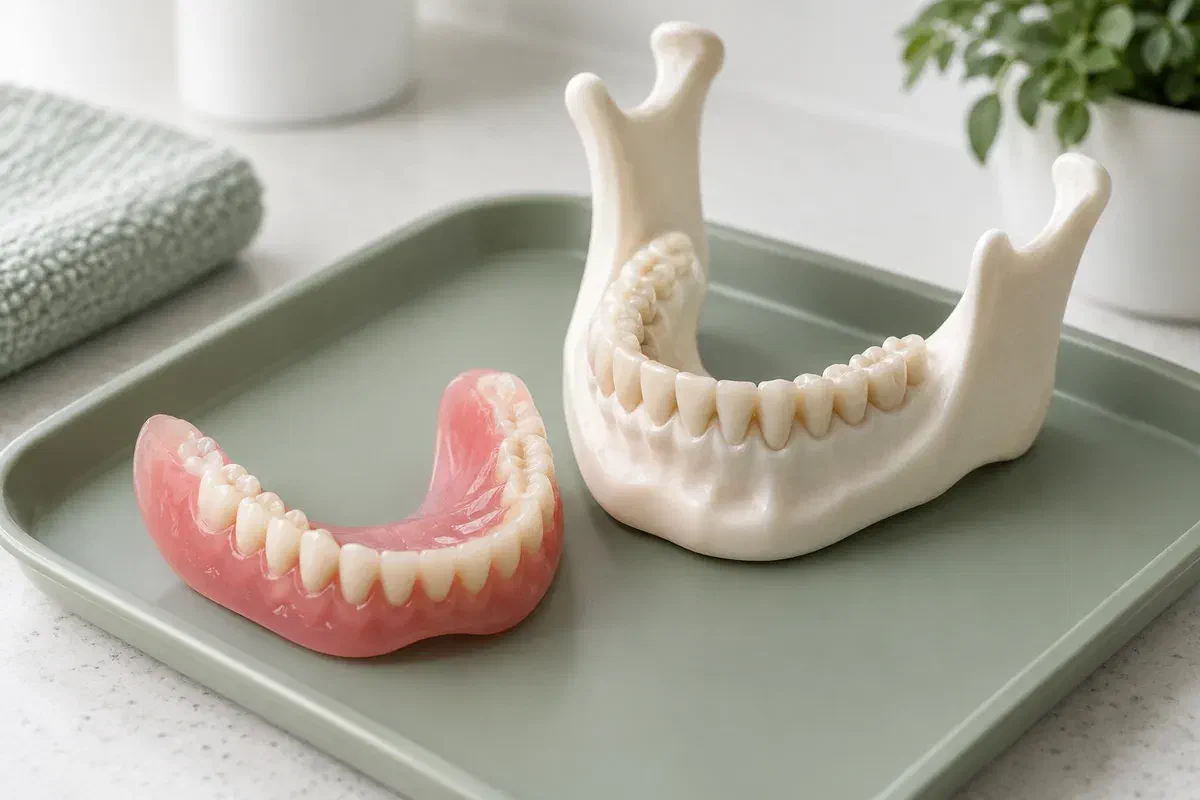
A stability assessment considers the whole appliance rather than assuming that more adhesive or a tighter fit is the answer. Bring examples of when it feels secure and when it does not.
Describe the movements or sounds that bring on the problem. The dentist can assess how the denture relates to the surrounding tissues and whether its borders or support need closer consideration.
Explain whether the movement occurs on one side or with particular foods. The relationship between fit and tooth contacts matters, so changing only the fitting surface may not address every concern.
A change in how much adhesive you need is useful information. Bring the product details and explain your routine so its role can be reviewed alongside the appliance rather than treated as the whole solution.
Pain, a broken component, or a sudden change in fit should be mentioned when booking. The team can advise whether the appliance needs prompt assessment before further use.
A clear assessment helps separate problems that can be addressed within the current appliance from those that require a different plan. It also makes the limits of treatment easier to discuss, particularly when the mouth offers less support than the denture originally had.
The useful outcome is not a vague promise that the denture will never move. It is an explanation of the intended improvement, the remaining limitations, and the care needed to maintain the result. Your ability to remove and clean an appliance should remain part of that conversation.
Patient information: Canadian Dental Association — dentures and overdentures
Reviewing support, contacts, and appliance condition can explain why movement happens. Ask which findings matter most and whether more than one factor needs attention before choosing a treatment.
Different approaches involve different appointments, costs, maintenance, and daily handling. A useful comparison considers those requirements alongside the improvement being sought so the choice fits your circumstances.
Describe the activities that feel difficult and ask what changes are reasonable to expect. The clinician can explain where a proposed treatment may help and where a removable appliance may still have limitations.
The assessment helps establish which options deserve a fuller discussion. You do not need to decide on implants, a reline, or a new denture before the cause of the movement has been reviewed.
Bring the denture and explain its age, repair history, and when instability developed. Mention adhesive use, sore areas, and any recent change in your remaining teeth or the way the appliance feels.
The dentist reviews the mouth and the appliance together. The examination considers whether the concern is localized or reflects broader limitations, and whether further records are needed before discussing a particular treatment.
Discuss what can be changed within the current denture and what would require replacement or another form of support. Ask about the expected benefit, treatment stages, maintenance obligations, and any referral that may be appropriate.
The next steps depend on the chosen approach. After treatment, fit and function need review, with instructions for care and a plan to reassess movement or discomfort that persists during ordinary use.
Care depends on whether the plan involved an adjustment, renewed fitting surface, replacement, or additional support. Ask for instructions that match the appliance and its components rather than continuing an old routine automatically.
If insertion or removal has changed, ask for a demonstration and practise with guidance. Tell the team if gripping, aligning, or cleaning the denture is difficult so the daily routine can be discussed realistically.
Some designs include components that need periodic review or replacement. Ask what ongoing care is expected, how it is arranged, and which changes in fit or handling should prompt an earlier appointment.
Note whether the problem is gradual or sudden and what activity brings it on. Returning with that information helps distinguish a new concern from a limitation already discussed during planning.
Stability concerns often lead to several possible treatments. These questions can help you compare the choices without assuming that one method is suitable for every appliance or every mouth.
Arrange a visit at our Bronte Street clinic to review a denture that shifts, lifts, or rocks. We can assess the appliance and supporting mouth, then explain the options that may address the cause.
Bring the denture, details of any adhesive you use, and examples of the situations in which you want better support.
