Tenderness after talking for a while
A spot that aches after long conversations may mean the denture is lifting and settling repeatedly. Describe when it starts so the edges, and the tissue they press on, can be examined carefully.


A denture that slides around rarely stays comfortable for long. Rubbed patches and tender gums often follow. For households in Campbellville, we look at what is making the appliance move and which practical steps could settle both problems.
Movement and soreness often travel together. Each time a loose appliance slides, it can press or rub on the same stretch of gum, and by evening that area may be tender enough that you take the denture out early. The discomfort is real, but it is often a symptom of instability rather than the root problem.
Getting to that root means looking beyond the sore. Perhaps the fitting surface has drifted from the shape of your gums. The teeth might be worn or meeting off-centre, or the design may suit your mouth less well than it once did. In some mouths the ridges simply give less support now. Stabilization aims at whichever of these applies.
Coming in from Campbellville, you will start with a conversation about where it hurts, when the denture shifts and what you have changed to cope. Dr. Anjum then examines your mouth and the appliance and explains which approaches are worth pursuing, how each might affect comfort and what upkeep would follow.
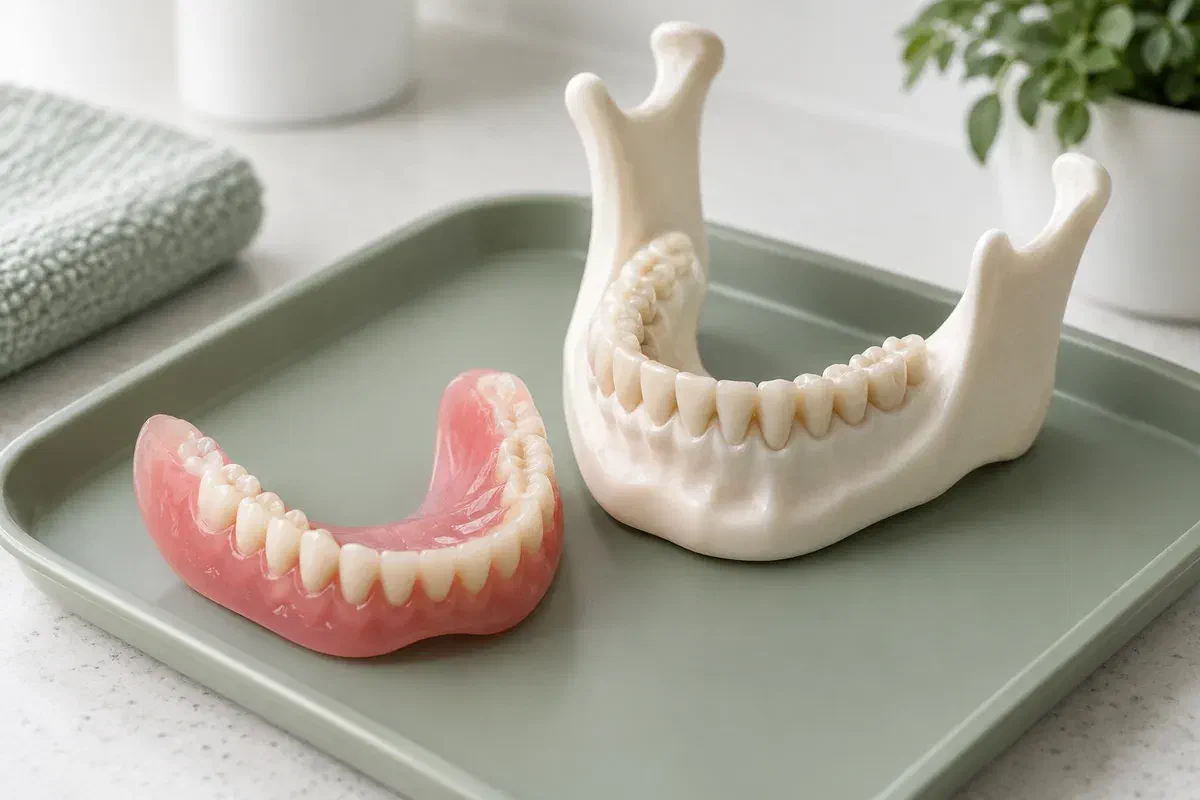
Soreness has a location and a timing, and both point toward the cause. Note where the tender spots are, when they flare and what the denture seems to be doing at the time.
A spot that aches after long conversations may mean the denture is lifting and settling repeatedly. Describe when it starts so the edges, and the tissue they press on, can be examined carefully.
If one side is tender after eating, rocking may be concentrating pressure there. Uneven tooth contacts can play a part, which is why the bite is checked as well as the fitting surface.
Some people add paste to make a sore area feel better. Mention it and bring the product, so adhesive can be reviewed as part of the picture and not as a way of covering up a fit problem.
Call ahead if a sore is not healing, is getting worse, or if the denture has broken or suddenly changed. The team will advise whether you should leave it out and how soon it should be seen.
When the cause of instability is clear, it becomes easier to see whether it can be corrected within the denture you have or whether a different plan is needed. That clarity also makes it possible to talk honestly about limits where the gums and bone now give less support.
No examination can promise a denture that never moves or never causes a tender day. A good one explains which improvement a treatment is aiming for, what might stay the same and how you would keep the result comfortable, including how easily you could remove and clean the appliance.
Patient information: Canadian Dental Association — dentures and overdentures
Pressure points, tooth contacts and the condition of the appliance are all examined. Asking which one matters most helps you avoid treating the sore while the movement continues.
Options differ in how many visits they need, their cost, their maintenance and how the appliance is handled. Thinking about those alongside comfort makes the decision more practical for a busy rural household.
Explain which activities leave you sore. The dentist can describe what a given approach might ease and where any removable appliance may still need occasional attention.
You can arrive undecided. Whether a small adjustment, a reline, a new appliance or implant support deserves discussion is worked out after the movement and soreness have been examined.
Bring the denture and show where it hurts. Tell us roughly how old it is, about past repairs, adhesive habits and any change in your natural teeth, and when the instability first appeared.
The dentist checks the tissue under the denture, how it seats and how the teeth close together. This helps show whether the cause is one localized pressure point or something broader, and whether records would help.
You will learn what might be changed in the present denture and what would call for a replacement or another kind of support. Ask how each would affect comfort, how many stages it involves and whether a referral is likely.
Once the agreed work is done, the dentist reviews how the denture sits and feels. You will get care instructions and a plan for revisiting any tenderness or movement that persists in everyday use.
What you do at home depends on the treatment, from a minor change to a new denture or added support. Ask how to look after both the appliance and your gums while things settle.
A changed fit can create new pressure points at first. Practise inserting and removing the appliance as shown before you leave, and call if a spot becomes sore rather than waiting it out.
Designs with components may need those parts checked or replaced over time. Ask what schedule is expected and which signs, such as returning tenderness, should bring you in early.
Note whether soreness or movement comes back gradually or suddenly and what you were doing. That record helps the dentist decide whether it is new or part of a limitation you have already talked about.
Tenderness tends to raise practical questions about what to do now and what to expect later. These general answers may help until your examination.
If your denture shifts and leaves you sore, set aside time at our Bronte Street practice. Dr. Anjum will examine the appliance and your gums, then explain which options could make it steadier and more comfortable.
Please bring the denture, any adhesive you use and a note of where the tender spots are and when they appear.
