Quieter in conversation
Someone who speaks less, covers their mouth or avoids the phone may be coping with a denture that lifts. The dentist can check how its edges sit against the soft tissues and whether the support has changed.


Sometimes it is a son or daughter who notices first: Mom is eating less, or Dad keeps taking his denture out. Families across Halton Hills can come in together so we can assess the appliance and explain practical ways to steady it.
People rarely announce that their denture has become unreliable. More often a relative notices softer food choices, a habit of leaving the appliance in a cup, or less chatter at family gatherings. Those observations are useful, especially when the wearer finds the change hard to describe.
Stabilization means working toward a denture that behaves more securely, but how to get there varies. The fitting surface may no longer match the gums, the teeth may be worn or uneven, the design may be limiting, or the mouth may offer less support than it once did. A careful examination is what sorts these apart.
Households from Georgetown, Acton, Glen Williams and elsewhere in Halton Hills are welcome to attend together. The dentist examines the denture and the mouth, asks what has become difficult and then explains which options are practical, including how much handling and upkeep each would require at home.
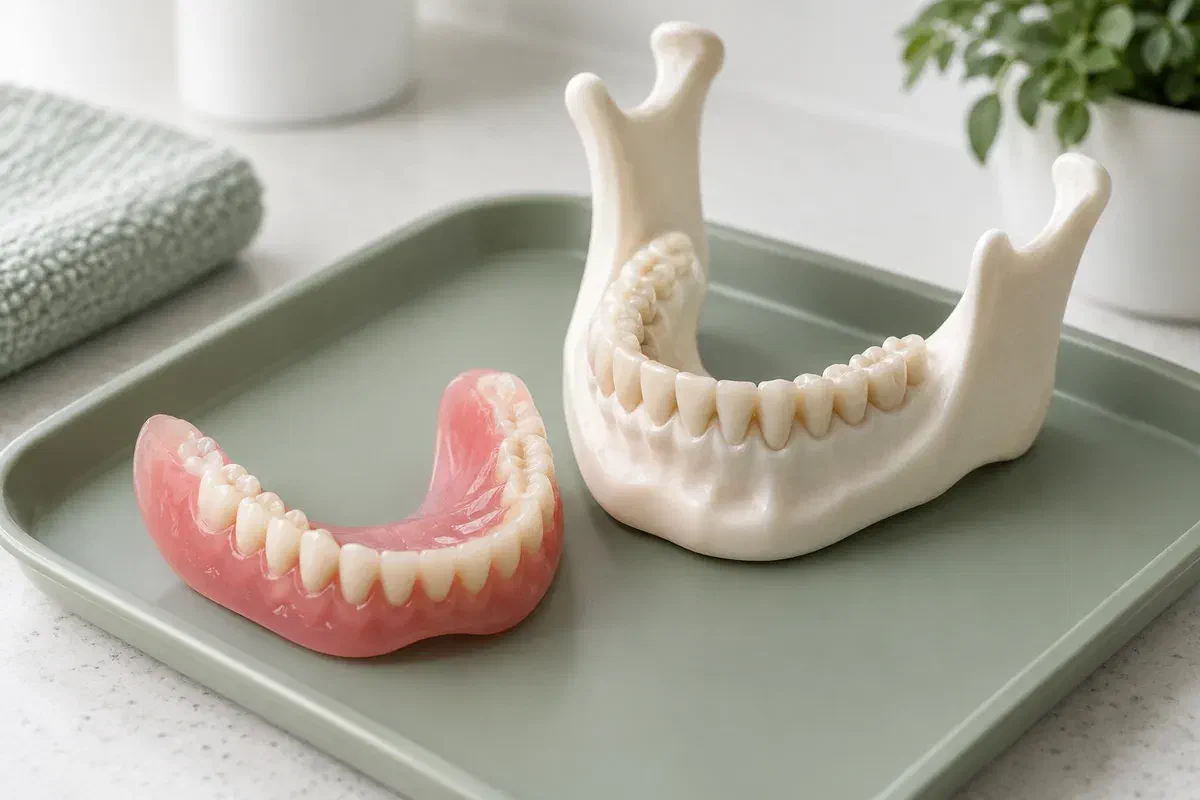
Observations from family members can fill gaps that the wearer may not mention. Jot down what you have seen and bring both the person and the denture to the appointment.
Someone who speaks less, covers their mouth or avoids the phone may be coping with a denture that lifts. The dentist can check how its edges sit against the soft tissues and whether the support has changed.
A switch to soft food or chewing on one side may signal rocking. Since uneven tooth contacts can contribute as well as fit, both are examined rather than assuming a new fitting surface will fix everything.
Heavy daily adhesive use, or giving up on wearing the denture, are both worth mentioning. Bring any product being used so its role can be reviewed together with the condition of the appliance.
Call before the visit if there is pain, a sore that will not heal, a break or a sudden change in fit. The team can advise whether it should be seen promptly and whether the denture should be left out meanwhile.
An assessment shows which issues can be solved within the current denture and which would need a different plan. It also gives the family an honest picture of limits, particularly when the gums and jaw now provide less support than they did.
No one should expect a promise that the appliance will never move. What is useful is knowing the improvement each option aims for, the limitations that may remain and the daily care involved. Whether the wearer, or a helper, can remove and clean it comfortably is a central part of that discussion.
Patient information: Canadian Dental Association — dentures and overdentures
The dentist reviews support, contacts and the appliance itself. Ask which finding matters most and whether more than one factor should be dealt with before deciding on treatment.
Options vary in appointments, cost, maintenance and handling. Thinking about who will help with cleaning and travel makes it easier to pick an approach that works in practice.
Describe the activities that have become hard. Hearing together what a treatment may improve, and what limits a removable denture may keep, helps avoid disappointment later.
Nobody needs to settle on implants, a reline or a new denture beforehand. Those choices come up after the cause has been examined and explained.
Bring the denture and any notes about its age, repairs and when problems began. A relative can help recall adhesive use, sore spots, medications and changes to any remaining natural teeth.
The dentist assesses support, fit and how the teeth meet. That shows whether the problem is limited to one area or part of broader change, and whether further records would be helpful.
We describe what could be done with the existing denture and what would need replacement or another form of support. Everyone present can ask about benefits, stages, upkeep and possible referrals.
Next steps depend on the approach agreed. Afterward, the fit is reviewed, care instructions are shared with the wearer and helper, and a plan is made to recheck any lingering movement or soreness.
Aftercare depends on whether the plan involved an adjustment, a reline, a new denture or added support. Ask for instructions both the wearer and any helper can follow, instead of carrying on with an old habit.
A changed appliance may seat differently. Ask the team to demonstrate, then let the wearer and helper both practise. Mention arthritis, tremor or vision concerns so the routine can be adapted realistically.
Some designs include parts that need regular review or replacement. Find out what is expected, who should book it and which changes in fit or handling mean calling sooner.
Note whether problems come back slowly or suddenly and what brings them on. Those details help the dentist separate a new issue from a limitation already discussed.
Relatives often have questions of their own when a parent or partner is struggling. These general answers may help, and the appointment will address the specifics.
Book a visit at our Bronte Street practice for a relative whose denture lifts, shifts or rocks. We will assess the appliance and their mouth, then talk you both through options that could help.
It helps to have the denture, any adhesive in use, a current medication list and your own notes on what you have noticed at home over the past few weeks.
